翻刻
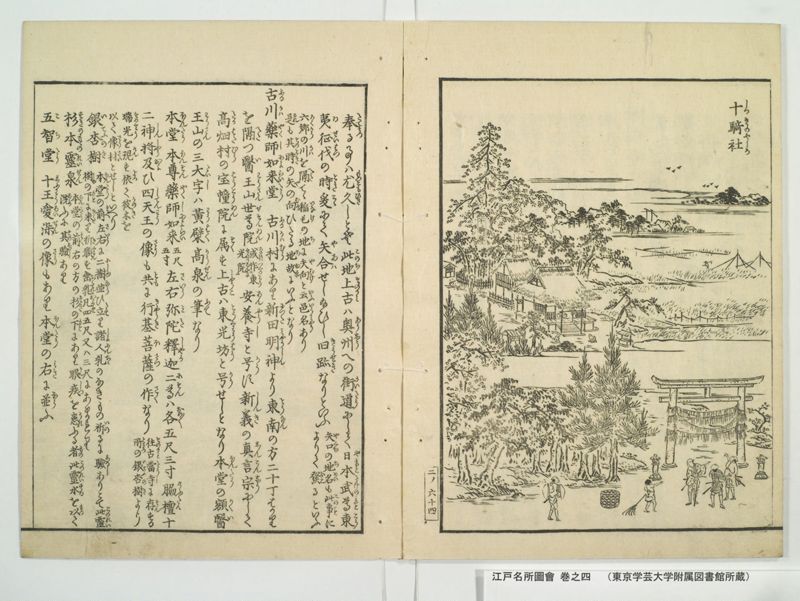
【右丁 絵図】
十騎社(しつきのやしろ)
本社
十騎塚
【左丁】
奉(たてまつ)る事は尤(もつとも)久(ひさ)しとそ此地(このち)上古(そのかみ)は奥州(あうしう)への街道(かいたう)にして日本武尊(やまとたけのみこと)東(とう)
夷征伐(ゐせいはつ)の時(とき)爰(こゝ)にて矢合(やあは)せし給ひし旧跡(きうせき)なりといふ《割書:矢口(やくち)の地名(ちめい)も此事(このこと)に|よりて發(おこ)るといふ》
《割書:六郷(ろくかう)の川(かは)を隔(へた)てゝ稲毛(いなけ)の地(ち)に矢向(やむけ)と云(いふ)邑名(いうみやう)あり|是(これ)も其時(そのとき)の矢(や)の向(むか)ひたる地(ち)故(ゆゑ)にいふとなり》
古川藥師如来堂(ふるかはやくしによらいたう) 古川村(ふるかはむら)にあり新田明神(につたみやうしん)より東南(とうなん)の方二十丁はかり
を隔(へた)つ醫王山(いわうさん)世尊院(せそんゐん)《割書:或(あるひは)作(つくる)_二東(とう) |光院(くわうゐんに)_一》安養寺(あんやうし)と号(かう)す新義(しんき)の真言宗(しんこんしう)にして
髙畑村(たかはたむら)の宝幢院(はうとうゐん)に属(そく)す上古(しやうこ)は東光坊(とうくわうはう)と号(かう)せしとなり本堂(ほんたう)の額(かく)醫(い)
王山(わうさん)の三大字( たいし)は黄檗髙泉(わうはくかうせん)の筆(ふて)なり
本堂(ほんたう)本尊(ほんそん)藥師如来(やくしによらい)《割書:五尺|五寸》左右(さいう)弥陀(みた)釋迦(しやか)二尊(にそん)は各(おの〳〵)五尺三寸 脇檀(けふたん)十
二神將( しんしやう)及(およ)ひ四天王(してんわう)の像(さう)も共(とも)に行基菩薩(きやうきほさつ)の作(さく)なり《割書:往古(そのかみ)當寺(たうし)に存(そん)する|所(ところ)の銀杏樹(いてふのき)より》
《割書:瑞光(すゐくわう)を現(けん)す依(よつ)て彼木(かのき)を|以て像材(さうさい)とせしといへり》
銀杏樹(いてふのき)《割書:本堂(ほんたう)の前(まへ)左右(さいう)に二樹(にしゆ)並(なら)ひ立(たて)り諸人(しよにん)乳(ちゝ)のなきもの祈(いの)るに驗(しるし)ありとて此(この)靈(れい) |樹(しゆ)の下(もと)に来(きた)り祈願(きくわん)す垂乳(ちたれ)凡(およそ)四五尺又は三尺にあまれり》
杉本靈泉(すきのもとのれいせん)《割書:本堂(ほんたう)の前(まへ)右の方の杉(すき)の下(もと)にあり眼疾(かんしつ)を患(うれ)ふる者(もの)此(この)靈水(れいすゐ)を以(もつ)て|洗(あら)ふに其驗(そのしるし)あり》
五智堂(こちたう)十王(しふわう)愛染(あいせん)の像(さう)もあり本堂(ほんたう)の右(みき)に並(なら)ふ
現代語訳
【右丁 絵図】
十騎社
本社
十騎塚
【左丁】
この神を奉ることは非常に古くからのことである。この地は昔、奥州への街道であり、日本武尊が東夷征伐の時にここで矢合わせをされた旧跡であるという《注記:矢口という地名もこの出来事から起こったという》
《注記:六郷の川を隔てて稲毛の地に矢向という村名があるが、これもその時の矢が向かった地であるからそう呼ぶのである》
古川薬師如来堂 古川村にあり、新田明神より東南の方二十丁ほど離れている。医王山世尊院《注記:あるいは東光院と書く》安養寺と号する。新義真言宗で、高畑村の宝幢院に属する。昔は東光坊と号したという。本堂の額の「医王山」の三大字は黄檗高泉の筆である。
本堂の本尊は薬師如来《注記:五尺五寸》で、左右の阿弥陀・釈迦二尊はそれぞれ五尺三寸である。脇壇の十二神将および四天王の像もすべて行基菩薩の作である《注記:昔当寺にあった銀杏の木から》《注記:瑞光を現したので、その木を像の材料としたという》
銀杏の木《注記:本堂の前左右に二本並んで立っている。多くの人で乳の出ない者が祈ると霊験があるといって、この霊樹の下に来て祈願する。垂れた乳房は大体四、五尺、または三尺を超えている》
杉本霊泉《注記:本堂の前右の方の杉の下にある。眼疾を患う者がこの霊水で洗うと効験がある》
五智堂 十王・愛染の像もある。本堂の右に並んでいる。
英語訳
【Right page - Illustration】
Jikki Shrine
Main Shrine
Ten Horsemen's Mound
【Left page】
The enshrinement of this deity dates back to very ancient times. This land was formerly a highway to the northern provinces (Ōshū), and it is said to be the historic site where Prince Yamato Takeru conducted archery practice during his campaign to subdue the eastern barbarians. 《Note: The place name "Yaguchi" (Arrow Mouth) is also said to derive from this event.》
《Note: Across the Rokugō River in the land of Inage, there is a village name called Yamuke (Arrow Direction), which is also said to be named after the place where arrows were directed at that time.》
Furukawa Yakushi Nyorai Hall - Located in Furukawa Village, about twenty chō southeast of Nitta Myōjin Shrine. It is called Mount Iō, Seson-in 《Note: Sometimes written as Tōkō-in》 Anyōji Temple. It belongs to the Shingon sect of the New Doctrine and is affiliated with Hōtō-in in Takahata Village. In ancient times it was called Tōkōbō. The three large characters "Mount Iō" on the plaque of the main hall are written by Ōbaku Kōsen.
The main hall houses the principal image of Yakushi Nyorai 《Note: five shaku five sun tall》, with Amida and Shakyamuni Buddha on the left and right, each five shaku three sun tall. The images of the twelve divine generals and four heavenly kings on the side altars are all works by the bodhisattva Gyōki. 《Note: From a ginkgo tree that existed at this temple in ancient times》《Note: It manifested auspicious light, so that tree was used as material for the statues.》
Ginkgo Trees 《Note: Two trees stand side by side in front of the main hall. Many people whose wives have no milk come to pray beneath these sacred trees, believing in their efficacy. The hanging breast-like formations extend about four to five shaku, or sometimes over three shaku.》
Sugimoto Sacred Spring 《Note: Located under a cedar tree to the right in front of the main hall. Those suffering from eye diseases who wash with this sacred water find it efficacious.》
Gochi Hall - Also contains images of the Ten Kings and Aizen Myōō. It stands alongside the main hall to the right.