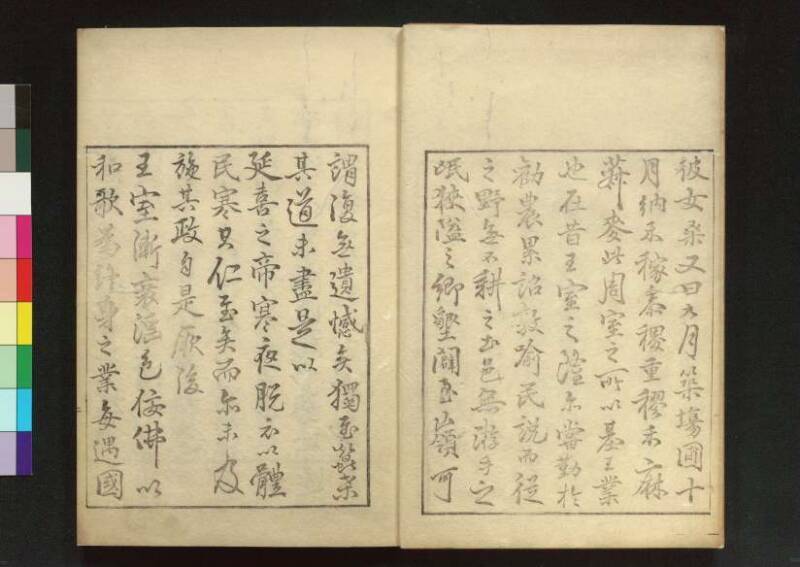
翻刻
【右丁】
彼女桑又曰九月築場圃十
月納禾稼黍稷重穋禾麻
菽麦此周室之所以基王業
也在昔王室之隆亦嘗勤於
勧農累詔敦喩民説而従
之野無不耕之土邑無游手之
氓狭隘之郷墾闢至嶺可
【左丁】
謂復無遺憾矣独至蚕桑
其道未尽是以
延喜之帝寒夜脱衣以体
民寒其仁至矣而亦未及
施其政自是厥後
王空漸衰淫色佞仏以
和歌為終身之業毎遇国
現代語訳
【右丁】
女に桑を採らせる。また「九月には脱穀場や菜園を築き、十月には
稲や雑穀を収納する。黍、稷、重穋、禾、麻、
菽、麦」という。これが周王室の王業の基盤となったのである。
昔、王室が隆盛だった時代にも、農業の奨励に
勤めて繰り返し詔勅を出し、民に懇切に教え諭したので、民は喜んで従い、
野には耕されない土地がなく、町には遊んでいる者もなく、
狭い郷でも開墾が山の頂上にまで及び、
【左丁】
もはや何の悔いも残すことがないと言えるほどであった。しかし蚕桑に関してだけは
その道が十分ではなかった。そのため
延喜帝は寒夜に衣を脱いで
民の寒さを身をもって体験された。その仁愛の深さは至高であったが、それでも
その政策を実施するには至らなかった。それ以後
皇室は次第に衰え、色欲に溺れ仏教に媚び、
和歌を生涯の事業として、国家に
英語訳
[Right Page]
having women pick mulberry leaves. It also states: "In September, construct threshing floors and gardens; in October, store the grain harvest—
millet, sorghum, late millet, rice, hemp,
beans, and wheat." This was the foundation of the Zhou royal dynasty's imperial enterprise.
In ancient times, when the royal house was flourishing, they also devoted themselves to
encouraging agriculture, repeatedly issuing edicts and earnestly instructing the people, so that the people gladly followed;
there was no uncultivated land in the fields, no idle hands in the towns,
and even in narrow villages, cultivation extended to the mountaintops,
[Left Page]
leaving truly nothing to regret. However, regarding sericulture alone,
the way was not yet complete. Therefore,
Emperor Engi, on cold nights, removed his clothes to personally
experience the people's cold. His benevolence was supreme, yet even he did not
manage to implement such policies. From that time onward,
the imperial house gradually declined, indulging in sensual pleasures and flattering Buddhism,
making waka poetry their life's work, and whenever the country