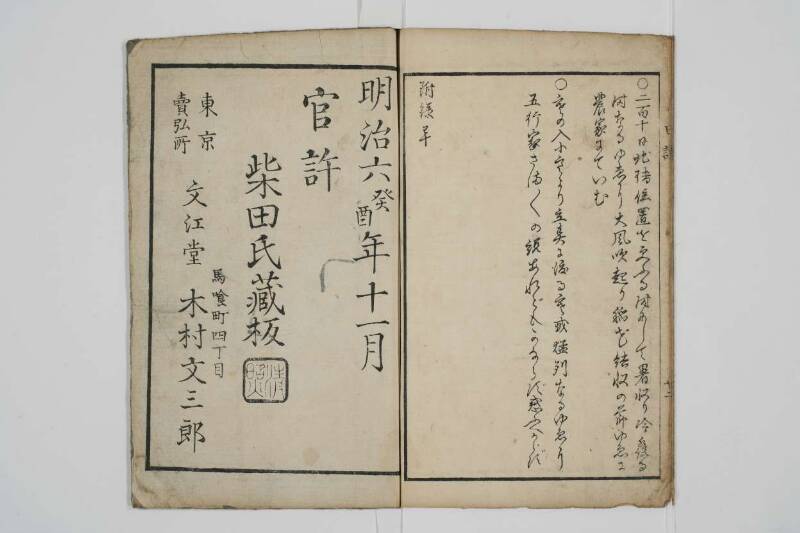
翻刻
【右丁】
○二百十日地■【蛇猪ヵ】位置を更【交ヵ】ふる時にして暑収り冷発る
時なるゆゑに大風吹起り稲花結収の節ゆゑに
農家にていむ
○寒の入に【小ヵ】寒より立春に渡【後ヵ】る寒或猛列なるゆゑに
五行家さま〳〵の説あれどもかならず惑ふへからず
付録畢
【左丁】
明治六《割書:癸| 酉》年十一月
官許
柴田氏蔵板【印】清照
《割書: |馬喰町四丁目》
《割書:東京|売弘所》 文江堂 木村文三郎
現代語訳
【右丁】
○二百十日は地の位置が変わる時であり、暑さが収まり冷気が発する時であるため、大風が吹き起こり、稲の開花結実の時期であるため、農家では忌み嫌う。
○寒の入りは小寒から立春にわたる寒気が、時として猛烈であるため、陰陽家がさまざまな説を唱えているが、必ず惑わされてはならない。
付録終わり
【左丁】
明治六年(癸酉)十一月
官許
柴田氏蔵板【印】清照
馬喰町四丁目
東京売弘所 文江堂 木村文三郎
英語訳
【Right Page】
○The 210th day is when the earth's position changes, and as the heat subsides and cold emerges, great winds arise. Since this is the time when rice flowers and forms grain, farmers consider it inauspicious.
○The onset of cold (kan no iri) extends from minor cold (shokan) to the beginning of spring (risshun). As the cold can sometimes be severe, yin-yang practitioners offer various theories, but one must not be misled by them.
End of Appendix
【Left Page】
Meiji 6 (Year of the Metal Rooster) November
Official Permission
Shibata Family Publishing House【Seal】Kiyoteru
Bakurocho 4th District
Tokyo Sales Office Bunko-do Kimura Bunsaburo