翻刻
【右丁】
賜(たま)ふ御仁(ごじん)恵実(けいじつ)に百世(ひやくせい)に冠(くわん)たりといふべし
氷川明神社(ひかはみやうじん ) 同所 西北(にしきた)の方(かた)五町ばかりにあり相伝(あひつた)ふ 孝照天皇(かうせうてんわう)の
御宇(きよう)の鎮座(ぢんざ)なりと云々 祭神(まつるかみ)武州(ぶしう)大宮(おほみや)の氷川明神(ひかはみやうじん)に同(おな)し昔(むかし)は
白山御殿跡(はくさんごてんあと)の地(ち)にありしか白山権現(はくさんごんげん)と共(とも)に地(ち)を替(かへ)させられし
より当社(たうしや)は此地(このち)に遷(うつ)る極楽水(ごくらくみづ)宗慶寺(そうけいじ)の持(もち)にして祭祀(さいし)は九月
十日なり
武蔵国風土記曰 足立郡巣鴨郷氷川神社観松彦香殖稲
天皇御宇三年戊辰所祭素盞嗚尊大巳貴命奇稲田比咩
合三座也云云
《割書:按(あんずる)に此(この)巣鴨(すかも)の地(ち)昔(むかし)は足立郡(あたちのこほり)に属(ぞく)せしに似(に)たり今(いま)は豊島郡(としまのこほり)の内(うち)に入たり》
当社(たうしや)は千有余年(せんいうよねん)を経(ふ)る所の宮社(きうしや)にして八幡太郎義家公(はちまんたらうよしいへこう)奥(あう)
州(しう)下向(げこう)の時(とき)当社(たうしや)に参籠(さんらう)ありしと云伝(いひつた)ふ中古(ちゆうこ)荒廃(くわうはい)して形(かた)
ばかり残(のこ)りしを伝通院(でんつうゐん)の開山(かいさん)了誉上人(れうよ )此地(このち)の幽邃(いうすゐ)を愛(あい)し
庵(いほ)を結(むす)んで聖冏庵(しやうけいあん)と号(なづ)け此地(このち)に閑居(かんきよ)ありし頃(ころ)宮居(みやゐ)を重修(ちゆうしゆ)
【左丁 一字一行書は縦書きに改めた】
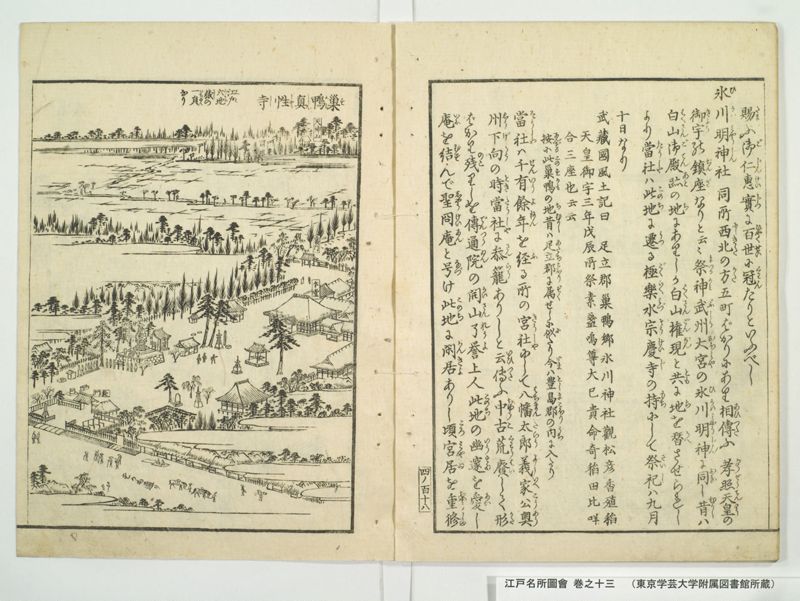
巣鴨(すかも)真性寺(しんしやうし)
江戸(えと)
六地(ろくち)
蔵(さう)の
一員(いちゐん)
なり
天神山 裏門 本堂
六地蔵 すかも通り
表門
現代語訳
【右丁】
〔療病院・続き〕
…賜るご仁恵は、まことに百世にも冠たるものと言うべきである。
---
**氷川明神社(ひかわみょうじんしゃ)** 同所の西北の方、五町ほどのところにある。伝えによれば、孝昭天皇の御代に鎮座されたと云々。祭神は武蔵国大宮の氷川明神と同じである。昔は白山御殿跡の地にあったが、白山権現とともに地を移されてより、当社はこの地に遷座した。「極楽水」は宗慶寺の持ちであり、祭祀は九月十日である。
『武蔵国風土記』に曰く――
足立郡巣鴨郷氷川神社、観松彦香殖稲天皇(孝昭天皇)の御代三年戊辰に祀る所は、素盞嗚尊・大巳貴命・奇稲田比咩、合わせて三座なり、と云々。
《割注:按ずるに、この巣鴨の地は、昔は足立郡に属していたように見える。今は豊島郡の内に入っている。》
当社は千有余年を経る宮社にして、八幡太郎義家公が奥州へ下向の折に当社に参籠されたと伝えられている。中古に荒廃して形ばかり残っていたのを、伝通院の開山・了誉上人がこの地の深い趣を愛し、庵を結んで「聖冏庵(しょうけいあん)」と号し、この地に閑居されていた頃に、宮居を重修し〔た〕。
---
【左丁(図版解説)】
**巣鴨 真性寺**
江戸六地蔵の一員なり。
〔図の説明〕
天神山 裏門 本堂
六地蔵 すかも通り
表門
英語訳
【Right Page】
[Continuation from previous page — Infirmary (Ryōbyōin)]
…The benevolence thus bestowed may truly be said to surpass that of a hundred generations.
---
**Hikawa Myōjin Shrine (氷川明神社)** Located approximately five *chō* to the northwest of the same place. According to tradition, the shrine was established during the reign of Emperor Kōshō. The enshrined deity is the same as the Hikawa Myōjin of Ōmiya in Musashi Province. In former times, the shrine stood on the grounds of the former Hakusan Goten (Hakusan Palace), but together with Hakusan Gongen, it was relocated, and the shrine was transferred to its present site. The "Gokuraku-mizu" (Blissful Water) is under the care of Sōkeiji Temple, and the shrine festival is held on the tenth day of the ninth month.
The *Musashi no Kuni Fudoki* (Topography of Musashi Province) states:
> The Hikawa Shrine of Sugamo Village, Adachi District — in the third year of the reign of Emperor Kanzōmatsuhiko Kaeshiine [Emperor Kōshō], the year of Tsuchinoe-Tatsu, the following deities are enshrined: Susanoo no Mikoto, Ōnamuji no Mikoto, and Kushiinadahime — three deities in total, and so forth.
《Interlinear note: Upon reflection, it appears that the land of Sugamo formerly belonged to Adachi District; it now falls within Toshima District.》
This shrine is a sacred establishment that has stood for over a thousand years. It is transmitted by tradition that Hachimantarō Yoshiie, on his journey to Ōshū (the northern provinces), lodged in prayer (*sanrō*) at this shrine. In the medieval period, the shrine fell into ruin and only barely retained its form, until Ryōyo Shōnin, the founding priest of Dentsu-in Temple, charmed by the deep seclusion of this place, built a hermitage here which he named "Shōkei-an," and during his period of quiet retirement at this site, he undertook a thorough restoration of the shrine buildings [—].
---
【Left Page: Illustration with Labels】
**Sugamo — Shinshōji Temple**
This is one of the *Edo Roku Jizō* (the Six Jizō of Edo).
[Diagram labels:]
Tenjinyama (Hill of the Tenjin Shrine) Rear Gate Main Hall
Six Jizō Sugamo Road (すかも通り)
Front Gate