翻刻
【右丁】
菊理姫(くゝりひめ)泉道守者(よもつちもりひと)等(とう)三座(さんざ)なり《割書:一宮記曰(いちのみやきにいはく)下社は伊弉冊尊(いざなみのみこと)|上社は菊理媛(くゝりひめ)号 白山権現(はくさんごんげん)云々》相伝(あひつたふ)当社(たうしや)は
元和(げんわ)三年の勧請(くわんじやう)なりといへり当社(たうしや)旧(いにしへ)白山御殿(はくさんごてん)の地(ち)にありて氷川(ひかは)
明神(みやうじん)女体宮(によたいのみや)と共(とも)に並(なら)びてありしかども彼地(かしこ)に御殿(ごてん)営作(えいさく)せられ
し頃(ころ)今(いま)の地(ち)へ遷座(せんざ)なし奉(たてまつ)ると也《割書:神社略記云(しんしやりやくきにいふ)此神(このかみ)旧(いにしへ)白山御殿(はくさんごてん)の地(ち)に鎮座(ちんざ)ありて|其(その)原始(はじめ)尤(もつとも)久(ひさ)し神木(しんぼく)に舩繋松(ふるつなぎまつ)とて無比(むひ)の大樹(たいじゆ)あり》
《割書:しと云々 氷川社(ひかはのやしろ)は今(いま)御薬園(おやくゑむ)の西(にし)にあり其(その)条下(でうか)に|詳(つまびらか)なり女体宮(によたいのみや)も今(いま)伝通院(でんつうゐん)の内(うち)にある所(ところ)の弁才天(へんさいてん)是(これ)也》祭礼(さいれい)は九月二十一日なり釣樟(くろもじ)の
歯木(やうじ)と紙(かみ)にて製(せい)する所の弓箭(ゆみや)を以(もつ)て此地(このち)の土産(とさん)とせり
御薬園( やくえん) 同所の西南(にしみなみ)にあり所謂(いはゆる)白山御殿(はくさんごてん)の旧地(きうち)是(これ)なり古(いにしへ)は
此地(このち)に白山(はくさん)氷川(ひかは)女体(によたい)等(とう)の三神(さんしん)の宮居(みやゐ)ありしとなり《割書:白山権現(はくさんごんげん)の|神木(しんぼく)《振り仮名:舩つな|ふね 》》
《割書:《振り仮名:ぎの松| まつ》も此地(このち)に|存(そん)せりと云》此辺(このあたり)を初音里(はつねりさと)と字(あざな)す里諺(りげん)に江戸(えと)の時鳥(ほとゝぎす)は此地(このところ)
より発声(はつせい)す故(ゆゑ)にしか名(な)つくと云
療病院(れうびやうゐん) 同所の西(にし)に並(なら)ぶ養生所(やうじやうしよ)と号(なづ)けらる則(すなはち)古(いにしへ)の療病院(れうびやうゐん)に
比(ひ)せられ鰥寡(くわんくわ)孤独(こどく)貧窮(ひんきう)無頼(むらい)の病人(びやうにん)を救(すく)はせ給はむがため
享保年間(きやうほねんかん) 官府(くわんふ)より是(これ)を建(たて)させられ寄宿(きしゆく)を許(ゆる)し薬餌(やくじ)を
【左丁 絵図】
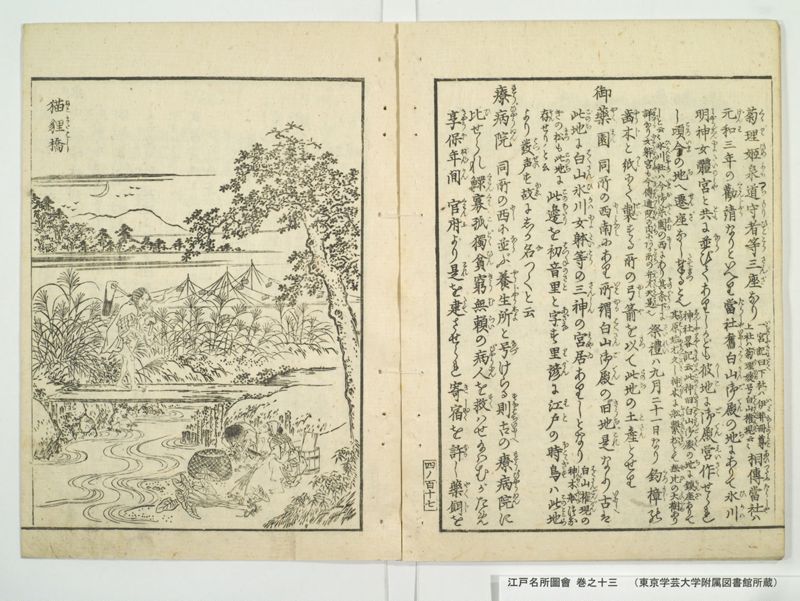
猫狸橋(ねこまたはし)
現代語訳
【右丁】
〔白山権現について〕
菊理姫(くくりひめ)・泉道守者(よもつちもりひと)ら三座である。《割注:『一宮記』に曰く、下社は伊弉冊尊(いざなみのみこと)、上社は菊理媛(くくりひめ)、白山権現と号すと云々。》伝えによれば、当社は元和三年(1617)の勧請であるという。当社はもと白山御殿の地にあって、氷川明神・女体宮とともに並んで祀られていたが、彼の地に御殿が造営されるにあたり、今の地へご遷座になったとのことである。《割注:『神社略記』に云う、この神はもと白山御殿の地に鎮座されており、その起源は非常に古い。神木として「舩繋松(ふなつなぎのまつ)」と呼ばれる無比の大樹があったと云々。氷川社は今の御薬園の西にあり、その条(項目)の下に詳しい。女体宮も、今の伝通院の内にある弁才天がすなわちこれである。》祭礼は九月二十一日である。クロモジの楊枝と、紙で作った弓矢をもってこの地の土産とする。
---
御薬園(おやくえん) 同所の西南にある。いわゆる白山御殿の旧地がこれである。古くはこの地に白山・氷川・女体の三神の宮居があったとのことである。《割注:白山権現の神木である「舩つなぎの松」もこの地にあったと云う。》この辺りを「初音里(はつねのさと)」という地名で呼ぶ。里のことわざに、「江戸のほととぎすはこの地から最初に鳴き声を発する、それゆえそのように名付けた」とある。
---
療病院(りょうびょういん) 同所の西に並ぶ。「養生所(やじょうしょ)」と称される。すなわち古代の療病院に比せられるもので、鰥寡(配偶者を失った者)・孤独(身寄りのない者)・貧窮・無頼の病人を救済するため、享保年間(1716〜1736)に幕府よりこれを建てさせ、寄宿を許し、薬と食事を〔与えた〕。
---
【左丁 絵図】
猫狸橋(ねこまたばし)
英語訳
【Right Page】
[On Hakusan Gongen Shrine]
[The enshrined deities are] Kukurihime, Yomotsu Chimori-hito (the guardian of the underworld path), and others — three deities in total. 《Interlinear note: According to the *Ichinomiya-ki*, the lower shrine enshrines Izanami no Mikoto, while the upper shrine enshrines Kukurihime, known as Hakusan Gongen, and so forth.》 According to tradition, this shrine was established by *kanjō* (the ceremonial transfer of a deity's spirit) in the third year of Genna (1617). The shrine originally stood on the grounds of Hakusan Goten (the Hakusan Palace), where it was enshrined alongside Hikawa Myōjin and Nyotai-no-Miya; however, when the palace was constructed on that site, the deity was transferred (*senza*) to its present location. 《Interlinear note: The *Jinja Ryakki* states that this deity was originally enshrined on the grounds of Hakusan Goten, and its origins are exceedingly ancient. Among the sacred trees there was said to be a peerless great tree called the "Funa-tsunagi no Matsu" (the Ship-Mooring Pine). The Hikawa Shrine is now located to the west of the Medicinal Herb Garden, as detailed in that entry. Nyotai-no-Miya is identified with the Benzaiten now found within the precincts of Dentsu-in Temple.》 The shrine festival is held on the twenty-first day of the ninth month. Toothpicks made of *kuromoji* (spicebush) wood, and toy bows and arrows fashioned from paper, serve as the local specialties of this place.
---
**Medicinal Herb Garden (御薬園, Oyakuen)** — Located to the southwest of the same place. This is the former site of Hakusan Goten. In ancient times, the shrines of three deities — Hakusan, Hikawa, and Nyotai — were located on these grounds. 《Interlinear note: It is said that the sacred "Ship-Mooring Pine" of Hakusan Gongen also stood on this site.》 This area is known by the place-name "Hatsune no Sato" (村 of the First Song). Local lore holds that the first cuckoo (*hototogisu*) of Edo calls from this very spot — hence the name.
---
**Infirmary (療病院, Ryōbyōin)** — Located to the west of the same place, adjoining it. It is called the "Yōjōsho" (Recuperation Facility). Comparable to the infirmaries of antiquity, it was established by the Shogunate during the Kyōhō era (1716–1736) for the purpose of providing relief to the sick who were widowed, alone in the world, destitute, or without means of support. Residents were permitted to lodge there, and medicine and [food were provided to them —]
---
【Left Page: Illustrated Map】
Nekomata Bridge (猫狸橋, Nekomatahashi)