翻刻
【右丁】
するものあり古色(こしき)にして文字(もんじ)見えかたし
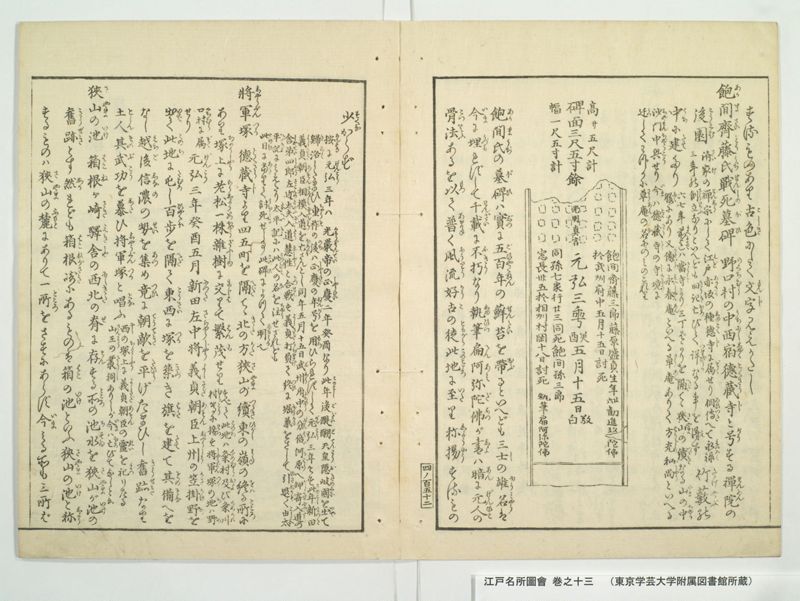
飽間齊藤氏戦死墓碑(あかまさいとううじせんしのほひ) 野口村(のくちむら)の中(うち)西宿(にししゆく)徳蔵寺(とくさうじ)と号(がう)する禅院(せんゐん)の
後園(こうえむ)《割書:済家(さいけ)の禅宗(せんしう)にして江戸(えど)赤坂(あかさか)の種徳寺(しゆとくじ)に属(ぞく)せり相伝(あひつた)へて永禄(えいろく)|三年の創立(さうりふ)なりといへども旧記(きうき)亡(ほろ)びて詳(つまびらか)なる事を得(え)ず》竹藪(たけやぶ)の
中(うち)に建(たて)たり《割書:六七年 前迄(まへまで)は当寺(たうじ)より三丁ばかりを隔(へだ)てゝ狭山(さやま)の続(つゞき)なる山(やま)の中(ちゆう)|腹(ふく)にあり又 傍(かたはら)に永春庵(えいしゆんあん)といへる草庵(さうあん)ありて方充和尚(はうじうおしやう)といへる》
《割書:沙門(しやもん)中興(ちゆうこう)せり今(いま)は徳蔵寺(とくさうじ)の寺境(じきやう)に|迁(うつ)してわづかに草庵(さうあん)の名(な)にのみのこれり》
高さ五尺計
碑面三尺五寸余
幅一尺五寸計
【墓碑図の碑文】
《割書:飽間齊藤三郎藤原盛貞生年《割書:廿|六》勧進玖□#1陀仏|於武州府中五月十五日討死》
光明真言 元弘三■#2《割書:癸#3|酉》五月十五日《割書:敬|白》
《割書:同孫七家行廿三同死飽間孫三郎|窓長卅五於相州村岡十八日討死 執#4筆扁阿弥陀仏》
飽間氏(あくまうぢ)の墓碑(ぼひ)は実(じつ)に五百年(ごひやくねん)の蘚苔(せんたい)を帯(おぶ)るといへども三士( し)の雄名(ゆうみやう)は
今(いま)も埋(うづも)れずして千載(せんざい)に不朽(ふきう)なり執筆(しゆひつ)扁阿弥陀仏(へんあみだぶつ)が書(しよ)は暗(あん)に元人(げんひと)の
骨法(こつはふ)あるを以(もつ)て普(あまね)く風流(ふうりう)好古(かうこ)の徒(ともがら)此地(このところ)に至(いた)り称揚(しようやう)するもの
【左丁】
少(すくな)からず
《割書:按(あんする)に元弘(げんこう)三年は 光厳帝(くわうげんてい)の正慶(しやうけい)二年癸酉なり此年(このとし)後醍醐天皇(ごだいごてんわう)隠岐国(おきのくに)を出(いで)て|帰洛(きらく)したまひ重祚(ちやうそ)の後(のち)は正慶(しやうけい)の年号(ねんがう)を用(もち)ひられずして元弘(げんこう)三年とす此年(このとし)新田(につた) 》
《割書:義貞朝臣(よしさだあそん)相模入道(さがみにふだう)を亡(ほろぼ)さんとし同年五月十五日 武州(ぶしう)府中(ふちゆう)の分倍河原(ぶんはいかはら)へ押寄(おしよせ)入道(にふだう)の|舎弟(しやてい)四郎左近太夫入道慧性(しらうさこんのたいふにふたうゑしやう)と合戦(かつせん)す義貞(よしさだ)打負(うちまけ)て終(つひ)に堀兼(ほりかね)をさして引退(ひきしりぞ)く由(よし)太(たい)》
《割書:平記(へいき)にみえたり太平記(たいへいき)には此人(このひと)の名(な)を注(ちゆう)せざれども|此日(このひ)に当(あた)りて討死(うちしに)せし事 此碑(このひ)によつて明(あきらか)也》
将軍塚(しやうぐんつか) 徳蔵寺(とくさうじ)より四五町を隔(へだ)てゝ北(きた)の方(かた)狭山(さやま)の続(つゝき)東(ひがし)の嶺(みね)の終(をは)る所(ところ)に
あり塚上(ちようしやう)に老松(らうしよう)一株(いつちゆう)雑樹(ざふしゆ)に交(まじは)りて繁茂(はんも)せり《割書:すべて此地(このち)は粂村(くめむら)及(およ)び粂川(くめかは)|村(むら)等(とう)に接(せつ)す将軍塚(しやうぐんつか)の地(ち)は野(の) 》
《割書:口村(くちむら)に属(ぞく)|せり》元弘(げんこう)三年癸酉五月 新田左中将義貞朝臣(につたさちゆうじやうよしさだあそん)上州(じやうしう)の笠掛野(かさかけの)を
出(いで)て此地(このち)に屯(たむろ)し百歩(ひやくほ)を隔(へだ)て東西(とうさい)に塚(つか)を築(きつ)き旗(はた)を建(たて)て其(その)備(そな)へを
なし越後(えちご)信濃(しなの)の勢(せい)を集(あつ)め竟(つひ)に朝敵(てうてき)を平(たひら)げたまひし旧跡(きうせき)なり
土人(としん)其(その)武功(ぶこう)を慕(した)ひ将軍塚(しやうぐんつか)と唱(とな)ふ《割書:西(にし)の塚上(ちようしやう)に義貞朝臣(よしさだあそん)の霊(れい)を祀(まつ)りたる|山王(さんわう)の叢祠(さうし)ありしが今(いま)は亡(ほろ)びてなしと云》
《振り仮名:狭山の池|さやま いけ》 《振り仮名:箱根が崎駅舎|はこね さきえきしや》の西北(にしきた)の脊(せ)に存(そん)する所(ところ)の池水(ちすゐ)を《振り仮名:狭山が池|さやま いけ》の
旧跡(きうせき)とす然(しか)れども箱根崎(はこねがさき)にあるものは《振り仮名:箱の池|はこ いけ》といふ《振り仮名:狭山の池|さやま いけ》と称(しよう)
するものは狭山(さやま)の麓(ふもと)にありて一所( ところ)をさすにあらず今(いま)みる所も三所ば
現代語訳
## 【右丁】
(前頁より続き)するものがある。古色蒼然として文字が読みにくい。
### 飽間斎藤氏戦死墓碑
野口村(のぐちむら)の中、西宿(にししゅく)の徳蔵寺(とくぞうじ)と号する禅院の後園(こうえん)
《割注:済家(臨済宗)の禅宗にして、江戸赤坂の種徳寺に属する。相伝えて永禄三年の創立なりといえども、旧記が失われて詳しい事は分からない。》の竹藪の中に建てられている。
《割注:六、七年前までは当寺より三丁ばかりを隔てて、狭山の続きなる山の中腹にあった。また傍らに永春庵(えいしゅんあん)という草庵があって、方充和尚(ほうじゅうおしょう)という沙門が中興した。今は徳蔵寺の寺境に移してわずかに草庵の名にのみ残れり。》
- 高さ 五尺ばかり
- 碑面 三尺五寸余
- 幅 一尺五寸ばかり
【墓碑の碑文】
《割注:飽間斎藤三郎藤原盛貞、生年二十六、勧進玖□陀仏、武州府中において五月十五日討死。》
光明真言 元弘三年(癸酉)五月十五日 敬白
《割注:同(じく)孫七家行(そんしちいえゆき)、二十三歳、同じく討死。飽間孫三郎(あくまそんさぶろう)、寛長(かんちょう)三十五歳、相州村岡(そうしゅうむらおか)において十八日討死。 執筆 扁阿弥陀仏(へんあみだぶつ)。》
飽間氏の墓碑は、実に五百年の苔(こけ)をまとっているとはいえ、三士の雄名(ゆうめい)は今も埋もれることなく千載(せんざい)に不朽である。執筆の扁阿弥陀仏の書は、暗(ひそか)に元人(もとびと、元代の人)の骨法(こっぽう、書の筆法)あるをもって、広く風流・好古の人々がこの地に至りて称揚するもの
## 【左丁】
少なからず。
《按ずるに、元弘三年は光厳帝(こうごんてい)の正慶(しょうけい)二年癸酉(きゆう)にあたる。この年、後醍醐天皇が隠岐国を出て帰洛され、重祚(ちょうそ)の後は正慶の年号を用いられずして元弘三年とされた。この年、新田義貞朝臣が相模入道(執権北条高時)を亡ぼさんとし、同年五月十五日、武州府中の分倍河原(ぶんばいがわら)へ押し寄せ、入道の舎弟(していしょうてい)四郎左近太夫入道慧性(しろうさこんのたいふにゅうどうえしょう)と合戦した。義貞は打ち負けて、ついに堀兼(ほりがね)をさして引き退く由、太平記に見えたり。太平記にはこの人の名を注せざれども、この日に当たりて討死せし事、この碑によって明らかなり。》
### 将軍塚(しょうぐんづか)
徳蔵寺より四、五町を隔てて北の方、狭山の続き、東の嶺の尽きるところにある。塚の上に老松一株が雑樹に交じりて繁茂している。《割注:すべてこの地は粂村(くめむら)および粂川村(くめかわむら)等に接する。将軍塚の地は野口村に属せり。》
元弘三年癸酉五月、新田左中将義貞朝臣が上州(上野国)の笠掛野(かさかけの)を出てこの地に屯(たむろ)し、百歩を隔てて東西に塚を築き旗を建てて備えをなし、越後・信濃の勢力を集め、ついに朝敵を平らげられた旧跡である。土地の人々がその武功を慕い、将軍塚と称する。《割注:西の塚の上に義貞朝臣の霊を祀りたる山王の叢祠(そうし)ありしが、今は失われてなしと云う。》
### 狭山の池(さやまのいけ)
箱根ヶ崎(はこねがさき)の駅舎の西北の背(せ、山の背)に存するところの池水を、狭山が池の旧跡とする。しかしながら箱根崎にあるものは「箱の池」という。「狭山の池」と称するものは狭山の麓にあって一ヶ所を指すのではなく、今みるところも三所ば(かり…)
英語訳
## [Right Page]
(Continued from the previous page) …[a memorial tablet of Hōjō Ujiteru] exists here. It is ancient in appearance and the characters are difficult to read.
### Gravestone Monument of the Fallen Warriors of the Akuma Saitō Clan
In Noguchi Village (野口村), within the area known as Nishi-juku (西宿), stands a Zen temple called Tokuzōji (徳蔵寺), in the rear garden of which
*Marginal note: It belongs to the Rinzai sect, affiliated with Shutokuji (種徳寺) in Akasaka, Edo. By tradition it was founded in the third year of Eiroku (永禄, 1560), but since the old records have been lost, the details cannot be confirmed.*
this monument has been erected in a bamboo grove.
*Marginal note: Until six or seven years ago, the monument stood approximately three chō away from this temple, on the hillside of the mountains that extend from Sayama. Beside it there was also a small hermitage called Eishun-an (永春庵), which a monk called Hōjū Oshō (方充和尚) restored. Now it has been moved into the temple grounds of Tokuzōji, and only the name of the hermitage remains.*
- Height: approximately 5 *shaku*
- Face of the stele: more than 3 *shaku* 5 *sun*
- Width: approximately 1 *shaku* 5 *sun*
**[Inscription on the monument:]**
*Marginal note: Akuma Saitō Saburō, Fujiwara no Morisada, aged 26; invocation to [Ku-]□-da-butsu; fell in battle on the fifteenth day of the fifth month at Fuchū in Musashi Province.*
Kōmyō Shingon — Fifteenth day of the fifth month, third year of Genkō (元弘, 1333), cyclical year Mizunoto-Tori (癸酉) — Respectfully submitted.
*Marginal note: Likewise, Grandson Shichi Ieyuki (孫七家行), aged 23, died in the same battle. Akuma Sonzaburō (飽間孫三郎), aged 35, fell in battle on the eighteenth day at Muraoka in Sagami Province. Written by Hen Amida Butsu (扁阿弥陀仏).*
Although the gravestone monument of the Akuma clan is in truth covered with five hundred years of moss and lichen, the heroic names of these three warriors remain unburied even now, undying through a thousand ages. The calligraphy of the inscription-writer, Hen Amida Butsu, secretly contains the bone-method (骨法, structural technique) of Yuan-dynasty calligraphers, and no small number of people of refined taste and antiquarian inclination who come to this place offer it their praise and admiration.
## [Left Page]
*Note: Upon examination, the third year of Genkō (元弘) corresponds to the second year of Shōkyō (正慶), the cyclical year Mizunoto-Tori (癸酉), under Emperor Kōgon (光厳帝). In that year, Emperor Go-Daigo departed from Oki Province and returned to the capital; after his restoration to the throne, the Shōkyō reign-name was no longer used, and the year was reckoned as Genkō 3. In that same year, Nitta Yoshisada (新田義貞) sought to destroy the lay monk of Sagami (i.e., Hōjō Takatoki), and on the fifteenth day of the fifth month of the same year, he advanced on Bunbai-kawara (分倍河原) in Fuchū, Musashi Province, and engaged in battle with the lay monk's younger brother, the Fourth Son, Sakon-no-tayū lay monk Eshō (四郎左近太夫入道慧性). Yoshisada was defeated and ultimately withdrew in the direction of Horigane (堀兼), as recorded in the Taiheiki. Although the Taiheiki does not record the names of the individuals mentioned on this stone, the fact that they fell in battle on this very day is made clear by this monument.*
### Shōgun-zuka (将軍塚, General's Mound)
Four or five *chō* to the north of Tokuzōji, at the end of the eastern ridge that extends from the Sayama hills, stands this mound. On top of it, a venerable old pine grows intermingled with other trees in luxuriant abundance. *Marginal note: All of this area borders on Kume Village (粂村) and Kumegawa Village (粂川村). The land of Shōgun-zuka belongs to Noguchi Village.*
In the fifth month of the third year of Genkō (1333), the cyclical year Mizunoto-Tori, Nitta no Sakyūshō (Left Middle Captain) Yoshisada set out from Kasakakeno (笠掛野) in Kōzuke Province (Upper Musashi), encamped here, constructed mounds to the east and west at a distance of one hundred paces, raised his banners, deployed his forces, assembled troops from Echigo and Shinano, and finally subjugated those enemies of the court. This is the historic site [of that encampment]. The local people, in admiration of his martial deeds, call it Shōgun-zuka (the General's Mound). *Marginal note: On the western mound there had formerly been a small cluster-shrine (叢祠) of Sannō (山王) enshrining the spirit of Lord Yoshisada, but it is said to have since disappeared and no longer exists.*
### Sayama Pond (狭山の池)
The pond water that exists to the northwest, beyond the ridge behind the post-station of Hakone-ga-saki (箱根ヶ崎), is identified as the historic site of Sayama Pond (狭山が池). However, the body of water at Hakonezaki is called "Hako no Ike" (箱の池, "Box Pond"). What is called "Sayama no Ike" is at the foot of the Sayama hills, and does not refer to a single location; even among the places visible now, there are some three sites…