翻刻
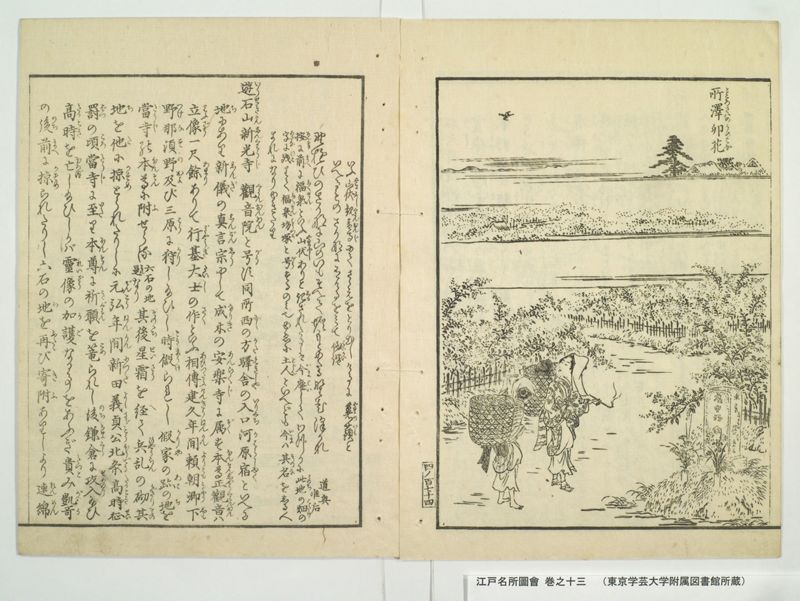
【右丁 絵図】
所沢(ところさはの)卯花(うのはな)
【左丁】
いふ山伏(やまふし)観音寺(くわんおんじ)にてさゝえをとり出しけるに薯蕷(やまのいも)と
いへるものさりなに有けるをみて俳諧(はいかい)
野遊ひのさかなに山のいもそへて堀もとめたる野老沢かな 《割書:道興| 准后》
《割書:按(あんする)に前(まへ)に福泉(ふくせん)といふ山伏(やまふし)ありと記(しる)されたるは今(いま)廃(はい)してわづかに此地(このち)の畑(はたけ)の|字(あざな)に残(のこ)りて福泉坊塚(ふくせんばうつか)と号(がう)するのみ也ゆゑに土人(とじん)といへども今(いま)は其名(そのな)をしる人|まれになりゆきたり》
遊石山(いうせきさん)新光寺(しんくわうじ) 観音院(くわんおんゐん)と号(がう)す同所 西(にし)の方(かた)駅舎(えきしや)の入口(いりくち)河原宿(かはらしゆく)といへる
地(ち)にあり新儀(しんぎ)の真言宗(しんごんしう)にして成木(なりき)の安楽寺(あんらくじ)に属(ぞく)す本尊(ほんそん)正観音(しやうくわんおん)は
立像(りふざう)一尺余( あまり)ありて行基大士(ぎやうぎたいし)の作(さく)といふ相伝(あひつたふ)建久年間(れんきうねんかん)頼朝卿(よりともきやう)下(しも)
野(つけ)那須野(なすの)及(およ)び三原( はら)に狩(かり)し給ひし時(とき)儲(まうけ)#3られし假家(かりや)の跡(あと)の地(ち)を
当寺(たうじ)の本尊(ほんそん)に附(ふ)せらる《割書:六石の地|是(これ)なり》其後(そのゝち)星霜(せいさう)を経(へ)て兵乱(ひやうらん)の砌(みぎり)其(その)
地(ち)を他(た)に掠(かすめ)とられたりしに元弘年間(げんこうねんかん)新田義貞公(につたよしさだこう)北条高時(ほうでうたかとき)征(せい)
罰(ばつ)の頃(ころ)当寺(たうじ)に至(いた)り本尊(ほんそん)に祈願(きぐわん)を篭(こめ)られし後(のち)鎌倉(かまくら)に攻入(せめいり)給ひ
高時(たかとき)を亡(ほろぼ)し給ひしが霊像(れいざう)の加護(かご)なる事をあふぎ貴(たつと)み凱哥(がいか)
の後(のち)前(まへ)に掠(かすめ)られたりし六石の地(ち)を再(ふたゝ)び寄附(きふ)ありしより連綿(れんめん)
現代語訳
【右丁 絵図】
所沢(ところざわ)の卯の花(うのはな)
【左丁】
という山伏が観音寺にて笹を取り出したところ、薯蕷(やまのいも)と
いうものが思いがけずあったのを見て、俳諧に詠んだ。
野遊びのさかなに山のいもそえて 掘り求めたる野老沢かな 〔道興准后〕
〔按ずるに、前に「福泉という山伏あり」と記されているのは、今では廃れて、わずかにこの地の畑の字(あざ)に残り、「福泉坊塚(ふくせんぼうづか)」と呼ばれるのみである。ゆえに土地の人といえども、今はその名を知る人はまれになりゆきたり。〕
遊石山(ゆうせきさん)新光寺(しんこうじ) 観音院(かんのんいん)と号する。同所の西の方、駅舎(宿場)の入口、河原宿(かわらじゅく)という地にある。新儀の真言宗にして、成木(なりき)の安楽寺に属す。本尊の正観音は立像で一尺余りあり、行基大士の作と伝える。伝えるところによれば、建久年間に頼朝卿が下野の那須野および三原に狩りをなさった時に設けられた仮屋(かりや)の跡の地を、当寺の本尊に附せられた。〔六石の地がこれである。〕その後、年月を経て、兵乱の折にその地を他者に奪い取られてしまったが、元弘年間に新田義貞公が北条高時を征伐する頃、当寺に至り本尊に祈願を込められた後、鎌倉に攻め入り、高時を滅ぼされた。霊像のご加護によるものと仰ぎ尊び、凱旋の後、先に奪われていた六石の地を再び寄附されたことより、以来連綿と〔続いている。〕
英語訳
**[Right Folio — Illustration]**
The *Unohana* (Deutzia Blossoms) of Tokorozawa
**[Left Folio]**
…a mountain ascetic (*yamabushi*) named Fukusen, who at Kannon-ji temple produced a bamboo grass cutting, whereupon he noticed that something called *yamaimo* (mountain yam) was unexpectedly present there, and composed a *haikai* verse:
*Noyasobi no / sakana ni yama no / imo soete / hori motometaru / tokorozawa kana*
(Seeking to dig up mountain yam to accompany our field-feast — ah, Tokorozawa!)
— Dōkō Jugo
[Note: As for the mountain ascetic named Fukusen mentioned above, the site has now fallen into ruin, surviving only barely in the name of a field-plot in this area, known as "Fukusenbō-zuka." Consequently, even among the local inhabitants, those who know the name have become rare.]
**Yūseki-zan Shinkō-ji Temple** — also known as *Kannonin*. Located in the same district, to the west, at the entrance to the post-station, in a place called Kawara-juku. It belongs to the Shingi (New Rite) branch of Shingon Buddhism, and is affiliated with Anraku-ji Temple at Nariki. The principal image is a standing figure of *Shō Kannon* (the Correct-Form Avalokiteśvara), measuring over one *shaku* in height, said to be the work of the Great Bodhisattva Gyōki. According to tradition, during the Kenkyū era, when Lord Yoritomo went hunting at Nasuno in Shimotsuke Province and also at Mihara, the land on which a temporary lodging (*kariya*) had been built for the occasion was subsequently donated to be attached to the principal image of this temple. [This was the land equivalent to six *koku* in yield.] As the years went by, however, during a period of military strife the land was seized by others. Then, in the Genkō era, when Lord Nitta Yoshisada launched his punitive campaign against Hōjō Takatoki, he came to this temple and offered prayers before the principal image. He then launched his assault on Kamakura and destroyed Takatoki. Revering this as the divine protection of the sacred image, after his triumphant return he once again donated the six-*koku* plot of land that had previously been seized, and from that time onward, the temple continued without interruption…