翻刻
【右丁 絵図】
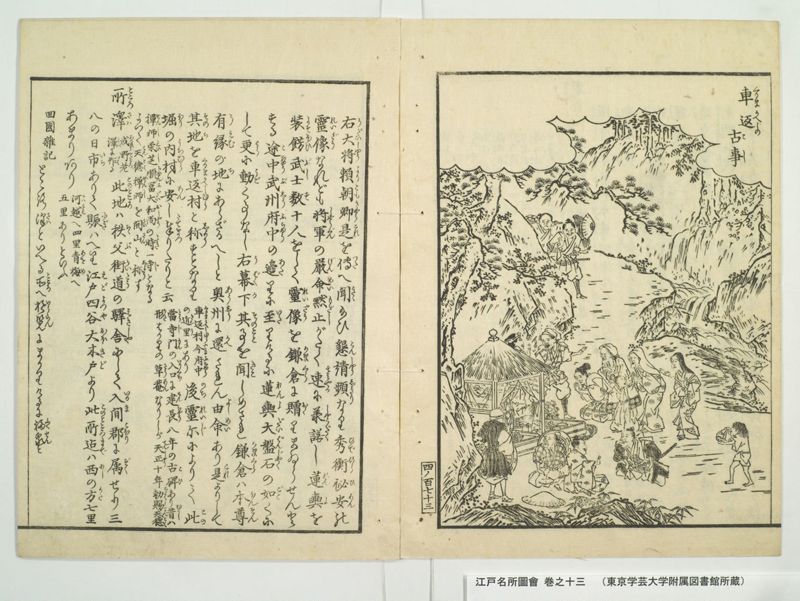
車返(くるまかへしの)
古事(こし)
【左丁】
右大将(うだいしやう)頼朝卿(よりともきやう)是(これ)を伝(つた)へ聞(きゝ)給ひ懇請(こんしやう)頻(しきり)なり秀衡(ひでひら)秘安(ひあん)の
霊像(れいざう)なれども将軍(しやうぐん)の厳命(げんめい)黙止(もだし)がたく速(すみやか)に承諾(しやうだく)し蓮輿(れんよ)を
装餝(よそほひ)武士(ぶし)数十人(す )をして霊像(れいざう)を鎌倉(かまくら)に贈(おく)りまゐらせんと
する途中(とちゆう)武州(ぶしう)府中(ふちゆう)の辺(あた)りに至(いた)りけるに蓮輿(れんよ)大盤石(だいばんじやく)の如(ごと)くに
して更(さら)に動(うご)く事なし右幕下(うばくか)其事(そのこと)を聞(きこ)しめされ鎌倉(かまくら)は本尊(ほんそん)
有縁(うえむ)の地(ち)にあらざるへしと奥州(あうしう)に還(かへ)されん由(よし)命(めい)あり是(これ)よりして
其地(そのち)を車返村(くるまかへしむら)と称(しよう)すとなり《割書:車返村(くるまかへしむら)今(いま)府中(ふちゆう) |の近里(きんり)にあり》後(のち)霊尓(れいじ)によりて此(この)
《振り仮名:堀の内村|ほり うちむら》に安(あん)し奉(たてまつ)りたりと云《割書:当寺(たうじ)門(もん)の入口(いりくち)に建長(けんちやう)八年の古碑(こひ)あり昔(むかし)は|形(かたち)はかりの草菴(さうあん)なりしが天正(てんしやう)十年 勅賜(ちよくし)天徳(てんとく) 》
《割書:禅師(せんし)栄芝順冨大和尚(えいしじゆんふだいおしやう)の時(とき)一寺( じ)となる|よつて天徳禅師(てんとくぜんし)を開山(かいさん)と称(しよう)す》
所沢(ところさは)《割書:或(あるひは)野老(ところ)|沢(さは)に作(つく)る》此地(このところ)は秩父街道(ちゝぶかいたう)の駅舎(えきしや)にして入間郡(いるまこほり)に属(ぞく)せり三
八の日 市(いち)ありて賑(にぎ)はへり江戸(えど)四谷大木戸(よつやおほきど)より此所迄(このところまで)は西(にし)の方(かた)七里
あまりあり《割書:河越(かはこえ)へ四里 青梅(あをめ)へ|五里ありといふ》
回国雑記
ところ沢(さは)といへる所(ところ)へ遊覧(いうらん)にまかりけるに福泉(ふくせん)と
現代語訳
【右丁 絵図】
車返しの古事(くるまかえしのこじ)
【左丁】
右大将・頼朝卿はこれを伝え聞かれて、しきりに懇請された。秀衡にとっては秘蔵の霊像であったけれども、将軍の厳命を黙って断ることもできず、速やかに承諾し、蓮輿(れんよ)を整えて武士数十人に霊像を護衛させ、鎌倉へ送り届けようとした。その途中、武州府中のあたりに差し掛かったところ、蓮輿が大盤石のように動かなくなり、まったく進まなくなった。右幕下(頼朝)はそのことをお聞きになり、「鎌倉はこの本尊にとって有縁の地ではないのだろう」と仰せになり、奥州へ還すようにとのお命じがあった。これよりして、その地を「車返村(くるまかえしむら)」と称するようになったという。〔車返村は、今の府中の近くにある。〕その後、霊示によってこの堀の内村に安置申し上げたと伝える。〔当寺の門の入口に建長八年の古碑がある。昔は形ばかりの草庵であったが、天正十年、勅賜の天徳禅師・栄芝順富大和尚の時に一寺となった。よって天徳禅師を開山と称する。〕
所沢(ところざわ)〔あるいは「野老沢(ところさわ)」とも書く〕
この地は秩父街道の宿場(えきしゃ)であり、入間郡に属している。三・八の日に市が立ち、にぎわいを見せる。江戸・四谷大木戸よりこの所まで西の方へ七里あまりある。〔河越(川越)へ四里、青梅へ五里あるという。〕
『回国雑記』〔より〕
ところ沢といえる所へ遊覧に参ったところ、福泉と〔いう者に出会い……〕
英語訳
**[Right Folio — Illustration]**
The Old Tale of Kuruma-kaeshi (The "Carriage-Turning")
**[Left Folio]**
The Right General, Lord Yoritomo, heard of this and pressed his request most insistently. Although for Hidehira the image was a treasured sacred icon kept in strict seclusion, he could not silently refuse the Shogun's stern command, and so he promptly consented. He prepared a lotus palanquin (*renyо̄*) and dispatched several tens of warriors to escort the sacred image to Kamakura. However, when the procession reached the vicinity of Fuchū in Musashi Province, the lotus palanquin became as immovable as a great boulder and would not advance at all. The Right *Bakka* (Lord Yoritomo) was informed of this, and declared, "Kamakura must not be a place with karmic affinity for this principal image," and ordered that it be returned to Ōshū. From this event, that place came to be called "Kurumakaeshi Village" (the Village of the Turned-Back Carriage). [Kurumakaeshi Village is situated near present-day Fuchū.] It is said that afterward, in accordance with a divine revelation, the image was enshrined here in Horinuchi Village. [At the gate-entrance of this temple there stands an ancient stone monument dated to Kenchō 8 (1256). In former times it was no more than a modest grass-thatched hermitage, but in Tenshō 10 (1582), under the imperial-titled Zen Master Tentoku — the Venerable Eishi Junfu — it was established as a proper temple. Thus Zen Master Tentoku is revered as the founding abbot (*kaisan*).]
**Tokorozawa** [also written as *Tokorosawa* 野老沢]
This place is a post-station (*ekisha*) on the Chichibu Highway, falling within Iruma District (*kōri*). Markets are held on days with the numbers three and eight in the month, and the town is lively and bustling. From the Yotsuya Ōkido (Great Gate at Yotsuya) in Edo to this place is more than seven *ri* in the westerly direction. [It is said to be four *ri* to Kawagoe, and five *ri* to Ōme.]
*Kaikoku Zakki* [Records of Travels through the Provinces]
When I went on an excursion to the place called Tokorozawa, I encountered a man named Fuкusen, and…