翻刻
【右丁】
として今猶(いまなほ)当寺(たうじ)に附属(ふぞく)せりと云《割書:道興准后(たうこうじゆこう)の回国雑記(くわいこくざつき)に所沢(ところさは)なる|観音寺(くわんおんじ)にてさゝえとり出したると》
《割書:あるは当寺(たうじ)|の事ならん》什宝(じうはう)に新田家(につたけ)寄附(きふ)の鞍(くら)あり黒漆(うるし)を以(もつ)て塗(ぬり)たる上(うえ)に
中黒(なかくろ)の紋(もん)を描画(まきゑ)にす
東光山(とうくわうさん)薬王寺(やくわうじ) 自昌院(じしやうゐん)と号(がう)す同所 北(きた)の横(よこ)小路(こうじ)を入(いり)て裏通(うらとほ)り道(みち)
より向(むか)ふ側(かは)にあり曹洞派(そうとうは)の禅宗(ぜんしう)にして粂村(くめむら)の永源寺(えいげんじ)に属(ぞく)す
《割書:中興(ちゆうかう)開山(かいさん)は孝山(かうさん) |大舜和尚(たいしゆんおしやう)と号(がうす)》薬師堂(やくしだう)の本尊(ほんそん)薬師如来(やくしによらい)は座像(ざざう)三尺 計(ばか)り行基(ぎやうぎ)
大士(たいし)彫造(てうさう)する所(ところ)なりといへり《割書:台座(だいざ)は金(きん)の針金(はりかね)を以(もつ)て造(つく)り極(きわ)めて妙(めう)|巧(かう)なりといへりされど秘仏(ひぶつ)にして容易(やうい)に》
《割書:宝龕(つし)を開(ひら)|く事なし》相伝(あひつた)ふ元弘(げんこう)の頃(ころ)新田武蔵守義宗公(につたむさしのかみよしむねこう)数度(すど)の合戦(かつせん)を
企(くはだつ)るといへども家運(かうん)衰(おとろ)へ軍毎(いくさごと)に敗走(はいさう)して家子(いへのこ)郎等(らうとう)数多(あまた)戦死(せんし)す
依(よつ)て義宗公(よしむねこう)此地(このところ)に至(いた)り一宇( う)の薬師堂(やくしだう)に入(いり)て假時(かり)に僧(そう)となり
忍(しの)びて年月を送(おく)り給ひしかども時運(じうん)再(ふたゝ)びひらくる期(ご)なきを歎(たん)じ
終(つひ)に発心(ほつしん)し給ひ此所(このところ)に草庵(さうあん)を結(むす)び兼(かね)て護持(ごぢ)する所(ところ)の仏体(ぶつたい)を
以(もつて)薬師堂(やくしだう)の本尊(ほんそん)の胎中(たいちゆう)に籠(こ)め法華経(ほけきやう)千部(せんぶ)書写(しよしや)し終(つひ)に
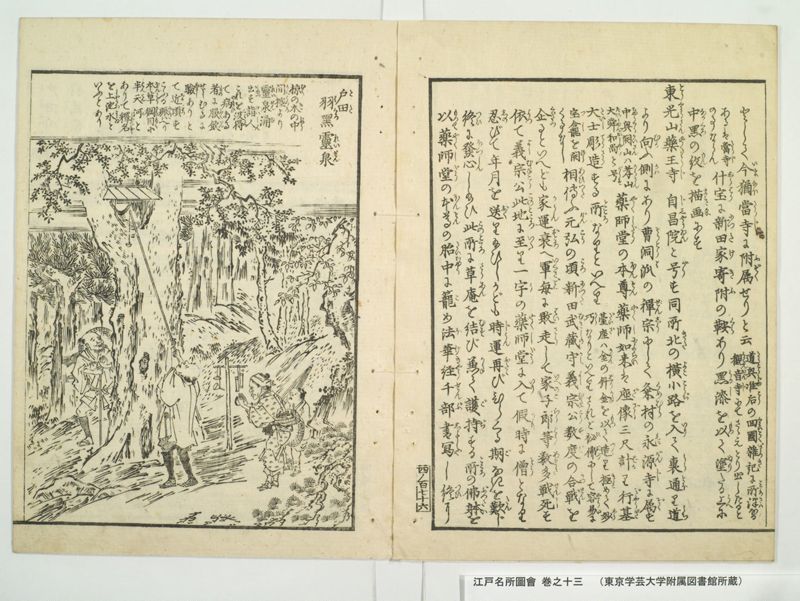
【左丁 絵図】
戸田(とた)
羽黒霊泉(はくろれいせん)
椋(むく)の木(き)の中(ちゆう)
間(かん)控(うつろ)より
霊泉(れいせん)湧(ゆ)
出(しゆつ)す詣人(けいしん)
これを汲得(くみえ)
て病(やまひ)ある
者(もの)に服飲(ふくいん)
せしむるに
験(しるし)ありと
て近頃(ちかころ)す
こふる賑(にき)はへり
本草綱目(ほんさうかうもく)に
半天河(はんてんか)と
ありて釈名(しやくみやう)
を上池水(しやうちすゐ)と
いふとあり
現代語訳
【右丁】
(前頁からの続き)として、今もなお当寺に附属しているという。〔道興准后の『回国雑記』に所沢の観音寺でさゝえ(野老)を取り出したとあるのは、当寺のことであろう。〕什宝として新田家寄附の鞍があり、黒漆を塗った上に中黒の家紋を蒔絵にしている。
**東光山薬王寺 自昌院**と号する。同所(所沢)の北の横小路を入り、裏通りの道より向かい側にある。曹洞派の禅宗であり、粂村の永源寺に属する。〔中興の開山は孝山大舜和尚と号す。〕薬師堂の本尊・薬師如来は座像で三尺ばかりの大きさで、行基大士が彫造したものであると伝えられている。〔台座は金の針金を用いて造られており、極めて精巧であるといわれている。しかし秘仏であって、容易に厨子を開くことはない。〕
伝えによれば、元弘の頃、新田武蔵守義宗公は数度にわたる合戦を企てたが、家運が衰え、戦のたびに敗走し、家子・郎等が数多く戦死した。そこで義宗公はこの地に至り、一宇の薬師堂に入って仮に僧となり、ひそかに年月を過ごされた。しかし、時運が再び開ける期のないことを嘆き、ついに発心され、この所に草庵を結び、かねて護持していた仏体を薬師堂の本尊の胎内に納め、法華経千部を書写して、ついに……(次頁へ続く)
【左丁 絵図】
**戸田 羽黒霊泉**
椋の木の洞(うつろ)より霊泉が湧き出す。参詣する人がこれを汲んで病ある者に飲ませると、霊験があるとして、近頃はたいそう賑わっている。『本草綱目』に「半天河」とあり、その釈名を「上池水」というとある。
英語訳
【Right Page】
(Continued from previous page) ...and it is said that this remains attached to the temple to this day. [What is recorded in the *Kaikoku Zakki* (Travel Miscellany) of the Retired Imperial Prince Dōkō about obtaining *sazae* (literally: wild yam roots/*tokoro*) at Kannōnji in Tokorozawa likely refers to this very temple.] Among the temple's treasures is a saddle donated by the Nitta clan, lacquered in black with the clan's *nakakuro* (central black circle) crest rendered in *makie* (lacquer inlay).
**Tōkōzan Yakuōji, known as Jishōin.** Located in the same area (Tokorozawa), reached by turning into the northern side lane and proceeding along the back road to the opposite side. It belongs to the Sōtō sect of Zen Buddhism and is affiliated with Eigenji temple in Kume village. [The founder of the temple's revival is known by the name of the Venerable Taishun of Kōzan.] The principal image of the Yakushidō (Medicine Buddha Hall) is a seated figure of Yakushi Nyorai (Bhaisajyaguru, the Medicine Buddha), approximately three *shaku* (roughly 90 cm) in height, said to have been carved by the great monk Gyōki. [The pedestal is crafted from gold wire and is said to be of extraordinary skill and refinement. However, as it is a *hibutsu* (secret Buddha), the shrine cabinet (*zushi*) is not readily opened.]
According to tradition, during the Genkō era, Nitta Musashi-no-kami Yoshimune engaged in numerous battles, but as the fortunes of his clan declined, he was routed in every engagement, and many of his retainers and followers perished. Consequently, Yoshimune came to this place, entered a small Yakushidō hall, temporarily took Buddhist vows, and spent his years in concealment. Lamenting that there was no prospect of his fortunes ever turning again, he at last resolved upon the path of Buddhist devotion, built a hermitage at this location, enshrined within the main image of the Yakushidō the sacred Buddhist statue he had been protecting, copied the Lotus Sutra one thousand times, and finally... (continued on next page)
【Left Page: Illustration】
**Toda — The Sacred Spring of Haguro**
A sacred spring wells up from the hollow of a *muku* (Japanese hackberry) tree. People who come to worship draw the water and give it to the sick to drink, and as it is said to have miraculous efficacy, the place has become greatly popular and bustling of late. In the *Bencao Gangmu* (*Honzō Kōmoku*, the Chinese Materia Medica), this type of water is listed as *Bantianhe* (半天河, "mid-heaven river water"), with the explanatory name *Shangshuishui* (上池水, "upper pool water").