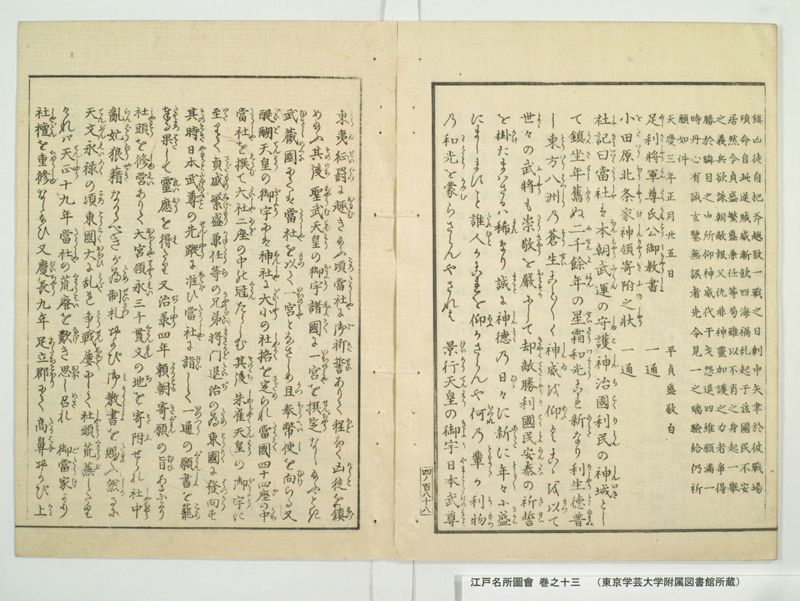
翻刻
【右丁】
鎮凶徒自把斧越致一戦之日剰中矢聿於彼戦場
殞命自此逆賊威漸飲四海禍乱起于茲国民不安
居然今貞盛繁盛兼任等苟雖以不肖之身起一挙
之義兵欲誅朝敵報父仇非神霊加護之力者争得
勝於瞬目之■#1所仰神威代干戈怨退四維願満一
時丹心有誠玄鑒無誤者先令見一之瑞験給仍祈
願如件
天慶三年正月廿五日 平貞盛敬白
足利将軍尊氏公(あしかゝしやうくんたかうちこう)御教書(みきやうしよ) 一通
小田原北条家(をたはらはうしやうけ)神領寄附之状(しんりやうきふのしやう) 一通
社記曰(しやきにいはく)当社(たうしや)は本朝(ほんちやう)武運(ふうん)の守護神(しゆこしん)治国利民(ちこくりみん)の神域(しんいき)とし
て鎮坐(ちんさ)年旧(としふり)ぬ二千余年(にせんよねん)の星霜(せいさう)和光(わくわう)これ新(あらた)なり利生(りしやう)徳(とく)普(あまね)
し東方(とうはう)八洲(はつしう)の蒼生(そうせい)こと〳〵く神威(しんゐ)を仰(あふ)くこゝを以(もつ)て
世々(よゝ)の武将(ふしやう)も崇敬(さうきやう)を厳(おこそか)にして却敵勝利(きやくてきしやうり)国民安泰(こくみんあんたい)の祈誓(きせい)
を掛(かけ)たまはさるは稀(まれ)なり誠(まこと)に神徳(しんとく)の日々(ひゝ)に新(あらた)に年々(とし〳〵)に盛(さかん)
にましますこと誰(たれ)人(ひと)かこれを仰(あふ)かさらんや何(いつれ)の輩(ともから)か利物(りもつ)
の和光(わくわう)を蒙(かふむ)らさらんやされは 景行天皇(けいかうてんわう)の御宇(きよう)日本武尊(やまとたけのみこと)
【左丁】
東夷征罰(とうゐせいばつ)に趣(おもむ)き給ふ頃(ころ)当社(たうしや)に御祈誓(ごきせい)ありて程(ほど)なく凶徒(けうと)を鎮(しづ)
め給ふ其後(そののち)聖武天皇(しやうむてんわう)の御宇(ぎよう)諸国(しよこく)一宮(いちのみや)を撰定(せんぢやう)なし給ふとき
武蔵国(むさしのくに)にては当社(たうしや)を以(もつ)て一宮(いちのみや)となさしめ且(かつ)奉幣使(ほうへいし)を向(むけ)らる又
醍醐天皇(だいごてんわう)の御宇(ぎよう)には神社(しんしや)に大小(だいしやう)の社格(しやかく)を定(さだめ)られ当国(たうこく)四十四座( ざ)の中(うち)
当社(たうしや)を撰(えらむ)て大社(たいしや)二座(にざ)の中の冠(くわん)たらしむ其後(そのゝち)朱雀天皇(しゆじやくてんわう)の御宇(ぎよう)に
至(いた)りて貞盛(さだもり)繁盛(しげもり)兼任(かねたう)等(ら)の兄弟(きやうだい)将門(まさかど)退治(たいぢ)の為(ため)東国(とうこく)に発向(はつかう)す
其時(そのとき)日本武尊(やまとたけのみこと)の先蹤(せんしやう)に准(したが)ひ当社(たうしや)に詣(けい)して一通(いつつう)の願書(ぐわんしよ)を籠(こめ)
奉(たてまつ)る果(はた)して霊応(れいおう)を得(え)たり又 治承(ぢしやう)四年 頼朝(よりとも)寄願(きぐわん)の旨(むね)あるにより
社頭(しやとう)を修営(しゆえい)ありて大宮(おほみや)領永(りやうえい)#2三千貫文( くわんもん)の地(ち)を寄附(きふ)せられ社中(しやちゆう)
乱妄(らんばう)狼藉(らうぜき)なかるべきが為(ため)制札(せいさつ)および御教書(みけうしよ)を賜(たま)ふ然(しか)るに
天文(てんぶん)永禄(えいろく)の頃(ころ)東国(とうこく)大(おほひ)に乱(みだ)れ争戦(さうせん)屢(しば〳〵)にして社頭(しやとう)荒蕪(くわうぶ)したり
ければ天正(てんしやう)十九年 当社(たうしや)の荒廃(くわうはい)を歎(なげ)き思(おぼ)し召(めさ)れ 御当家(ごたうけ)より
社壇(しやだん)を重修(ちゆうしゆ)なし給ひ又 慶長(けいちやう)九年 足立郡(あたちこほり)にて高鼻(たかはな)および上(かみ)
現代語訳
【右丁】
(前ページより続く、平貞盛の願書)
「……凶徒を鎮めようと、みずから斧を持って一戦に及んだ日、さらに彼の戦場にて矢に中り命を落としました。これより以降、逆賊の威勢はますます四海に満ち、禍乱はこの国に起こり、民は安らかに住むことができなくなりました。しかして今、貞盛・繁盛・兼任らは、不肖の身ながら一挙に義兵を起こし、朝敵を誅し父の仇を報いんと欲しております。神霊の加護の力なくしては、いかにして瞬く間に■勝利を得ることができましょうか。神威に仰いで干戈に代え、怨敵を四方より退け、願いを一時に満たさんと、丹心に誠を尽くしております。霊鑒(れいかん)誤りなくば、まず一つの瑞験(ずいげん)をお示しください。よって祈願すること件(くだん)の如し。
天慶三年正月二十五日 平貞盛 敬白」
---
**足利将軍尊氏公の御教書 一通**
**小田原北条家 神領寄附の状 一通**
---
**社記にいわく**、当社は本朝(日本)における武運の守護神、治国利民の神域として鎮座されて年久しく、二千余年の星霜を経てなお、和光(神仏が光を和らげて人々に利益を垂れること)は新たなり、利生の徳は広く行き渡っている。東方八洲(日本全土)の民はことごとく神威を仰ぐ。これをもって、代々の武将もひそかに崇敬を厚くし、却敵勝利・国民安泰の祈誓を掛けられなかった者は稀である。まことに神徳が日々に新たに、年々に盛んにましますことを、誰人かこれを仰がざらんや、いずれの輩かその和光の利物を蒙らざらんや。
されば景行天皇の御代、日本武尊が
【左丁】
東夷征伐に赴かれた頃、当社に御祈誓があり、ほどなく凶徒を鎮め給うた。その後、聖武天皇の御代に諸国一宮を撰定なされた時、武蔵国においては当社をもって一宮となされ、かつ奉幣使を向けられた。また醍醐天皇の御代には、神社に大小の社格を定められ、当国四十四座の中から当社を選んで、大社二座の筆頭(冠)とされた。その後、朱雀天皇の御代に至って、貞盛・繁盛・兼任ら兄弟が将門退治のために東国に発向した。その時、日本武尊の先蹤(先例)にならい、当社に詣でて一通の願書を籠め奉った。果たして霊応を得たり。また治承四年、頼朝が寄願の旨があったことにより、社頭を修営され、大宮領として三千貫文の地を寄附され、社中において乱妄・狼藉のないようにするために、制札および御教書を賜った。しかるに天文・永禄の頃、東国大いに乱れ、争戦しばしばにして社頭は荒れ果てたので、天正十九年、当社の荒廃を嘆き思し召され、御当家(徳川家)より社壇を重修なされた。また慶長九年、足立郡にて高鼻および上(の村)……
英語訳
**[Right Page]**
*(Continued from the previous page — Petition of Taira no Sadamori)*
"…[my father] personally took up arms and engaged in battle to suppress the rebels, but on that very day of fighting, he was struck by an arrow and fell on the battlefield. From that time on, the rebel's power grew ever greater, spreading across the four seas, calamity and disorder arose throughout the land, and the people were unable to live in peace. Now, though Sadamori, Shigemori, Kanetō, and the others are men of little worth, we wish to raise a righteous army in one bold stroke, to execute the enemy of the court and avenge our father's enmity. Without the protective power of the divine spirit, how could we hope to achieve victory in the blink of an eye? We look to the divine authority to replace our weapons, to drive our enemies back from all four quarters, and to fulfill our wish in a single moment. Our hearts are filled with sincere devotion — if your divine discernment does not err, please first grant us a sign of your auspicious response. Thus we humbly pray, as stated above.
25th day of the 1st month, Tengyō 3rd year (940) Taira no Sadamori, respectfully submitted."
---
**One document: Official order (migyōsho) of Ashikaga Shogun Takauji**
**One document: Deed of donation of shrine lands by the Hōjō clan of Odawara**
---
**The shrine record (shaki) states**: This shrine has long been established as the guardian deity of martial fortune (buun) in our land of Japan, and as a sacred domain for the governance of the country and the benefit of the people. Through more than two thousand years of time, the divine radiance (wakō) remains ever fresh, and the virtue of bestowing benefits (rishō) is widely diffused. All the people of the eight provinces of the east look to the divine authority with reverence. For this reason, there is scarcely a military commander of any era who did not solemnly offer reverence and pray for the repulsion of enemies, victory in battle, and the peace and safety of the people. Truly, as the divine virtue renews itself day by day and flourishes year by year, who would not look up to it? What manner of person would fail to receive the blessings of its beneficent radiance?
Thus it was that in the reign of Emperor Keikō, when Yamato Takeru no Mikoto
**[Left Page]**
set out to subjugate the eastern barbarians, he offered prayers at this shrine, and before long he was able to pacify the rebels. After this, in the reign of Emperor Shōmu, when the first shrines (ichinomiya) of the various provinces were designated, this shrine was established as the ichinomiya of Musashi Province, and a messenger bearing votive offerings (heihaku) was dispatched here. Furthermore, in the reign of Emperor Daigo, ranks were assigned to shrines great and small; among the forty-four shrines of this province, this shrine was selected and placed at the head of the two shrines of the Great Shrine rank. Subsequently, in the reign of Emperor Suzaku, Sadamori, Shigemori, Kanetō, and their brothers set out for the eastern provinces to suppress Masakado. Following the precedent set by Yamato Takeru, they visited this shrine and solemnly deposited a written petition. And indeed, they obtained a miraculous response. Again in the fourth year of Jishō (1180), as Minamoto no Yoritomo had made vows of prayer to the shrine, he had the shrine buildings repaired and donated three thousand kanmon of land as the domain of Ōmiya Shrine, and presented a prohibition notice (seisatsu) and an official order (migyōsho) to prevent disorder and misconduct within the shrine precincts. However, during the Tenbun and Eiroku eras, the eastern provinces fell into great turmoil, with frequent warfare, and the shrine fell into ruin and neglect. Therefore, in Tenshō 19 (1591), lamenting the shrine's dilapidation, the honorable house (i.e., the Tokugawa clan) had the shrine altar rebuilt and restored. Furthermore, in the 9th year of Keichō (1604), within Adachi District, [the villages of] Takahana and Kami-…