翻刻
日々 新聞 第廿号
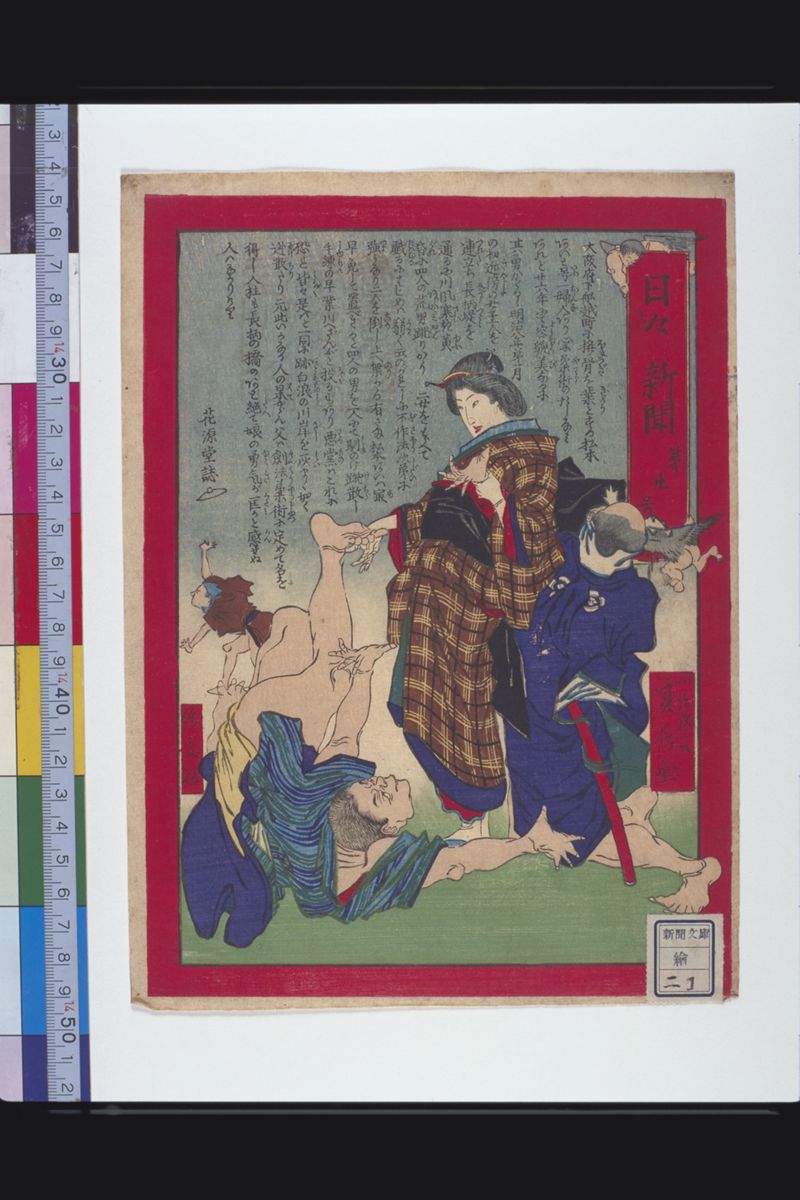
大阪府下舩越町に接骨(ほねつぎ)を業(ぎよう)とする松本
あいと号(いふ)一婦人(おんな)あり心に柔術(やわら)のたしなみ
あれど二十六年にて容貌(ようぼう) 美(び)なるに
其勇かくるゝ 明治八年第一月
の初 近傍(きんぼふ)の女子一人を
連立(つれた)ち長柄堤(ながえつゝみ)を
通るに川風寒き黄(ゆふ)
昏(ぐれ)に四人の荒男(あらおとこ) 跳(おど)りかゝり 二女をとらへて
戯(たはむる)るにはじめは弱(よわ)く云のがれしに不作法(ぶさほう) 次第(しだい)に
強(つよ)うなり二人を倒(こか)し上へ乗(のり)たる有りさま松本あいは最(も)
早免して置べきかと四人の男を一人にて馴(はね)のけ蹴散(けちら)し
手練(しゆれん)の早業川へざんぶと投(なぐ)るもあり悪党はこれに
恐れ皆々(みな〳〵)是はと一同に跡白浪(あとしらなみ)の川 岸(ぎし)を灰(はい)まくごと如く
迯散(にげちり)【逃の異体字】たり 元此いかなる人の果(はて)やらん父は剣法(けんはう) 柔術(にうじゆつ)に定めて名を
得し人柱も長柄の橋のあと絶(たへ)て娘の勇気(ゆうき)が匡(かたみ)かと感(かん)せぬ
人はなかりけり
花源堂誌
小信改二代
貞信画
綿政板
現代語訳
日々新聞 第二十号
大阪府下の船越町に、接骨(ほねつぎ)を業とする松本あいという一人の婦人がいる。心中ひそかに柔術のたしなみがあるのだが、年は二十六で容貌も美しいため、その武勇はおもてに現れず隠れていた。
明治八年一月の初め、近所の娘を一人連れ立って長柄堤(ながらづつみ)を通っていたところ、川風の寒い夕暮れどきに、四人の荒くれ男が躍りかかり、二人の女を捕まえてふざけかかった。はじめは穏やかに言い逃れをしていたが、男たちの無作法はしだいに度を増し、二人を突き倒してその上に乗りかかるという有様。松本あいは「もはや許しておくものか」と、四人の男を一人ではね飛ばし蹴散らし、鍛えた技の早業で、なかには川へざんぶと投げ込まれた者もあった。悪党どもはこれに恐れをなし、「これはたまらぬ」と口々に言って、跡白浪(あとしらなみ)——川岸を灰を撒いたように、いっせいに逃げ散ってしまった。
そもそもこの女性はどのような人の子孫であろうか。父は剣術・柔術でさだめし名を得た人であったのだろう。長柄の橋の人柱の話も今は絶えて久しいが、この娘の勇気こそその形見(かたみ)ではないかと、感心しない者はなかったという。
花源堂 誌(しる)す
小信改め 二代目貞信 画
綿政 板(版元)
英語訳
Nichinichi Shimbun, No. 20
In Funakoshi-chō, in the prefecture of Osaka, there lives a woman named Matsumoto Ai, who makes her living as a bonesetter. In private she has trained in jūjutsu, but as she is only twenty-six and of fair appearance, her valor lay hidden from view.
At the beginning of the First Month of Meiji 8 (1875), she was walking along the Nagara embankment in company with a young woman of the neighborhood when, in the chill river wind of dusk, four ruffians sprang upon them, seized the two women and began to molest them. At first the women meekly tried to talk their way free, but the men's rudeness only grew bolder, until they knocked the two down and threw themselves upon them. At this Matsumoto Ai thought, "Shall I let them off any longer?"—and single-handed she flung the four men aside and scattered them, and with the swift skill of her practiced art she even hurled one of them splashing into the river. The villains, terrified, cried out "This is too much!" and all together fled—leaving only a white wake behind them—scattering along the riverbank like ashes flung to the wind.
Whose descendant, one wonders, can this woman be? Her father must surely have been a man of note in swordsmanship and jūjutsu. The old tale of the human pillar buried at Nagara Bridge has long since passed away, yet all who heard of it marveled, saying that this girl's courage was surely a keepsake of that ancient valor.
Recorded by Kagendō
Illustration: Sadanobu II, formerly Konobu
Publisher: Wata-masa