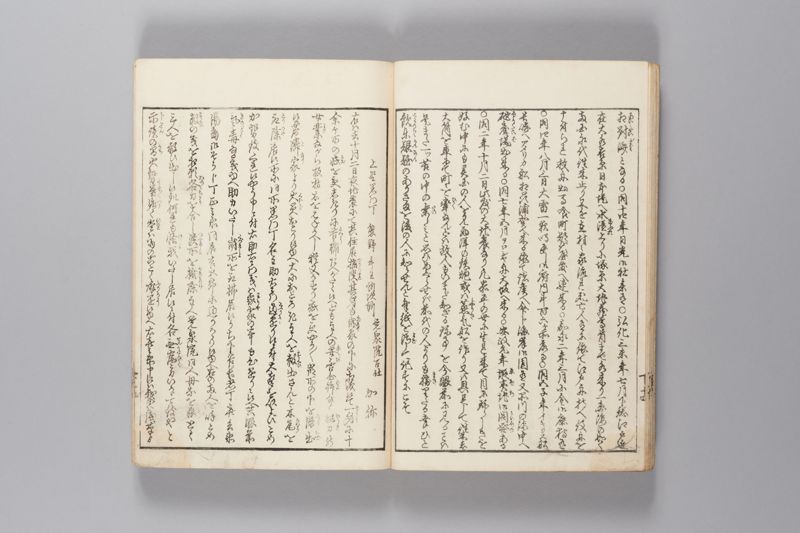
翻刻
【右丁】
相対済(あいたいずみ)となる○同十四年日光御社参有○弘化三未年七月下総江戸近
在大水吉原日本堤へ水 溢(あふれ)上り小塚原大地蔵尊首まで水来り一円海の如く
両国永代往来止り又近在村々家流れ死亡人有に依て江戸舟持へ役舟を
申付られ救舟出馬喰町郡代屋敷へ連来る○嘉永二年三月小金御鹿狩有
○同四年八月三日大雷一夜鳴通し御府内斗百六ケ所落る○同五子年イキリス船
長崎へアメリカ船相州浦賀へ来る依て諸侯へ命じ海岸御固有又品川の海中へ
砲台場(ほうたいば)出来る○同七年五月ヲロシヤ舟大坂へ来る○安政元年 蝦夷地(ゑぞち)御 開発(かいほつ)ある
○同二年十月二日此度の大地震なり凡泰平の世に生れ来て目に珍らしきを
好む中にも異国の人を見西洋の鉄炮或は蒸気(じやうき)船を作り又は具足して往来は
大筒を車にて町々を牽(ひく)なんどは故人もいまだ知ざる珍事を今眼前に見ることは
是また一ツ苦の中の楽(たの)しみと思ひめぐらせば前代の人よりも勝(まさ)りたる幸ひと
歓楽(くわんらく)艱難(かんなん)のありさまを後の人に知らせんと筆紙を汚(よご)して記すにこそ
【左丁】
上野黒門丁 熊野 牛王所次所 覚泉院召仕 加 祢
右は去十月二日夜地震にて其住居 揺潰(ゆりつふれ)其身も崩家(くづれや)の下に相成候て一身(そうみ)に十
余ケ所の疵(きづ)を受しきりに苦痛(くつう)たへがたく候へども主人の安否(あんぴ)心 許(もと)なく非力(ひりき)の
女 業(わざ)ながら板材木をはねかへし猶又かすり疵を受やう〳〵崩所の下を潜出(くゞりいで)
候処 隣家(となり)より火災(くはじ)おこり候ゆへ大におどろき主人を救(すくひ)出さんと木 瓦(かはら)を
取除(とりのけ)居候所に同所黒門丁名主助右衛門 通懸(とふりかゝ)り候に付大声を以よびとめ
加勢致くれ候やう申に付右助右衛門義は我家(わかや)の事も心懸りに候へ共眼前
気毒(きのどく)なる義ゆへ助力いたし崩所(くづれしよ)を取払居候うち下谷長者丁喜兵衛
湯島御そうじ丁正兵衛同居吉五郎等通りかゝり候ゆへ右の両人を呼とめ
赦(すくひ)の義を相頼 各(おの〳〵)力(ちから)を合し潰所(つふれしよ)を掻除(かきよけ)主人覚泉院同人母なを娘とく
三人を赦ひ出し候処何れも怪我(けが)いたし居候に付各 無為方(せんかたなく)いかゞ可致やと
示談(じだん)の間(うち)火勢 益(ます〳〵)強(つよ)く炎(ひのこ)は雨のごとく降懸(ふりかゝり)候ゆへ右喜兵衛申候は我等は浅草ゟ
現代語訳
【右丁】
(借貸は)相対済み(当事者間での話し合いによる解決)となる。○同十四年(1843年)、日光への御社参(将軍の日光東照宮参詣)があった。○弘化三年(1846年)未年七月、下総・江戸近在に大洪水があり、吉原・日本堤まで水が溢れ上がり、小塚原の大地蔵尊の首のあたりまで水が来て、一面海のようになった。両国・永代の往来が止まり、また近在の村々では家が流され、死亡者が出たため、江戸の船持ちへ役舟(公用の船)を申し付けられ、救助船が出て、馬喰町の郡代屋敷へ(被災者を)連れてきた。○嘉永二年(1849年)三月、小金(こがね)において御鹿狩りがあった。○同四年(1851年)八月三日、大雷が一夜中鳴り通し、御府内だけで百六か所に落雷した。○同五年(1852年)子年、イギリス船が長崎へ、アメリカ船が相州浦賀へ来航した。これにより諸侯に命じて海岸の御固め(海岸警備)が行われ、また品川の海中に砲台場が築かれた。○同七年(1854年)五月、ロシア船が大坂へ来た。○安政元年(1854年)、蝦夷地(北海道)の御開発(開拓)があった。○同二年(1855年)十月二日、今度の大地震があった。
およそ泰平の世に生まれ来て、目に珍しいものを好む中にも、異国の人を見たり、西洋の鉄砲あるいは蒸気船を作ったり、また甲冑(具足)をつけて往来し、大筒(大砲)を車に乗せて町々を引いて歩くなどということは、昔の人がいまだ知らなかった珍事を、今まさに眼前に見ることができるのは、これもまた一つ、苦の中の楽しみと思えば、前代の人よりも勝れた幸いである。歓楽と艱難(苦労)の有様を後の人に知らせようと、筆を汚して(つたない文章ながら)ここに記すものである。
【左丁】
上野黒門町 熊野牛王所次所 覚泉院召仕(下女) 加祢
右(の者)は、去る十月二日夜の地震にて、その住居が揺り潰れ、自身も崩れた家の下敷きになり、一身に十か所余りの傷を受け、しきりに苦痛に耐えがたい状況であったが、主人の安否が気がかりで、非力な女の身ではあるものの、板や材木をはね返し、さらにまた擦り傷を受けながらも、ようやく崩れた箇所の下を潜り抜けて出たところ、隣家から火災が起こったため、大いに驚き、主人を救い出そうと木材や瓦を取り除いていたところ、同所黒門町の名主・助右衛門が通りかかったので、大声で呼び止め、加勢してくれるよう申したところ、右の助右衛門は自分の家のことも心がかりではあったが、目の前の気の毒な状況ゆえ、助力し、崩れた箇所を取り払っていたところ、下谷長者町の喜兵衛、湯島御掃除町の正兵衛・同居の吉五郎らが通りかかったので、右の両人(喜兵衛・正兵衛)を呼び止め、救助を相頼み、各々力を合わせて潰れた箇所を掻き除け、主人の覚泉院・同人の母なを・娘とく、三人を救い出したところ、いずれも怪我をしており、各々どうすることもできず、いかがすべきかと相談している間に、火勢はますます強くなり、火の粉は雨のように降りかかってきたので、右の喜兵衛が申すには「我らは浅草より……(以下次ページへ続く)」
英語訳
【Right folio】
…(lending and borrowing) was to be settled between the parties directly (*aitai-zumi*). ○ In the fourteenth year of the same era (Tenpō 14, 1843), the Shogun made a pilgrimage to the Nikkō shrine. ○ In the seventh month of the third year of Kōka (1846), the year of the Sheep, there was a great flood in Shimōsa Province and the vicinity of Edo: water overflowed as far as the Yoshiwara and the Nihon Embankment, reached up to the neck of the Great Jizō statue at Kozukahara, and the entire area became like a sea. Traffic along the Ryōgoku and Eitai routes came to a halt; in the surrounding villages, houses were swept away and deaths occurred, and so the boat-owners of Edo were ordered to furnish official rescue boats (*yakibune*), which went out and brought the victims to the *Gundai* office at Bakurochō. ○ In the third month of the second year of Kaei (1849), there was a shogunal deer hunt at Kogane. ○ On the third day of the eighth month of the fourth year of the same era (1851), a great thunderstorm raged throughout the night, and lightning struck one hundred and six locations within the city of Edo alone. ○ In the fifth year of the same era (1852), the year of the Rat, a British ship came to Nagasaki and an American ship came to Uraga in Sagami Province. In response, the various domain lords were ordered to strengthen coastal defenses, and a gun battery (*hōdaiba*) was constructed in the sea off Shinagawa. ○ In the seventh year of the same era (1854), a Russian ship came to Osaka. ○ In the first year of Ansei (1854), the development (*kaihatsu*) of Ezo (Hokkaidō) was undertaken. ○ On the second day of the tenth month of the second year of the same era (1855), the great earthquake described in this very account occurred.
Having been born in an age of enduring peace, one naturally delights in the sight of things novel and rare. Among such wonders, one witnesses foreigners from distant lands; sees Western firearms and even steamships being built; watches men clad in armor walking the streets; and sees great cannon hauled through the neighborhoods on wheeled carriages — all of it extraordinary spectacles unbeknownst to men of former times, yet visible before our very eyes today. If one reflects that this, too, is a kind of joy found within suffering, then those of us living now may be counted more fortunate than those of earlier generations. It is with the wish to convey to people of later ages the appearance of both the pleasures and the hardships of our time that I have set my brush to paper and set down these humble records.
【Left folio】
Ueno Kuromonchou — Stationed at the Kumanogōo Shrine — Maidservant of Kakusen'in — **Kane**
The aforementioned person: on the night of the second day of the tenth month last, the earthquake caused the collapse of her dwelling, and she herself was caught beneath the rubble. She sustained wounds in more than ten places across her body and was in tremendous and unrelenting pain; yet, consumed with anxiety for the safety of her mistress, and despite being a woman of little strength, she thrust aside boards and timbers, receiving yet more grazing wounds in the process, and at last managed to crawl her way out from beneath the wreckage. At that moment, a fire broke out in the neighboring house, and greatly alarmed, she began removing wood and roof tiles in order to rescue her mistress. Just then, Sukeemon, the *nanushi* (headman) of the same Kuromonchou district, happened to pass by; she called out to him in a loud voice and begged him to lend his assistance. Although Sukeemon was himself worried about his own home, seeing the pitiable situation before his eyes, he lent his help and set about clearing the debris. While they were doing so, Kihei of Shitaya Chōjamachi, and Shōbei of Yushima Osōji-machi together with his housemate Kichigoro, happened to pass by. She called out and stopped them, entreating them both for assistance. Together, all of them pooled their strength and cleared away the wreckage, succeeding in rescuing three people: her mistress Kakusen'in, Kakusen'in's mother Nao, and her daughter Toku. However, all three had sustained injuries, and while everyone was at a loss as to what should be done, the fire grew ever more fierce, and sparks rained down like a shower of rain. Thereupon Kihei said: "We have come from Asakusa…" *(continues on the following page)*