翻刻
【右丁】
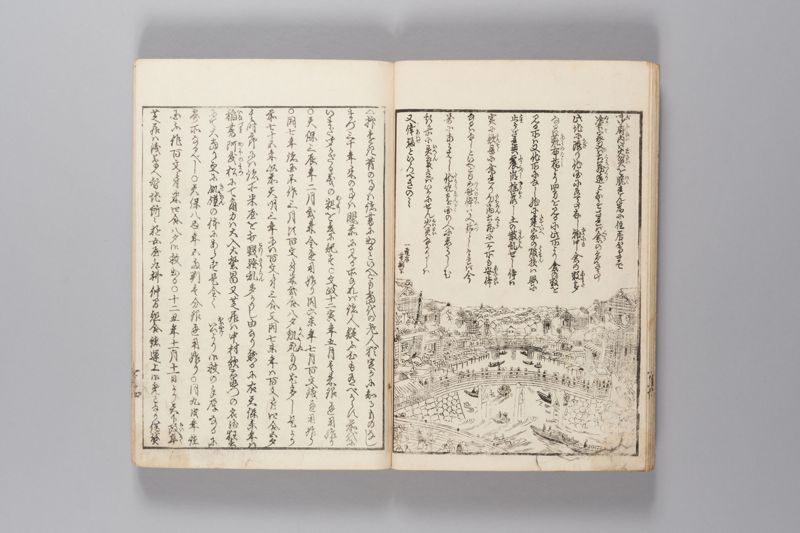
御府内(ごふない)は火災(くはさい)を脱(のか)れん為に住居等まで
塗家(ぬりや)又は土蔵造(くらづくり)となすされば倉(くら)の多き事
此地に限(かぎ)り他国に有事なし就中(なかにも)倉の数多(あまた)
なるは荒布橋(あらめばし)より四方を見るに此所より倉の数を
見る所は又他所になし然に建家(たていへ)の破損(はそん)は眼に
止(とま)らざれ共 震崩(ふりくづし)揺落(ゆりおと)し土の散乱(さんらん)せし体は
実に歎息(たんそく)に余れり勿論(もちろん)土蔵(くら)に一ケ所も安体(あんたい)
なるはなしといへども如此体(かくのてい)は又 珍(めづ)らしければ今
図にあらはし他境(たけう)遠国(ゑんごく)の人にしらしむ
斯る所に異変(いへん)有ばいかにせん火災(くはさい)なかりしは
又 倖福(しあはせ)といゝつべきのみ
一登斎
芳綱写
【左丁】
△抑遠き昔の事は諸書に出るといへども当代の老人程定かに知るものなし
まづ三十年来の事は眼前に見る所なれば諸人疑ふ心も有べからす前代に
いまだ聞かざる義の粗(あらまし)を爰に記す○文政十二寅年五月壱朱銀通用始り
○天保三辰年二月弐朱金通用始り同六未年七月百文銭通用始り
○同七年諸国不作三月頃百文に付米弐合八勺 飢死(うへしぬ)もの尤多し是より
前七十五年以前天明三年には百文に付三合又同七未年は百文に付四合五勺
其時節には諸所米屋を打 毀(こはし)騒乱(さうらん)多かりし由なり然るに右天保未年は
稲妻(いなづま)阿武松(おほのまつ)にて角力は大入大繁昌又芝居は中村歌右衛門の名残狂言
にて大当り更に飢饉(ききん)の体にあらず是全く 公(おほやけ)より御救の手厚なるに
寄所なるべし〇天保八酉年五両判壱分銀通用始り○同九戌年諸
国不作百文に付米四合八勺御救出る○十二丑年十一月十一日より天下 改革(かいかく)
芝居は浅草へ替地所々遊女屋取払仲間組合諸運上御免となり借貸
現代語訳
【右丁】
御府内(江戸市中)では、火災から守るために住居などを塗家(漆喰塗りの家)または土蔵造りにしている。それゆえ蔵の多いことは、この地に限ったことであり、他国にはないほどである。とりわけ蔵の数が多いのは荒布橋付近で、この場所から四方を見渡すと、これほど多くの蔵が見渡せる場所は他にはない。さて、建家(普通の建物)の破損は目に留まらないほどであるが、(地震によって)揺り崩され、揺り落とされ、土が散乱した有様は、まことに歎息(ため息)に余るものがある。もちろん土蔵で一か所も無事なものはないとはいえ、このような光景はまた珍しいことであるから、今ここに図に表わして、他国・遠国の人々に知らせるものである。このような場所に異変があれば、いかに大変なことか。火災がなかったことは、また幸いというべきであろう。
一登斎
芳綱写
【左丁】
△そもそも遠き昔のことは諸書に記されているとはいえ、当代の老人ほど確かに知る者はない。まず三十年来のことは、目の前で見てきたことであるから、諸人が疑う余地もないであろう。前代に未だ聞いたことのない事柄のあらましを、ここに記す。
○文政十二年(1829年)寅年五月、一朱銀の通用が始まる。
○天保三年(1832年)辰年二月、二朱金の通用が始まる。同六年(1835年)未年七月、百文銭の通用が始まる。
○同七年(1836年)、諸国不作となり、三月頃は百文につき米二合八勺(しゃく)。飢え死にする者がことに多かった。これより七十五年前の天明三年(1783年)には百文につき三合、また同七年(1787年)未年には百文につき四合五勺であった。その時節には諸所で米屋を打ち毀し、騒乱が多かったという。しかるに右の天保未年(1835年)は、稲妻雷五郎・阿武松緑之助による相撲が大入り大繁盛し、また芝居は中村歌右衛門の名残狂言(引退興行)にて大当たりとなり、少しも飢饉の様子ではなかった。これはひとえに、公儀(幕府)からの御救いの手が厚かったことによるものであろう。
○天保八年(1837年)酉年、五両判・一分銀の通用が始まる。
○同九年(1838年)戌年、諸国不作となり、百文につき米四合八勺。御救いが出される。
○十二年(1841年)丑年十一月十一日より、天下(幕府)の改革(天保の改革)が始まり、芝居は浅草へ替地(移転)、各所の遊女屋は取り払い、仲間・組合・諸運上(税)は御免(廃止)となり、借貸(金融)は……(以下次ページへ続く)
英語訳
【Right folio】
Within the city of Edo (the *gofu-nai*), residences and other buildings had been constructed as plastered houses (*nuriya*) or earthen-walled storehouses (*kurazukuri*) in order to protect against fire. As a result, the sheer number of storehouses (*kura*) found here is unmatched anywhere in the country. Among all places where storehouses are particularly numerous, none compares to the view from Aramebashi Bridge, from which one can look out in all four directions and see more storehouses than from any other vantage point in the city. Now, the damage to ordinary buildings was too extensive for the eye to take in; but the sight of walls shaken apart and brought down, rooftiles hurled to the ground, and earth and debris scattered in all directions was truly a scene beyond all lamentation. Of course, there was not a single storehouse left unscathed; but because such a spectacle was so extraordinary, it has been depicted here in illustration so that people in distant provinces and faraway regions may come to know what it looked like. One can only imagine the severity of such devastation in a place like this. That there was no great fire accompanying the earthquake must be counted as a mercy.
*Ichitōsai Yoshitsuna, artist*
【Left folio】
△ Although events of the distant past are recorded in various writings, no one knows them as reliably as the elderly people of the present age. As for events of the past thirty years, these are things seen with one's own eyes, and so no person need harbor any doubt. Below I record an outline of matters such as have never before been heard of in previous generations.
○ In the fifth month of the twelfth year of Bunsei (1829), the year of the Tiger, the one-shu silver coin (*isshu-gin*) was put into circulation.
○ In the second month of the third year of Tenpō (1832), the year of the Dragon, the two-shu gold coin (*nishu-kin*) was put into circulation. In the seventh month of the sixth year of the same era (1835), the year of the Sheep, the one-hundred-*mon* coin was put into circulation.
○ In the seventh year of Tenpō (1836), harvests failed throughout the country. Around the third month, one hundred *mon* bought only two *gō* and eight *shaku* of rice, and great numbers of people died of starvation. Seventy-five years prior to this, in the third year of Tenmei (1783), one hundred *mon* bought three *gō* of rice; and in the seventh year of the same era (1787), the year of the Sheep, it bought four *gō* and five *shaku*. It is said that at that time, rice merchants' shops were attacked and destroyed in many places, and great disorder prevailed. And yet, in the aforementioned Tenpō year of the Sheep (1835), the sumo wrestlers Inazuma Raigoro and Ōnomatsu Midorinosuke were drawing enormous crowds, and the kabuki theater was enjoying a great triumph with the farewell performances (*nagori kyōgen*) of Nakamura Utaemon — giving no appearance whatsoever of a famine year. This was surely due to the generous relief measures provided by the authorities (the shogunate).
○ In the eighth year of Tenpō (1837), the year of the Rooster, the five-*ryō* coin (*goryō-ban*) and the one-*bu* silver coin (*ichibu-gin*) were put into circulation.
○ In the ninth year of Tenpō (1838), the year of the Dog, harvests again failed throughout the country. One hundred *mon* bought four *gō* and eight *shaku* of rice, and relief provisions were distributed.
○ From the eleventh day of the eleventh month of the twelfth year (1841), the year of the Ox, the Great Reform of the realm (the Tenpō Reforms) was enacted: kabuki theaters were relocated to Asakusa, brothels in various places were abolished, merchant guilds (*nakama*) and trade associations (*kumiai*) along with their various levies (*unjō*) were dissolved, and as for lending and borrowing of money… *(continues on the following page)*