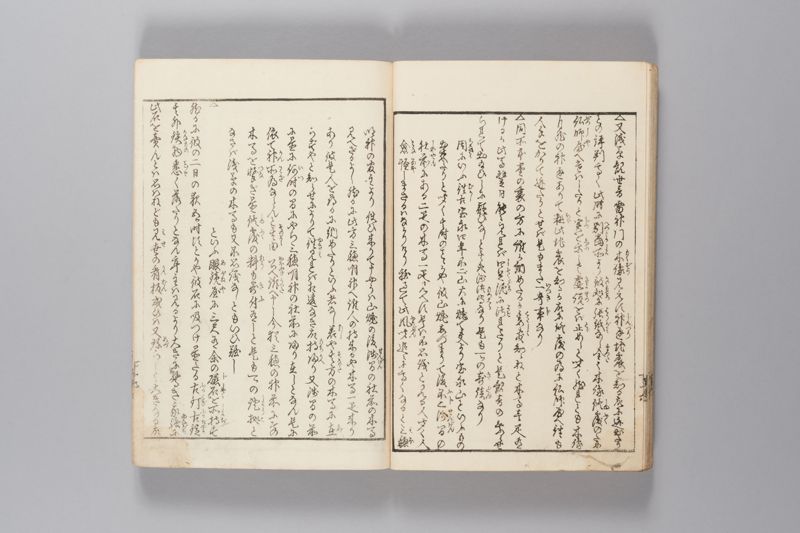
翻刻
【右丁】
△又浅草観世音雷神門の木像(もくぞう)見えす神通(じんづう)地震を知る故に逃出たり
ことの評判高く此時に別当所(へつとうしよ)より彼処(かのところ)に張紙(はりがみ)なし全(まつた)く木像 修覆(しゆふく)のため
仏師屋(ぶつしや)へ遣はしたりと実(じつ)を示(しめ)して虚説(きよせつ)をば止(とゞ)めしと聞く然れとも木像
自然の神通ありて粗(ほゞ)此地震を知るか故に修覆の為に仏師屋へ往も
人手をかりて逃たりとせば是もまた一奇事(いつきじ)なり
△同所本堂の裏の方に誰か納めたるか委敷(くわしく)知らねと木馬壱疋有
けるか此馬翌日能々見れば四足(しそく)泥(どろ)に汚(よご)れたりと是観音の乗らせ
られて出給ひしに疑ひなしと其取沙汰 専(もつはら)なり是も一ツの奇談(きだん)なり
因(ちなみ)にいふ往古(むかし)宝永四年不二山大に焼て夫より宝永山といふもの
出来たりと聞く其時のことゝかや彼山焼しづまりて後 不二浅間(ふじせんげん)の
社前(しやぜん)にある二疋の木馬一疋見へす是は不思議と見る人聞く人
僉(みな)怪(あや)しまさるはなかりけり程過て此 風聞(ふうぶん)追々に高くなると三穂(みほ)
【左丁】
明神の官主より使ひ来りて申やうは山焼の後 浅間(せんげん)の社前の木馬
見へざるよし然るに此方三穂明神へ誰人の持来るや木馬一疋来り
あり彼是人を尋るに納めたりといふ者なし若(もし)や其方(そなた)の木馬に在(あ)
らずやと知らせによりて往(ゆき)見(み)れば相違なき故 持帰(もちかへ)り又浅間の前
に置に何時(いつ)の間にやら三穂明神の社前に帰り在しとなん是に
依て神所為(かんわざ)ならんと其(その)由(よし)公(おほやけ)へ訴(うつた)へ申し今猶三穂の神前にその
木馬を繋(つな)ぎ置 修覆(しゆふく)の料(れう)も寄付(きふ)有しこと是も一つの証拠(しようこ)と
なさば浅草の木馬も又不思議なしともいひ難し
△ といふ眼鏡屋(めがねや)に三尺有余の磁石(じしやく)を所持(しよぢ)す
然るに彼の二日の夜五ツ時頃とかや彼石に吸つけ置たる古釘(ふるくぎ)古錠(ふるぢやう)
其外 鉄物(かなもの)悉(こと〴〵)く落たりとなん亭主は見るより大きに驚き我 強(あながち)に
此石を売んとは思はねども見世(みせ)の看板(かんばん)或ひは又 珍(めづ)らしく大きなる故
現代語訳
【右丁】
△また、浅草観世音の雷神門の木像が見当たらなくなったという評判が高くなった。神通力によって地震を知り、逃げ出したのだというのである。このとき別当所(管理所)からその場所に張り紙をして、「木像は修復のため仏師屋(仏像師の工房)へ預けた」と事実を示して虚説を収めたと聞く。しかしながら、木像に自然の神通力があって、おおよそこの地震を察知したゆえに、修復のために仏師屋へ行くという口実のもと、人手を借りて逃げたのだとすれば、これもまた一つの奇妙な話である。
△同所(浅草)本堂の裏手に、誰が奉納したのか詳しくは知らないが、木馬が一頭あった。ところがこの馬を翌日よくよく見れば、四本の足が泥で汚れていたという。これはまさに観音様がお乗りになって出かけられたに違いないという取り沙汰がもっぱらとなった。これもまた一つの奇談である。
ついでに申し述べる。昔、宝永四年(一七〇七年)に富士山が大いに噴火し、それによって宝永山と呼ばれるものができたと聞く。そのときのこととかや——彼の山の噴火が収まった後、富士浅間の社前にあった二頭の木馬のうち一頭が見当たらなくなった。これは不思議なことだと、見る人聞く人、皆が怪しまないものはなかった。しばらく経って、この噂が次第に広まっていくと、三穂(みほ)
【左丁】
明神の社の神主から使いが来て申すには、「山焼けの後、浅間の社前の木馬が見当たらなくなったとのこと。ところがこちら三穂明神の境内に、誰が持ってきたのやら、木馬が一頭やってきている。あちこち人に尋ねてみたが、奉納したという者は誰もいない。もしやそちらの木馬ではないだろうか」と知らせがあった。それで行って見ると、まさしくそれに相違なかったので持ち帰り、また浅間社の前に置いたところ、いつの間にやら三穂明神の社前に戻っていたという。これによって神の所業(わざ)であろうと、その旨を公(役所・朝廷)へ訴え申し上げ、今もなお三穂の神前にその木馬を繋ぎ置き、修復のための費用の寄付もあったこと——これも一つの証拠とするならば、浅草の木馬もまた不思議でないとは言い難い。
△ (某)という眼鏡屋に、三尺余りの磁石を所持する者がいた。ところが、あの(安政二年十月)二日の夜、五つ時(午後八時)頃のこととかや、かの磁石に吸いつけておいた古釘・古錠、その他鉄製の物がことごとく落ちてしまったという。亭主(店主)はそれを見てたいそう驚き、「私は必ずしもこの石を売ろうとは思っていないが、店の看板にもなるし、また珍しく大きなものゆえ……」
英語訳
【Right folio】
△ Furthermore, there arose a widespread rumor that the wooden statue (*mokuzō*) at the Thunder Gate (*Kaminarimon*) of the Asakusa Kannon had gone missing — that it had, through its divine powers (*jinzū*), foreseen the earthquake and fled. At this time, the temple's administrative office (*bettō-sho*) posted a notice at the site stating that the statue had been sent to a sculptor's workshop for repairs, and thereby brought the false rumors to a stop — or so it is said. Nevertheless, if one supposes that the statue had a natural divine power by which it sensed the coming earthquake, and that while it may indeed have gone to the sculptor's for repairs, it had also managed to escape with the assistance of human hands — then this, too, is a most curious affair.
△ Behind the main hall of the same temple in Asakusa, there was a wooden horse — it was not entirely clear who had offered it — but when this horse was observed carefully on the day following the earthquake, its four legs were found to be soiled with mud. The prevailing rumor became that this was without doubt the work of the Kannon, who had ridden the horse and gone out somewhere. This, too, is one of the extraordinary tales of the time.
While I am on the subject, let me add the following. Long ago, in the fourth year of Hōei (1707), Mount Fuji erupted greatly, and it is said that this gave rise to the formation of what is now called Mount Hōei (*Hōei-zan*). Of that time — so the story goes — after the mountain's eruption had quieted, one of the two wooden horses that stood before the Fuji Sengen Shrine disappeared. There was not a single person who saw or heard of this and did not think it strange. As time passed, the rumor spread ever more widely, until at last a messenger arrived from the head priest of Miho Myōjin Shrine —
【Left folio】
— with the following message: "After the eruption of the mountain, it was reported that one of the wooden horses before the Sengen Shrine had gone missing. As it happens, here at our Miho Myōjin Shrine, a wooden horse has appeared — it is unclear who brought it — and though we have made enquiries on all sides, no one admits to having offered it. Might it perhaps be your horse?" Acting on this information, someone went to look, and indeed it was unmistakably the very same horse, so it was brought back and placed again before the Sengen Shrine. But before long, the horse had made its way back to the grounds of Miho Myōjin Shrine, as if of its own accord. It was concluded that this must be the work of the divine, and the matter was duly reported to the authorities (*ōyake*). To this day the wooden horse remains tethered before the deity at Miho, and donations for its repair and upkeep have also been made. If one takes this as evidence of divine activity, then it becomes difficult to say that the wooden horse at Asakusa is any less wondrous.
△ There was a certain optician (*meganеya*) — (the name is left blank in the text) — who was in possession of a lodestone (*jishaku*) of over three *shaku* in size. On the night of the second day (of the tenth month of Ansei 2), at around the fifth hour (*itsutsu-doki*, approximately eight o'clock in the evening), every piece of metal that had been attached to the stone by its magnetic force — old nails, old locks, and other iron objects — all fell off at once. The proprietor was greatly startled by the sight of this, and (he said): "I did not particularly intend to sell this stone, as it serves as a sort of attraction and signboard for the shop, and it is also such a rare and large specimen —"
*(The text breaks off here at the bottom of the page.)*