翻刻
【右丁】
△深川寺町辺は崩家尤多し伊勢屋某の倉三ヶ所 揺(ゆり)落し土瓦は山のごとし
急に取片付んと思へども今度の騒乱(そうらんは)前代 未聞(みもん)なるゆへ人夫等もなく五日の間捨置
けれど往来も成がたきゆへやう〳〵人をやとひ土瓦を取除(とりのけ)させけるに一人の男を堀
出しけり各(おの〳〵)大におどろき是を引出しけるに暫(しばし)有て此男目をひらき辺(あたり)を見廻 ̄シ
爰は何処(いづこ)なるぞと云に皆々 弥(いよ〳〵)あきれ夫より土中に有し体を尋るに土蔵の土の
落て押伏られしまてはおぼへあり其後の事をしらずといへり又はせ川丁本所にも
同容のことありて是も恙(つゝが)なし凡此度の天変に付 焼亡(せうぼう)等の非業(ひがう)幾万人と
いへる員(かづ)をしらず是等は前世よりの応報(おうばう)にして脱(のがれ)がたきもの也 尓共(されど)右のごとく
土中に埋(うつもれ)て日数をふれ共 安体(あんたい)なるもの有是又 善果(ぜんくは)の因縁(いんえん)にしていかなる死地
に入とも生命を失ふことなし今 眼前(めのまへ)の証拠(せうこ)あり八丁堀北島丁質屋某は引抜(ひきぬき)一軒 潰(つぶれ)
家倉 微葬(みぢん)【塵?】となり怪我人もあり其両 隣(となり)は安全にして瓦(かはら)一枚落ることなし是いか成因
ぐはにて差別有地震なるぞ右両隣は善行(ぜんげう)の人なるものとすいれうし給ふべし
【左丁】
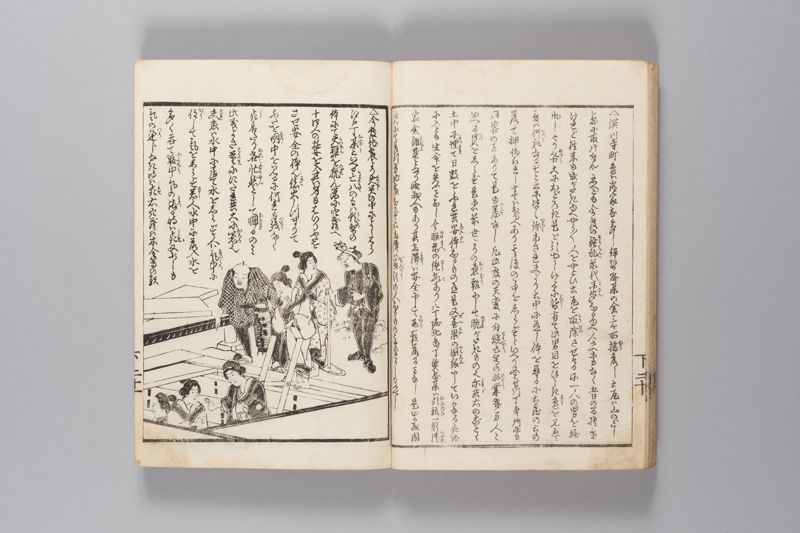
△今度地震より火災(くはじ)の中によしはら
江戸丁 某(なにがし)といへる亡八(ちよろうや)の主は頓智(とんち)の
体にて火難(くはなん)を脱(のがれ)ん為に穴蔵へ
十四人の遊女を入其身もはいりふたを
させ安全の体也 偖(さて)火しづまりて
ふたを明(あけ)中を見るに何れも残(のこり)なく
死(しゝ)居たり各(おの〳〵)忙然(ばうせん)として惘(あきれ)るのみ
此義よき量(はかりこと)ににたれ共大に愚(おろか)也
夫(それ)魚は水中に居て水をしらず人は気中(きのうち)に
住(ぢう)して気をしらず若(もし)人水中に落入水を
多く呑て腹中(ふくちう)気の満(みつ)る時は死(しす)又上しも
気の通(つう)じなき時は死(しす)右穴蔵は木金等の類
現代語訳
【右丁】
△深川寺町あたりは倒壊した家屋が特に多く、伊勢屋某の蔵三か所が揺れ崩れ、土や瓦は山のように積み重なった。急いで片付けようと思ったが、今回の騒乱は前代未聞であったため人夫なども集まらず、五日間そのまま放置していた。しかし、往来もままならなくなったため、ようやく人を雇って土や瓦を取り除かせたところ、土の中から一人の男が掘り出された。人々は大いに驚いてその男を引き出したところ、しばらくして男は目を開き、あたりを見回して「ここはどこだ」と言った。皆はますます驚き呆れた。それから、土の中に埋まっていたときの状況を尋ねると、「土蔵の土が落ちて押しつぶされたところまでは覚えているが、その後のことは知らない」と答えた。また、本所の長谷川町にも同様のことがあり、こちらも無事であった。おおよそ今回の天変地異による焼失や非業の死を遂げた者が幾万人に上るかその数も分からない。これらはすべて前世からの因果応報であり、逃れることができないものである。しかしながら、右のように土の中に埋まって何日も経ちながら安泰であった者もいる。これもまた善い行いの因縁によるものであり、いかなる死地に入ろうとも命を失うことはない。今、目の前に証拠がある。八丁堀北島町のある質屋は、家も蔵も一軒すべて微塵に潰れ、怪我人も出た。その両隣は安全であり、瓦一枚さえ落ちなかった。これはいかなる因果によってこのような差が生じたのか。両隣の者は善行を積んだ人であるとご推察いただきたい。
【左丁】
△今回の地震による火災の中で、吉原江戸町の某という廓の主人は、機転を利かせて火難を逃れようと、穴蔵(地下の貯蔵庫)に十四人の遊女を入れ、自身も入ってふたを閉めさせ、安全であるつもりでいた。さて、火が鎮まってふたを開けて中を見ると、いずれも残らず死んでいた。人々は呆然として驚くばかりであった。この考えは良い策に似てはいるが、大いに愚かなことであった。魚は水の中に住んでいながら水を意識せず、人は空気の中に住んでいながら空気を意識しない。もし人が水の中に落ちて水を多く飲み、腹の中が水で満たされたときは死ぬ。また、上下とも空気が通じなくなったときも死ぬ。右の穴蔵は木材・金属などの類(が囲んでおり)……
英語訳
**[Right Page]**
△The area around Fukagawa Teramachi had an exceptionally large number of collapsed buildings. Three storehouses belonging to a certain merchant named Iseya collapsed in the shaking, and the soil and roof tiles piled up like mountains. They intended to clear everything away quickly, but because the chaos of this disaster was unprecedented, there were no laborers available, and the debris was left for five days. However, since even passage along the road became difficult, they eventually hired workers to remove the soil and roof tiles. In doing so, they dug out a man from within the earth. Everyone was greatly shocked and pulled him out. After a short while, the man opened his eyes, looked around, and said, "Where am I?" Everyone was even more astonished. They then asked about his condition while buried underground, and he replied, "I remember the earth of the storehouse falling and pressing down on me, but I have no memory of what happened after that." A similar incident occurred at Hasegawa-chō in Honjo, and that person also survived unharmed. Altogether, the number of those who perished in fires or met violent deaths in this great calamity is unknown, numbering in the tens of thousands. These are the consequences of karma from previous lives, and there is no escaping them. Yet, as described above, there were those who remained buried in the earth for days and survived safely. This too is the result of good karmic causes, and no matter what mortal peril one enters, such a person will not lose their life. We have evidence of this before our very eyes. A certain pawnbroker in Kitajima-chō, Hatchōbori, had his house and storehouse completely reduced to rubble, with some people injured. Yet both neighboring properties were entirely safe, without a single roof tile falling. What karmic difference could account for such variation in the earthquake's effects? One should infer that the residents on both sides were people of virtuous conduct.
**[Left Page]**
△In the midst of the fires that broke out following the earthquake, the proprietor of a brothel called something-or-other on Edo-chō in Yoshiwara, thinking quickly to escape the fire, placed fourteen courtesans inside an underground cellar, entered himself, and had the lid closed. He believed they were safely sheltered. When the fire subsided and the lid was opened to check inside, every single one of them was dead. People were left utterly stunned and speechless. This plan seemed like a good idea, but it was in fact profoundly foolish. Fish live in water yet are unaware of water; humans live in air yet are unaware of air. If a person falls into water, drinks a great deal of it, and the belly fills up with water, they die. Likewise, when air ceases to circulate from above and below, they also die. The underground cellar in question was surrounded by wood, metal, and similar materials…