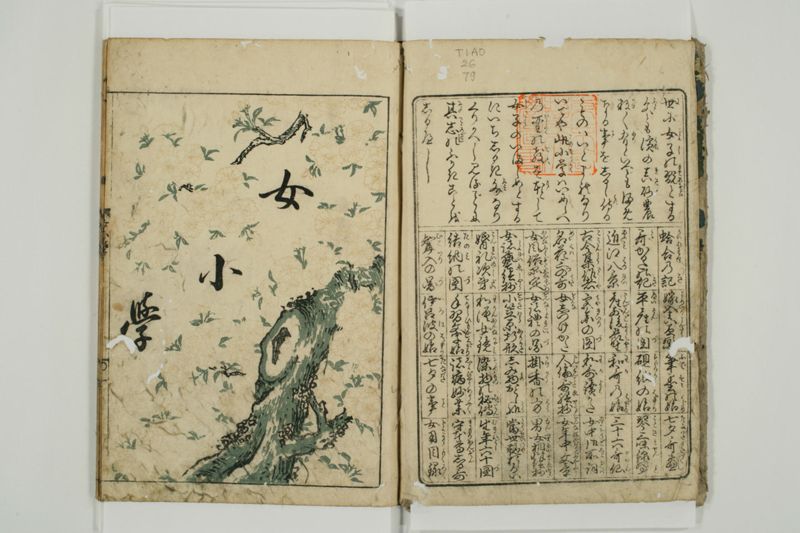
翻刻
【右丁】
【上段】
世に女子(じよし)の翫(もてあそび)とする
文(ふみ)とも浜(はま)の真砂(まさご)の
数(かず)〳〵有(あり)といへどもまめ
なる事(こと)をしるし侍(はべ)る
ものはいとまれなり
いでや此(この)小学(せうがく)はいにしへ
の聖(ひじり)の教(をしへ)を本(もと)として
女子(じよし)のいましめとする
にいちしるき文(ふみ)なり
くりかへし見るごとに
其(その)志(こころざし)のふかきことを
しるへし
【下段】
【一行目、右から】
蛤合(かいあわせ)の記(き)
歌かるたの記(き)
近江(あふみ)八景(はつけい)
古今集(こきんしう)作者(さくしや)
名花(めいくわ)三ッの歌
女風俗品定(おんなふうぞくしなさだめ)
女 諸芸絵抄(しよげいゑしやう)
婚礼次第(こんれいのしだい)
結納(たのみ)の図
婿入(むこいり)の図
【二行目、右から】
嫁入真草の図(よめいりしんさう)■
平産(へいさん)の図(づ)
産前後養生(さんぜんごようじやう)
宮参(みやまいり)の図(づ)
女(をんな)しつけがた
女(をんな)諸礼(しよれい)の図(づ)
小笠原(をがさはら)折形(おりかた)
和漢女鏡(わかんおんなかゞみ)
手習文字始(てならいもんじはじまり)
伊呂波(いろは)の始(はじまり)
【三行目、右から】
筆墨(ふですみ)の始(はじめ)
硯紙(すずりかみ)の始(はじまり)
和哥(わか)の始(はじまり)
和哥(わか)読(よみ)かた
人倫(じんりん)哥(うた)絵抄(えせう)
掛香(かけかう)の方(はう)
しみ物(もの)おとし様(よう)
染物(そめもの)の秘伝(ひでん)
諸病(しよびやう)妙薬(めうやく)
七夕(たなばた)の事(こと)
【四行目、右から】
七夕哥尽(たなばたうたづくし)
琴三味線(ことさみせん)の事(こと)
三十六 歌仙(かせん)
女中(じよちう)御所詞(ごしよことば)
女(をんな)年中文章(ねんぢうぶんしやう)
男女(なんによ)相性(あいしやう)絵抄(ゑせう)
当世艶(とうせいつや)おしろい
生年(むまれどし)六十 図(づ)
守本尊(まもりほんぞん)しる哥
女用目録(じよようもくろく)
【左丁 插絵中の文字】
女
小
学
現代語訳
【右丁】
【上段】
世に女子の楽しみとする書物も、浜の砂粒のように数多くあるといえども、真面目な(ためになる)ことを記しているものはとても稀である。
さあ、この『小学』は、昔の聖人の教えを基として、女子への戒めとするのに、とりわけ明らかな(優れた)書物である。
繰り返し読むたびに、その志の深いことを知るべきである。
【下段・目録】
〔第一列〕
・蛤合の記
・歌かるたの記
・近江八景
・古今集の作者
・名花三首の歌
・女風俗品定め
・女諸芸絵抄
・婚礼次第
・結納の図
・婿入りの図
〔第二列〕
・嫁入り真草の図
・平産の図
・産前後の養生
・宮参りの図
・女のしつけかた
・女諸礼の図
・小笠原流折形
・和漢女鑑
・手習い文字始め
・いろはの始まり
〔第三列〕
・筆・墨の始め
・硯・紙の始まり
・和歌の始まり
・和歌の読みかた
・人倫歌絵抄
・掛け香の方法
・しみ物の落とし方
・染物の秘伝
・諸病の妙薬
・七夕のこと
〔第四列〕
・七夕歌尽くし
・琴・三味線のこと
・三十六歌仙
・女中御所詞
・女年中文章
・男女相性絵抄
・当世艶おしろい
・生年六十図
・守本尊知る歌
・女用目録
【左丁・挿絵中の文字】
女
小
学
英語訳
【Right Page】
【Upper Section (Introduction)】
Though there are countless books in this world made for women's enjoyment — as numerous as the grains of sand on the beach — those that record truly earnest and worthwhile matters are exceedingly rare.
Now, this "Shōgaku" (Elementary Learning) is based on the teachings of the ancient sages, and is a work of particular clarity and excellence to serve as moral guidance for women.
Each time one reads it again and again, one should come to understand the great depth of its purpose and spirit.
【Lower Section (Table of Contents)】
〔First Column〕
- Record of the Shell-Matching Game (Kai-awase)
- Record of Poetry Karuta
- The Eight Views of Ōmi
- Authors of the Kokinshū
- Poems on the Three Famous Flowers
- A Critique of Women's Manners and Customs
- Illustrated Anthology of Women's Various Arts
- The Order of Wedding Ceremonies
- Illustration of Betrothal Gifts (Yuino)
- Illustration of the Bridegroom's Entry
〔Second Column〕
- Illustration of the Bride's Entry (in formal and cursive styles)
- Illustration of Safe Delivery (Childbirth)
- Care Before and After Childbirth
- Illustration of the Shrine Visit (After Birth)
- How to Discipline/Raise Women Properly
- Illustration of Women's Various Etiquette
- Ogasawara-style Paper Folding (Origata)
- A Mirror of Women, Japanese and Chinese
- Beginning of Practice Writing (Calligraphy)
- The Beginning of the Iroha (Syllabary)
〔Third Column〕
- The Beginning of Brush and Ink
- The Beginning of Inkstone and Paper
- The Beginning of Waka Poetry
- How to Read/Compose Waka Poetry
- Illustrated Anthology of Human Relations in Poetry
- Method of Making Hanging Sachets (Kake-kō)
- How to Remove Stains from Fabric
- Secret Techniques for Dyeing Fabric
- Miraculous Medicines for Various Ailments
- On the Tanabata Festival
〔Fourth Column〕
- Collection of Tanabata Poems
- On Koto and Shamisen
- The Thirty-Six Poetry Immortals (Sanjūrokkasen)
- Court Ladies' Palace Vocabulary (Gosho Kotoba)
- Women's Correspondence Throughout the Year
- Illustrated Anthology of Romantic Compatibility Between Men and Women
- Contemporary Fashionable Face Powder
- The Sixty-Year Cycle of Birth Years (Zodiacal Chart)
- Poems for Knowing One's Guardian Buddha
- Index for Women's Use
【Left Page (Text within Illustration)】
Women's
Elementary
Learning