翻刻
【右丁】
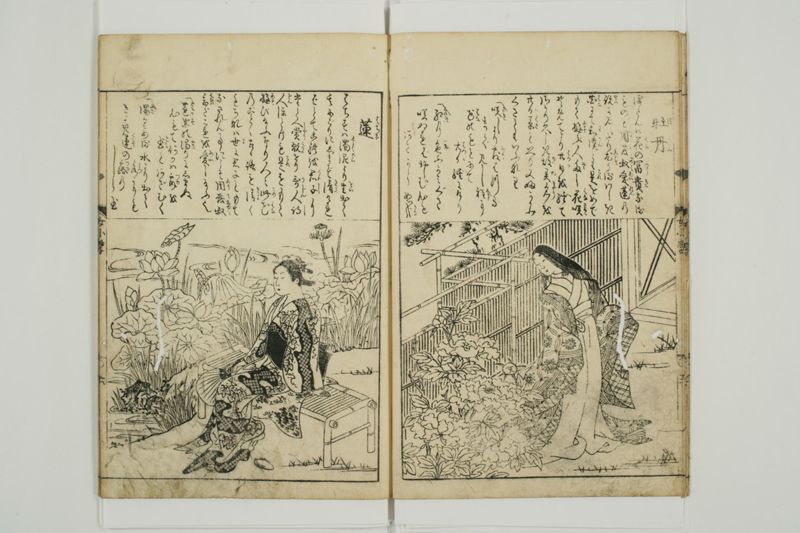
牡丹(ほたん)
ぼたんは花(はな)の冨貴(ふうき)なる
ものと周茂叔(しうもしゆく)愛蓮(あいれん)の
説(せつ)に見えたり尤(もつとも)うるはしき
花(はな)にて和漢(わかん)とも是(これ)をめで
もて遊(あそ)ぶ人/多(おゝ)し花(はな)咲(さき)
そめてより廿日(はつか)を経(へ)て
さかり久しき故(ゆへ)異名(ゐみやう)を
廿日/草(くさ)といへり又ふかみ
くさともいふなり
〽咲(さき)しより散(ちり)はつる
まで 見し程(ほど)に
春(はる)のもとにて
廿日(はつか)経(へ)にけり
〽紅(くれない)の色(いろ)ふかみぐさ
咲ぬればおしむ心も
あさからぬ哉(かな)
【左丁】
蓮(はちす)
はちすは濁泥(しよくでい)より生(をい)出て
其にごりにしまず清(きよ)けれ
ばとてこれを君子(くんし)に
たとへ賞翫(しやうくはん)せり歌人(かじん)詩(し)
人(じん)ほとけも是(これ)をもて
遊(あそ)び給ふなり人々/此花(このはな)
のごとくこゝろを清(きよ)く
もちなば世(よ)に君子ともて
なされん事にこそ周茂叔(しうもしゆく)
甚(はなは)だこれを愛(あい)し給ふ也
〽蓮葉(はちすば)の濁(にご)りにしまぬ
心もて何かは露(つゆ)を
玉(たま)とあざむく
〽濁(にご)りある水より出て
水(みつ)よりも
きよき蓮(はちす)の露(つゆ)の
しら玉
現代語訳
【右丁】
牡丹(ぼたん)
牡丹は、花の中でも富貴(高貴で豊かな)ものであると、周茂叔の「愛蓮説」に記されている。とりわけ美しい花であり、日本・中国ともにこれを愛でて楽しむ人が多い。花が咲き始めてから二十日を経てもなお盛りが続くことから、異名を「二十日草(はつかぐさ)」という。また「ふかみぐさ」とも呼ばれる。
〽咲いてから散り果てるまでを 見ていると
春の木のもとで
二十日が経ったことよ
〽紅の色も深き「ふかみぐさ」よ
咲いたかと思えば 惜しむ心も
浅くはないことよ
【左丁】
蓮(はちす)
蓮は、濁った泥の中から生え出て、その濁りに染まらず清らかであることから、これを君子(徳のある人)にたとえて賞賛されてきた。歌人も詩人も、仏様もこれをめでて楽しまれる。人々がこの花のように心を清く保つならば、世間から君子として遇されることであろう。周茂叔はとりわけこの花を愛されたのである。
〽蓮の葉の 濁りに染まぬ心をもって
なぜわざわざ露を
玉(宝珠)と見せかけるのか
〽濁りある水の中から生まれながら
水よりも
清い蓮の露の
白玉よ
英語訳
**[Right Page]**
**Peony (Botan)**
The peony is described as the most wealthy and noble of flowers in Zhou Maoshu's essay "On Loving the Lotus" (*Ai Lian Shuo*). It is an exceptionally beautiful flower, and there are many people in both Japan and China who admire and delight in it. Because its bloom lasts for twenty days after first opening, it is alternatively called "Hatsukagusa" (the twenty-day plant). It is also known as "Fukamigusa" (the deep-colored plant).
*From when it blooms until it scatters and fades — watching all this,*
*beneath the spring tree,*
*twenty days have passed.*
*The crimson "Fukamigusa" in full bloom —*
*now that it has flowered, the feeling of reluctance to let it go*
*is far from shallow.*
---
**[Left Page]**
**Lotus (Hachisu)**
The lotus grows up out of muddy, turbid water, yet is not tainted by that murkiness, remaining pure and clean. For this reason, it has been likened to a *kunshi* (a person of virtue and moral excellence) and celebrated as such. Poets of waka, poets of Chinese verse, and even the Buddha himself take delight in this flower. If people were to keep their hearts as pure as this flower, they would surely be regarded by the world as virtuous persons. Zhou Maoshu loved this flower especially and deeply.
*With a heart that, like the lotus leaf, is not stained by murkiness —*
*why then does it deceive,*
*making the dew appear as jewels?*
*Rising from turbid water,*
*yet purer than the water itself —*
*the white jewel of the lotus dew.*