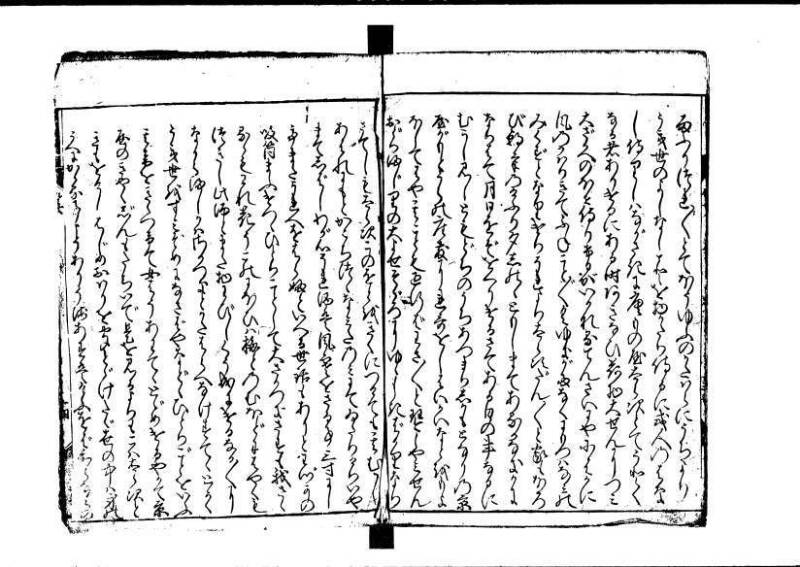
翻刻
雨ふりつれ〴〵とてほうゆふのかたはらにうちより
うき世のよしなしことを物かたり侍るに或人のはな
し侍りしはながさきに唐ものや太郎次とてうとく
なる者ありけるにある時あきなひ荷物大せんにつみ
大ざかへのほを侍りけるがいかなるてんさいにやにはかに
風のかはりきてふねこと〴〵くゆきがたなくにもつはなみの
みくずとなりけりそれより太郎次だん〳〵と家もほろ
び朝気のけふり夕しのゝともしまてあるかなきかに
なりはて月日をぞをくりけるさてある日の事なるに
むかし見しともどちのうちあつまりしかもとなりの京
屋がもとうらの座敷に連歌をしはいかいなとをもよ
ほしてはや其ことも過行ばわさ〳〵と琴しやみせん
おどりまじりの大よせそゞろにゆゝしきばかりなり
さてしも太郎次このをとをきくにつけても其むかし
あはれにもとかこちつゝなみたのみにてゐたりけりいや
まてしばしわが心それ酒は風寒をさる事三寸にし
てまたうれへをはらふといへる世話もありとわづかの
吸筒まふけつゝひとりことして大さかつきさすも我さく
るゝもわれ花うこのにほひは梅とのむほどにはやくも
つきし此酒とまた物わびしくう成にけるなか〳〵に
なからましかはさかつきとかたはらへなけすてゝとかく
うき世をすみぞめになさばやなどゝひとりごとをいふ
其音をきゝつけて女はうあわてゝとゞめけるやかて京
屋のきやくじんもたちいで是を見るよりもこは太郎次と
きもをけしはじめおはりを聞とゞけたゞ世の中は永の
うへにかゝる事こそありそ海あすはけふをば知らなら■の
現代語訳
雨が降り続いているので、夕方のかたわらで家の中から浮世のよもやま話を語っていたところ、ある人の話であったのは、長崎に唐物屋太郎次という裕福な者がいた。ある時、商売の荷物を大船に積んで大坂へと向かっていたが、どのような天災であろうか、にわかに風向きが変わって、船はすっかり進むことができなくなり、荷物は波の泡と消えてしまった。それより太郎次は次第に家も没落し、朝の食事から夕べの灯火まで、あるかないかの状態になってしまい、月日を送っていた。
さてある日のことに、昔馴染みの友人たちが集まって、隣の壺屋の裏座敷で連歌や俳諧などを楽しんでいたが、早くもそのことも過ぎ去ると、わいわいと琴や三味線、踊りなどが入り混じった大騒ぎで、ただ楽しいばかりであった。
さて太郎次がこの音を聞くにつけても、その昔を哀れにも懐かしく思い、涙ばかりで座っていた。いや待て、しばし我が心よ。それ酒は風寒を去ることわずか三寸にして、また憂いを払うという世間話もあると、わずかな酒器を設けて、ひとりごとをしながら、大きな盃を差すのも我、酌むのも我、花鳥の香りは梅と飲むほどに、早くも尽きたこの酒よ、また物寂しくなってしまった。いっそのこと、この世を捨てて出家になろうかなどとひとりごとを言う、その声を聞きつけて、女房が慌てて止めた。やがて壺屋の客人たちも立ち出て、これを見るや、これは太郎次よと肝を消し、始終を聞き届けて、ただ世の中は無常の上に、このようなことこそ哀れなれ。明日は今日を知らない波のように。
英語訳
As the rain continued to fall, we were sitting inside during the evening, telling various stories about this floating world, when someone told this tale: In Nagasaki, there was a wealthy merchant named Tarojinamed who dealt in Chinese goods. One time, he loaded his trading goods onto a large ship bound for Osaka, but due to some natural disaster, the wind suddenly changed direction, the ship could no longer proceed, and his cargo disappeared like foam on the waves. From that point on, Taroji's household gradually fell into ruin, and he came to live in such poverty that even his morning meals and evening lamp oil were uncertain, passing his days in this manner.
Now, one day, his old friends had gathered at the back room of the neighboring Tsuboya shop to enjoy linked verse and haikai poetry, but when that entertainment ended, they made a great commotion with shamisen, koto, and dancing, creating nothing but merriment.
When Taroji heard these sounds, he was moved to nostalgia for the old days and sat there with nothing but tears. "No, wait," he said to his heart, "they say that sake can dispel cold and wind within three inches, and there are also folk sayings that it can chase away sorrows." So he prepared what little drinking vessel he had and, talking to himself, poured large cups - serving himself and drinking by himself. As he drank, savoring the floral fragrance like plum blossoms, the sake was quickly exhausted, leaving him feeling even more melancholy. "Perhaps I should abandon this world and become a monk," he muttered to himself. Hearing this, his wife rushed to stop him in alarm. Soon the guests from the Tsuboya shop also came out, and seeing this scene, they cried "This is Taroji!" in shock. After hearing the whole story, they reflected that the world is built upon impermanence, and such circumstances are truly pitiful. Tomorrow, like the waves, we cannot know today.