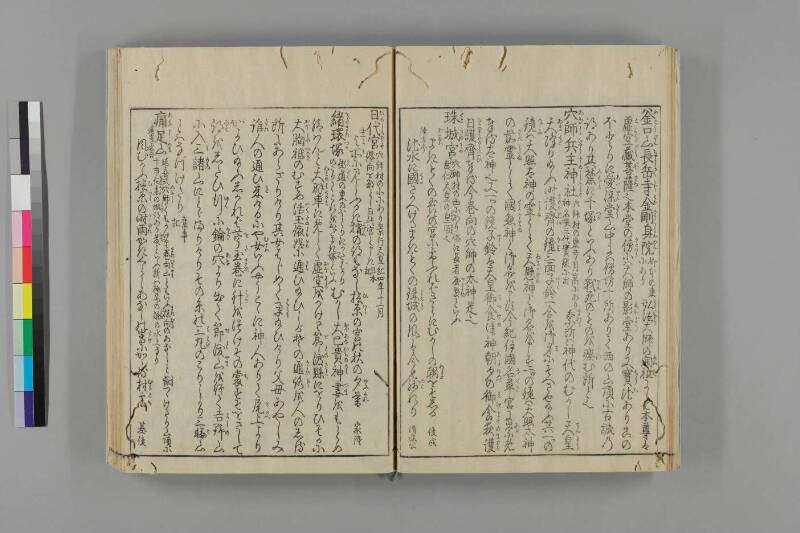
翻刻
【コマ178】
【右丁】
釜口山長岳寺金剛身院(ふこうざんちやうかくじこんかうしんゐん)《割書:栁本の東|にあり》弘法大師(こうほう )の開祖(かいそ)にして本尊は
虚空藏菩薩(こくうざうぼさつ)也本堂の傍(かたはら)には大師の影堂(ゑいだう)あり又 寳池(ほうち)ありこの
ほとりに愛染堂(あいせんだう)山中には僧坊十所ありて西の山頂に古城の
跡あり其麓に千塚( つか)といふあり戦死(せんし)のものを瘞(うつ)む所と也
穴師兵主神社(あなしひやうすのしんしや)《割書:穴師村の東弓月嵩にあり|神名帳三代實録に出》祭(まつる)所は神代のむかし天皇(てんわう)
天降(あまくだ)り給ふ时 《振り仮名:護𮮻|まもりいはひ》#1の鏡(かゝみ)三面 子鈴(すゝ)一合を御身( み)にそへさせ給ふ其一 ̄ツの
鏡(かゞみ)は天照太神の霊(みたま)として天懸神(あまかけの )と御名を申す一 ̄ツの鏡は天照太神
の前霊(さきみたま)として國懸神(くにかゝりの )と御名を申す今紀伊國名草宮に崇(あが)め
奉る太神也又一 ̄ツの鏡 子鈴(すゝ)は天皇 御食津神(みつけの )#5朝夕(あしたゆふべ)の御食夜護(みけよるのまもり)
《振り仮名:日護𮮻|ひるのまもりといはひ》奉る今巻向の穴師の太神是也
珠城宮(たまきのみや)《割書:穴師村の西にあり俗に長者屋敷( やしき)といふ|垂仁天皇(すいにん )の皇居也》
《割書:玉葉》
まきもくの玉きの宮に雪ふればさらにむかしの朝(あした)をそしる 俊成
《割書:續古今》
池水に國(くに)さかへけるまきもくの殊城(たまき)の風は今も残れり 清慎公
【左丁】
日代宮(ひのしろのみや)《割書:穴師村の北にあり景行天皇紀四年十一月|纒向を都とし日代宮と申き《割書:日本|紀》》
《割書:壬二》
よ所に見しふるき梢(こずへ)の跡もなし桧原(ひはら)の宮の秋の夕暮(ゆふくれ) 家隆
緒環塚(をだまきつか)《割書:街道(かいだう)の東のほとりにかたばかり|のこりてこれをおだまき塚(つか)といふ》むかし大己貴神(おほあなむちのかみ)妻(つま)#2をもとめ
給わんと天羽車(あまのはくるま)にめして虚空(おほそら)をかけり節渡縣(せとのさと)にをりひそかに
大胸祇(おほみやつかさ)のむすめ活玉依姫(いくたまよりひめ)に通ひ給ひしがその通路(かよひじ)を人のしる
所にあらざりけり其女はじめて孕(はらみ)給ひけり父母あやしみ
誰人(たれ )の通ひ來(き)けるにや女(むすめ)いふやうこゝに神人ありて尾上(おのへ)より
かよひ給ふしかれば苧玉巻(をたまき)に針(はり)をつけその裳(も)すそをさして
跡(あと)をしたひ行(ゆく)に錀(かぎ)の穴(あな)より出て節渡山(せとやま)を経て《振り仮名:𠮷野山|よしの 》
に入 三諸山(みもろ )とゞまりけりその糸の三丸(みわげ)#3のこりしより三輪山( わ )
とはなづけたり《割書:𦾔事#4|記》
痛足山(あなしやま)《割書:延喜式 穴師(あなし)ともかけり巻向山(まきむくやま)ともいふ槙向(まきむき)のあなしと詠(よみ)つゝけたり山頂に|十市 何某(なにかし)の城跡(しろ )あり藤(ふぢ)といふ所は桃尾の瀧(たき)の水上なり》
《割書:遠嵩哥合》
風むかふ桧原(ひはら)の时雨(しぐれ)かきくらしあなしの嵩(たけ)にかゝる村雲(むらくも) 基俊
現代語訳
## 【右丁】
**釜口山長岳寺金剛身院**(柳本の東にある)
弘法大師が開いた寺で、本尊は虚空蔵菩薩である。本堂のかたわらには大師の影堂があり、また宝池がある。その池のほとりには愛染堂がある。山中には僧坊が十か所あり、西の山頂には古城の跡がある。その麓には「千塚」と呼ばれる場所があり、戦死した者を葬った所である。
---
**穴師兵主神社**(穴師村の東、弓月嶽にある。神名帳・三代実録に記載あり)
祭神について:神代の昔、天皇が天から降り給うた時、御護りとして奉った鏡三面と子鈴一合を御身にそえられた。そのうち一つの鏡は天照大神の霊(みたま)として「天懸神(あまかけのかみ)」と申し上げる。もう一つの鏡は天照大神の前霊(さきみたま)として「国懸神(くにかかりのかみ)」と申し上げ、今は紀伊国名草の宮で崇め奉る大神である。さらにもう一つの鏡と子鈴は、天皇の御食津神として、朝夕の御食と夜の御護り、昼の御護りとして奉る。今、巻向の穴師の大神がこれである。
---
**珠城宮**(穴師村の西にある。俗に「長者屋敷」という。垂仁天皇の皇居である。)
> 【玉葉】
> まきもくの玉きの宮に雪ふればさらにむかしの朝(あした)をぞしる 俊成
> 【続古今】
> 池水に国さかえけるまきもくの珠城の風は今も残れり 清慎公
---
## 【左丁】
**日代宮**(穴師村の北にある。景行天皇紀四年十一月、纒向を都とし、日代宮と申した。〔日本紀〕)
> 【壬二(集)】
> よそに見しふるき梢の跡もなし桧原の宮の秋の夕暮 家隆
---
**緒環塚**(街道の東のほとりにわずかに残り、これを「苧環塚」という。)
昔、大己貴神が妻を求めようと天羽車に乗り、大空をかけ巡った。節渡の里に降り立ち、ひそかに大胸祇の娘・活玉依姫のもとに通われた。しかし、その通い路を誰も知らなかった。その姫がはじめて懐妊された時、父母が不思議に思い、「いったい誰が通ってきているのか」と問うた。娘が言うには、「ここに神人があって、尾上(山の頂)より通ってこられます」と。そこで苧環(糸巻き)に針をつけ、その裳の裾に刺して跡をたどってゆくと、鍵の穴(錀の穴)から出て、節渡山を経て吉野山に入り、三諸山に留まっていた。その糸が三巻(みわ)残ったことから、「三輪山」と名付けられた。〔旧事記〕
---
**痛足山(穴師山)**(延喜式では「穴師」とも書く。巻向山ともいう。「槙向のあなし」と詠み続けられてきた。山頂には十市某の城跡がある。「藤」という所は桃尾の滝の水源である。)
> 【遠嶺歌合】
> 風むかふ桧原の時雨かきくらしあなしの嶽にかかる村雲 基俊
英語訳
## [Right Page]
**Kamaguchisan Chōgakuji Kongōshinin Temple** (Located to the east of Yanagimoto)
This temple was founded by Kōbō Daishi (Kūkai), and its principal object of worship is the Bodhisattva Ākāśagarbha (Kokūzō Bosatsu). Beside the main hall stands a memorial hall (eidō) dedicated to Kūkai. There is also a sacred pond (hōchi), near which stands the Aizen Hall. Within the mountain precinct are ten monk's quarters, and at the western summit lie the ruins of an old castle. At its foot is a place called "Chizuka" (Thousand Mounds), said to be a burial site for those who died in battle.
---
**Anashi Hyōsu Shrine** (Located to the east of Anashi village, on Mt. Yuzukidake. Mentioned in the Jinmyōchō and the Sandai Jitsuroku.)
Regarding the enshrined deities: In the age of the gods, when the Emperor descended from Heaven, three sacred mirrors and one set of small bells were placed upon his person as divine talismans. One of these mirrors is venerated as the spirit (mitama) of Amaterasu Ōmikami and is called "Amakake no Kami." Another mirror is venerated as the anterior spirit (sakimitama) of Amaterasu Ōmikami and is called "Kunikakari no Kami"—this great deity is now enshrined and revered at the Nagusamiya in Kii Province. The remaining mirror and bells serve as the deity of the Imperial meals (Miketsu no Kami), protecting the morning and evening meals, the nighttime, and daytime. These are now the great deities of Anashi in Makimuku.
---
**Tamaki no Miya** (Located to the west of Anashi village. Commonly known as "Chōja Yashiki" (the Manor of the Wealthy Landowner). This was the Imperial Palace of Emperor Suinin.)
> [Gyokuyō anthology]
> *Makimoku no / Tamaki no miya ni / yuki fureba / sara ni mukashi no / ashita o zo shiru*
> (When snow falls upon the Palace of Tamaki in Makimoku, one feels anew the mornings of ages past.) — Shunzei
> [Shoku Kokin anthology]
> *Ikemizu ni / kuni sakaekeru / makimoku no / Tamaki no kaze wa / ima mo nokoreri*
> (The wind of Tamaki in Makimoku, where the land once flourished by the pond's water, still lingers today.) — Seishinko
---
## [Left Page]
**Hinoshiro no Miya** (Located to the north of Anashi village. In the fourth year of Emperor Keikō's reign, in the eleventh month, Makimuku was established as the capital and named Hinoshiro no Miya. [Nihon Shoki])
> [Jini (anthology)]
> *Yoso ni mishi / furuki kozue no / ato mo nashi / Hihara no miya no / aki no yūgure*
> (Not even a trace remains of the old treetops I once saw from afar — the autumn dusk at the Palace of Hihara.) — Ienari (Karitaka)
---
**Odamaki Tsuka (Spindle Mound)** (Only a small portion remains on the eastern side of the highway, and this is called "Odamaki Tsuka.")
Long ago, the great deity Ōnamuchi no Kami sought a wife, riding the Heavenly Feather Chariot (Ama no Hakuruma) across the sky. He descended at Seto no Sato and secretly began visiting Ikutamayorihime, daughter of Ōmiyatsukasa. The path by which he came was unknown to anyone. When the maiden first became pregnant, her parents were puzzled and asked who had been visiting her. She replied: "A divine being comes here from the mountaintop." So she attached a needle to a spindle of thread (odamaki) and stuck it into the hem of his garment. Following the trail, they found that the thread passed through a keyhole, went across Mt. Seto, entered Yoshino-yama, and ended at Mt. Mimoro. Because three coils (miwa) of thread remained, the mountain was thereafter named "Miwayama" (Mt. Miwa). [Kujiki (Sendai Kuji Hongi)]
---
**Anashiyama (Mt. Anashi)** (In the Engishiki it is also written as "Anashi." It is also called Makimukuyama. It has long been paired in poetry with the phrase "Makimuki no Anashi." At the mountain summit are the ruins of a castle belonging to Toichi-nanigashi. The place called "Fuji" is the headwaters of the Momoo Waterfall.)
> [Tōrei Utaawase (Poetry Contest)]
> *Kaze mukau / Hihara no shigure / kakikurashi / Anashi no take ni / kakaru murakumo*
> (The driving rain at Hihara darkens the sky, and clouds gather over the peak of Anashi.) — Mototoshi