翻刻
【コマ198】
【見開き 図】
【右丁】
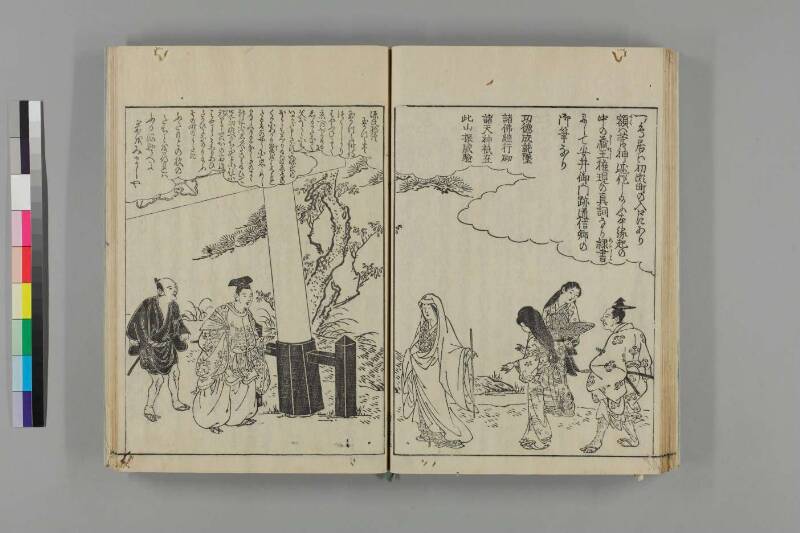
一 ̄ノ鳥居は初瀬町の入口にあり
額(かく)は菅神述作し給ふ本縁起の
中の藏王権現の真詞なり隷書(れいしよ)
にして安井御門跡道信卿の
御筆なり
功徳成就墜
諸佛經行砌
諸天神祇在
此山振威驗
【左丁】
源氏物語
玉かつら巻
玉かつらの内侍
つくしより
はやふねにて
京へのぼりけるに
しるかたなく
父おとゝにも
いまだ申さず又源氏の
おとゝもしり給はず水鳥の
くかにあかり巣(す)をはなれ
たる鳥のやうにて思しめし
かなしみけるかなしさのまゝ
神仏に御しるべたのみ給ひて
先初瀬へかちにて参 ̄リ仏に
祈(いの)り申せはかの右近
はせにて参りあひ
たかひになのり給ふ
その时のうたに
ふたもとの杦の
たちとを尋れは
ふる河野へに
君をみましや
現代語訳
【見開き図】
【右丁】
一の鳥居は初瀬町の入口にある。
額(扁額)は菅原道真公が述作された本縁起の中の蔵王権現の真詞(神聖な言葉)であり、隷書体で書かれており、安井御門跡・道信卿の御筆によるものである。
(扁額に刻まれた漢詩)
功徳成就墜
諸佛經行砌
諸天神祇在
此山振威驗
(意訳:功徳が成就して降り注ぎ、諸仏がその庭を経行し、天つ神々がここに在して、この山で威験を振るわれる。)
【左丁】
『源氏物語』
玉鬘の巻より
玉鬘の内侍が筑紫より早船に乗って京へ上る途中、頼れる縁故もなく、父である内大臣(もとの頭中将)にも未だ申し出ておらず、また源氏の大臣もご存知でなかった。まるで水鳥が水面から飛び立ち、巣を離れた鳥のように心細く悲しみに暮れていた。その悲しさのまま、神仏にお導きをお頼みになり、まず初瀬へ徒歩で参詣され、仏に祈り申し上げたところ、かの右近が長谷寺に参り合わせ、互いにお名乗りになった。
その時の歌に、
ふたもとの杉の
立ち所を尋ねれば
古(ふる)河野辺(かはのへ)に
君を見ましや
(二本の杉のある場所(長谷寺)を訪ね来なければ、懐かしいこの川辺であなたに巡り会えたでしょうか。)
英語訳
【Double-page spread illustration】
【Right page】
The first torii gate stands at the entrance to Hatsuse-machi (the town of Hatsuse).
The plaque was composed by the Sugawara deity (Sugawara no Michizane) and contains the sacred words of Zaō Gongen from the original sacred chronicle. It is written in the clerical script (reisho) style and is the brushwork of the Abbot of Yasui, Lord Dōshin.
(Verse inscribed on the plaque)
Merits and virtues achieved descend,
The many Buddhas walk the garden stones,
The gods of heaven and earth dwell here,
And on this mountain their sacred power resounds.
【Left page】
*The Tale of Genji*
From the "Tamakazura" chapter
Lady Tamakazura, traveling by fast boat from Tsukushi (Kyushu) up to the capital, had no one to rely upon — she had not yet spoken to her father, the Minister of the Interior (formerly Tō no Chūjō), and Lord Genji was also unaware of her existence. Like a waterbird that has taken flight from the surface of the water, or a bird that has left its nest, she felt utterly forlorn and sorrowful. In the midst of this grief, she entrusted herself to the guidance of the gods and buddhas, and first made a pilgrimage on foot to Hatsuse (Hase-dera temple) to pray to the Buddha. There, she encountered her former attendant Ukon, who had also come to Hase on pilgrimage, and the two women revealed their identities to one another.
The poem composed at that moment reads:
Had we not sought out
the place of the twin cedars,
could we have met you
here on this familiar riverbank?
(Had we not come to seek this place — Hase-dera, marked by its twin cedar trees — would we ever have been reunited here by this remembered riverside?)