翻刻
【コマ292】
【右丁上部欄外】
《箱:十市郡》
【右丁】
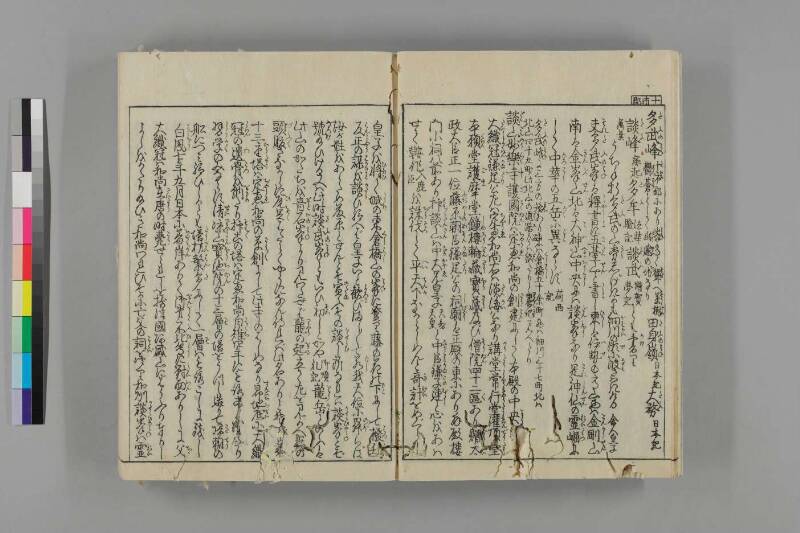
多武峰(たふのみね)《割書:十市郡(といち )にあり峯(みね)高く聳(そび)へ草樹(そうじゆ)|欎蒼(うつさう)#4として幽邃(ゆうせい)の地(ち)なり》田身嶺(たふのみね)《割書:日本紀》大務(たふ)《割書:日本紀》
談峰(たふ)《割書:縁起》多牟(たふ)《割書:法𬜻|驗記》談武(たふ)《割書:增賀|夢記》とも書(かけ)り
《割書:萬葉》
うち手折 多武(たふ)の山雰( きり)しげき#3かも細川(ほそかは)の瀬(せ)に波(なみ)さはきける 舎人皇子
夫(それ)多武峯(たふのみね)は釋書(しやくしよ)に五䑓山(ごたいせん)と書(しよ)し東(ひかし)は伊㔟(いせ)の髙山西は金剛山(こんかうせん)#5
南は金峯山(きんぶせん)北は大神山(みはやま)中央(ちうわう)には談峯(だんほう)なり是(これ)神仙(しんせん)の霊崛(れいくつ)に
して《振り仮名:中𬜻|もろこし》の五岳( かく)に異(こと)ならず《割書:荷西|記》
多武峰(たふのみね)に三方の路(みち)あり東は倉橋(くらはし)五十余町西は細川三十七町北は
北山四十九町此北山の通路(つうろ)今(いま)は絶(たへ)たりと畧記(りやくき)見へたり
談山妙樂寺護國院(だんさんめうらくじごこくゐん)は定恵和尚(ちやうゑ )の創建(さうこん)にして本殿の中央( わう)□□#6
大織冠鎌足公(たいしよくかんかまたり )㔫は定恵(ちやうゑ)和尚右は淡海公(たんかい )なり講堂(かうとう)常行堂(しやうきやうとう)灌頂堂(くはんでうたう)
本願堂( くわん )護摩堂(ごま )鐘樓(しやろう)輪藏(りんさう)寳藏(ほうさう)及び僧院(そうゐん)四十二區( く)あり贈太(ぞうたい)
政大臣正一位藤原朝臣鎌足公( ふぢわらのあそんかまたり )の祠廟(しびやう)は正殿の東にあり拝殿樓
門小祠八前あり抑(そも〳〵)談山(たんさん)は中大兄皇子(なかおほゑ )《割書:天智|天皇》と中臣鎌子連(なかとみかまこのむらし)と心をあは
せて鞍作#1《割書:入鹿|臣》を誅伐(ちうばつ)して平天下(へいてんか)なからしめんと竒計(きけい)をめぐらし
【左丁】
皇子を將(ひきひ)て城(しき)の東 倉橋山(くらはし )の峯(みね)に登り藤の花の下(もと)にして撥乱(はつらん)
反正(はんしやう)の謀(はかりこと)を談(かたら)ひ給へば皇子いと歓(よろこ)びまし〳〵て若(もし)我天位に曻(のぼ)らば
汝が姓をあらため藤原とせんとそ宣(のたま)ふその談(かたらひ)し所なれは談峯(かたらひのみね)とぞ
號(なつけ)給ひける又は此時 談武峯(たふのみね)ともいひ初(そめ)しとかや《割書:御順|礼記》龍岳(りうかく)#2といふは
此山のかたちを音石峯(をとはのみね)より見わたせば龍(りう)#2の起(をき)立て㔫を見かへ□の
頭服(づふく)さなからに尾足(びそく)はたらくやうになん侍れば此名ありとそ□□#7
十三重塔( ちうとう)は定恵和尚(ぢやうゑ )の草創(さう〳〵)にして此寺のはしめなり即(すなはち)地底(ちてい)に大織
冠(くわん)の遺骨(ゐこつ)を納(をさめ)たり抑(そも〳〵)古の塔は定恵和尚 白雉四年(はくち )にもろこしにわたり
習学(しうかく)のみならす清涼山寳池院(せいりやうさんほうちゐん)の十三層( そ)の塔をうつし造りて帰朝(きてう)の
舩につみ給ひしかとも塔材繁多(たうざいはんた)にして一層( そ)はもろこしに残し
白鳳(はくほう)七年九月日本に着岸(ちやくがん)ありて御㐧不比等(をんをとゝふひとう)に対面(たいめん)ありしに父(ちゝ)
大織冠は和尚 在唐(さいたう)の時 薨(こう)せられしを摂津國阿威山にはうふり奉りし
よしをかたり給ひき和尚われひそかに亡父の詞(ことば)を聞り和州談峯( かたらひのみね)は霊(れい)
現代語訳
【大和名所図会 十市郡】
**多武峰**(十市郡にあり。峰は高くそびえ、草木が鬱蒼として幽邃の地である)
田身嶺(『日本書紀』)、大務(『日本書紀』)、談峰(縁起)、多牟(『法華験記』)、談武(『増賀夢記』)とも書く。
『万葉集』より:
うち手折り 多武の山霧 しげきかも 細川の瀬に 波さわきける
舎人皇子
そもそも多武峰は、『釈書』に「五台山」と記されており、東は伊勢の高山、西は金剛山、南は金峯山、北は大神山、中央には談峰がある。これはまさに神仙の霊窟であり、中国の五岳に異ならない(『荷西記』)。
多武峰には三方の道がある。東は倉橋より五十余町、西は細川より三十七町、北は北山より四十九町。この北山の通路は今は絶えたと『略記』に見える。
**談山妙楽寺護国院**は定恵和尚の創建にして、本殿の中央に〔大織冠鎌足公〕、左は定恵和尚、右は淡海公(藤原不比等)が祀られている。講堂・常行堂・灌頂堂・本願堂・護摩堂・鐘楼・輪蔵・宝蔵、および僧院四十二区がある。贈太政大臣正一位藤原朝臣鎌足公の祠廟は正殿の東にあり、拝殿・楼門・小祠八前がある。
そもそも談山とは、中大兄皇子(後の天智天皇)と中臣鎌子連(鎌足)とが心を合わせて、鞍作(入鹿臣)を誅伐して天下を平定しようと奇計をめぐらし、
【左丁】
皇子を率いて城(磯城)の東、倉橋山の峰に登り、藤の花の下で乱を収め正道に戻す謀を語り合われた。皇子はたいそう喜ばれて、「もし我が天位に昇ったならば、汝の姓を改めて藤原としよう」と仰せになった。その語り合いをされた所であるから「談峰(かたらいのみね)」とお名付けになった。またこの時「談武峰」とも言い始めたとか(『御順礼記』)。
「龍岳」と呼ぶのは、この山の形を音羽の峰から見渡すと、龍が起き立って頭をふり返り、頭服(頭を伏せ)たままに尾足を動かすようであるからこの名があると言う。
**十三重塔**は定恵和尚の草創にして、この寺のはじまりである。すなわち地底に大織冠(鎌足)の遺骨を納めた。そもそも古の塔は、定恵和尚が白雉四年(653年)に唐に渡り、ただ学ぶだけでなく、清涼山宝池院の十三層の塔を模して造り、帰朝の船に積まれたが、塔の材料があまりに多く、一層分は唐に残した。白鳳七年(678年)九月に日本に着岸し、御弟の不比等に対面された際、父・大織冠は和尚が唐にいた時に薨去され、摂津国阿威山に葬り申し上げた由を語られた。和尚は「私はひそかに亡父の言葉を聞いた。大和国の談峰(かたらいのみね)は霊験あらたかな……」
英語訳
【Yamato Meisho Zue — Toichi District】
**Tōnomine (多武峰)**
*(Located in Toichi District. The peak rises high, trees and grasses grow thick and lush, and it is a place of deep, secluded beauty.)*
The name is also written as: *Tōnomine* 田身嶺 (*Nihon Shoki*); *Tōmu* 大務 (*Nihon Shoki*); *Danpō* 談峰 (temple *engi*); *Tamu* 多牟 (*Hokke Genki*); *Danbū* 談武 (*Zōga Muki*).
*From the Man'yōshū:*
> Breaking off a branch—
> the mountain mists of Tōnomine
> how thick they gather!
> On the shallows of the Hosokawa
> the waves surge and churn.
> — Prince Toneri
According to the *Shakusho*, Tōnomine is called "Mount Wutai" (五台山). To the east lies the high mountains of Ise; to the west, Mount Kongō; to the south, Mount Kinpusen; to the north, Mount Miwa; and at the center stands Danpō. This is truly a sacred cavern of the immortals, no different from the Five Sacred Peaks of China. *(Kasei-ki)*
There are three routes to Tōnomine: from the east via Kurahashi, over fifty *chō*; from the west via Hosokawa, thirty-seven *chō*; and from the north via Kitayama, forty-nine *chō*. The northern route is now said to be closed, as recorded in the *Ryakki*.
**Danzan Myōrakuji Gokokuin** was founded by the monk Jōe. In the main hall, the central figure is [Daishokkwan Kamatari-kō], with Jōe on the left and Tankai-kō (Fujiwara no Fuhito) on the right. The temple complex includes a lecture hall (*kōdō*), a nembutsu hall (*jōgyōdō*), a consecration hall (*kanjōdō*), a main prayer hall (*hongandō*), a *goma* fire ritual hall, a bell tower, a rotating scripture repository (*rinzō*), a treasure repository (*hōzō*), and forty-two monastic quarters. The shrine of the posthumously awarded Grand Minister of State, Senior First Rank, Fujiwara no Ason Kamatari-kō stands to the east of the main hall, with a worship hall, a tower gate, and eight small shrines.
Now, Danzan takes its name from the following: Prince Naka no Ōe (later Emperor Tenji) and Nakatomi no Kamako no Muraji (Kamatari) conspired together to devise a plan to strike down Kurakuri no Iruka no Omi and bring peace to the realm.
【Left page】
Leading the Prince to the peak of Kurahashiyama to the east of Shiki, beneath the wisteria blossoms, they discussed their stratagem to quell the rebellion and restore rightful order. The Prince was greatly pleased and declared: "Should I ascend to the throne, I shall change your surname to Fujiwara." Because this was the place where they held their fateful *katarahi* (discourse/consultation), it was named *Katarahi no Mine* (Peak of Discourse), or *Danpō*. It is also said that the name *Dambūmine* (談武峰) was first used at this same occasion. *(Go-junreiki)*
The name "Ryūgaku" (Dragon Peak) derives from the shape of the mountain: when viewed from the Peak of Otowa, it resembles a dragon rising up, turning its head back, with its tail and legs in motion—hence the name.
**The Thirteen-Story Pagoda** was first established by the monk Jōe and marks the very origin of this temple. The bones of Daishokkwan (Kamatari) were interred in the earth beneath it. The history of the original pagoda is as follows: in the fourth year of Hakuchi (653), Jōe traveled to Tang China, where he not only pursued his studies but also had a thirteen-story pagoda modeled on the one at Seiryōzan Hōchi-in constructed, and loaded it onto the ship for his return to Japan. However, since the pagoda materials were so numerous, one story had to be left behind in China. In the ninth month of the seventh year of Hakuhō (678), he arrived at the shores of Japan and met with his younger brother Fuhito, to whom he related how their father Daishokkwan had passed away while Jōe was still in Tang, and had been buried at Mount Ai in Settsu Province. The monk said: "I secretly heard the words of my late father—that the peak of Katarahi in Yamato Province is a sacred place of spiritual power…"
*(The text continues on the next page.)*