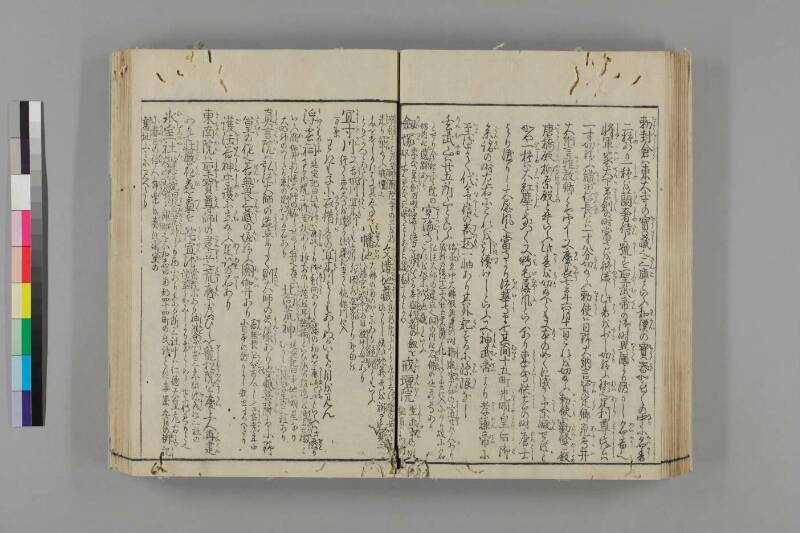
翻刻
【コマ41】
【右丁】
勅封倉(ちよくほうくら)は東大寺の寳藏(ほうざう)也 三庫(さんこ)といふ和漢(わかん)の《振り仮名:寳器|ほうき》かず〳〵の中(なか)に名香(めいかう)
二種( しゆ)あり一種( しゆ)を蘭奢待(らんしやたい)と號(かう)す聖武帝(しやうむてい)の御时 異國(ゐこく)より渡りし名香(めいかう)也
将軍家(しやうぐんけ)天下草創(てんかさう〳〵)の时當寺を修造(しゆざう)し此香( かう)を少(すこ)し切(きり)給ふ例(れい)也 足利尊氏公(あしかゞたかうじこう)は
一寸 切(きり)給ふ織田信長公(をだのふなが )は一寸八分 切(きり)給ふ勅使(ちよくし)は日野大納言資定卿( すけsだ )飛鳥井(あすかい)
大納言雅教卿( まさのり )とぞ聞し又 慶長七年(けいちやう )六月十一日これを切給ふ勅使(ちよくし)は勸修寺殿(くはんしゆじとの)
唐橋殿(からはしとの)柳原殿(やなぎはらとの)とそいふ此香( かう)を切(きり)給へとも又 本(もと)の如くに成て更(さら)に减(けん)せずと
かや一種(いちしゆ)は大紅塵(たいこうじん)となづく又 鴨毛屏風(かもけびやうふ)といふあり東大寺供養(とうたいしくよう)の时 唐士(もろこし)#1
より渡りし大屏風也當寺より《振り仮名:法𬜻寺|ほつけし》まて其間( あひた)十五町 光明皇后(くはうみやうくはうこう)御(ご)
参詣(さんけい)の时㔫右にこれを引續(ひきつゞ)けしといふ又 神武帝(しんむてい)より孝謙帝(かうけんてい)に
至(いた)るまて代々(よゝ)印信(ゐんしん)の巻物(まきもの)一軸あり其外 記(き)するに際限(さいげん)なし
玄武山(けんうやま)は卄五所山ともいふ《割書:《振り仮名:治𣴎年中|ちしやう 》大佛殿再建の时 精進潔斎(しやうしんけつさい)の工匠(こうしやう)卄五人あり|成就の後此山に入卄五菩薩と化して雲に入にけり故に名》
《割書:とせり今に上生院の|坊内に遺跡(ゐせき)あり》空海寺(くうかいし)《割書:弘法大師の建立也 洞(ほら)の内に石佛(せきふつ)の地藏尊あり|これを俗に《振り仮名:穴ノ地藏|あな 》といふ》
劔塚(けんつか)《割書:東大寺 草創(さう〳〵)の时良弁と法力を諍(あらそ)ひたる辛國行者(からくにきやうしや)の剱を|収し所也東大寺に恠(あやし)きことあれは必 鳴動(めいどう)するとかや》戒壇院(かいたんいん)《割書:聖武帝(しやうむてい)の时|鑑真和尚》
【左丁】
《割書:来朝(らいてう)して天竺(てんちく)那蘭陀寺(ならんたじ)の土を持|来り築(きつき)給ふ戒壇(かいだん)#2也》文遣地藏(ふみつかひのぢざう)《割書:惣持院にあり《振り仮名:㔫少弁行隆| ゆきたか》の女(むすめ)父の身|まかりし後此地藏尊を祈(いの)りて冥土(めいど)へ》
《割書:文を遣しけれは又其返事を|とりてかへりあたへしと也》八幡池(はちまんいけ)《割書:大佛の南のかたにあり鏡池(かゞみいけ)ともいふ|八幡宮 式祭(しきさい)の日 放生會(ほうしやうゑ)あり》
冝寸川(よしきかは)《割書:又《振り仮名:𠮷城川|よしき 》冝木川(よしき )とも書り水源(すいけん)水屋峯(みつやのみね)より野田を|經て東大寺を遶(めぐ)り法蓮(ほうれん)に至て佐保川#3に入》
《割書:万葉》
わきも子に衣(ころも)借香(かすが)の冝木川(よしき )よしもあらぬかいもか目を見ん
浮雲祠(うきくものみや)《割書:延宝記曰此御神は鹿嶋(かしま)より御影向(こゑうかう)ありし也旅の初めを鹿嶋立(かしまたち)といふは此發( をこ)り|なり内院に御笠杖( かさつへ)あり神前の小橋を耳語橋(さゝやきのはし)といひ池の板橋を浮雲橋(うきくものはし)と》
《割書:いふ閼伽井(あかい)は弘法大師の堀(ほ)らせ給ふ井也庭に|大明神のいしたる鹿(しか)の足跡(あしあと)ある石あり》北向荒神(きたむきくはうしん)《割書:延宝記日本地は明星なり|むかしは月(つき)日(ひ)星(ほし)の三社あり》
真言院(しんごんゐん)は弘法大師(こうほう )の造立(さうりう)にして則(すなはち)大師の尊像(そんさう)あり地藏菩薩(ちざうぼさつ)は小野
篁(たかむら)の作也 善無畏三藏(せんむいさんざう)の堀(ほり)給ふ閼伽井(あかい)あり《割書:善無畏(せんむい)は天竺(てんぢく)の人にして養老年中(ようろう )|に日本に渡りよし釈書に見へたり》
護法善神(ごほうせんしん)守護(しゆご)に立(たち)給ふ足跡(あしあと)の石(いし)あり
東南院(とうなんゐん)は聖寳尊師(しやうほうそんし)の建立(こんちう)也 荒癈(くはうはい)に及びしを龍松院公慶上人(りうしやうゐんこうけい )再建(さいこん)
ありて壯嚴花美(さうごんくはひ)を盡(つく)す詫宣池(たくせんち)#4《割書:當院にあり神護景雲三年(しんごけいうん )此 池水(ちすい)に三社の|詫宣(たくせん)うかみしより書(かき)とゝめて世に傳れりと也》
氷室社(ひむろのやしろ)《割書:寛文記曰 北向荒神(きたむきくはうしん)より西にあり祭る所三社中は仁德天皇㔫右は|大山主命(おほやまぬしのみこと)と陣那(ちんな)之大和志曰く南都四十四町の氏神とす毎歳九月の例祀(れいし) 》
《割書:に春日(かすか)の伶人(れい )舞樂(ぶがく)を奏(そう)す氷室(ひむろ)の|《振り仮名:𦾔址|きうし》上みに見へたり》
現代語訳
## 【コマ41】
### 【右丁】
**勅封倉(ちょくほうくら)**は東大寺の宝蔵である。三庫(さんこ)と呼ばれ、和漢の宝器が数々収められているなかに、名香が二種ある。その一種を**蘭奢待(らんじゃたい)**と号す。聖武帝の御代に、異国より渡来した名香である。将軍家は天下草創の折に当寺を修造する際、この香を少し切り取ることを慣例としている。足利尊氏公は一寸切り取られ、織田信長公は一寸八分切り取られた。〔信長の際の〕勅使は日野大納言資定卿・飛鳥井大納言雅教卿であったと聞く。また、慶長七年(1602)六月十一日にこれを切り取られた際の勅使は、勧修寺殿・唐橋殿・柳原殿であったという。この香を切り取っても、また元のように戻り、少しも減らないということである。もう一種は**大紅塵(だいこうじん)**と名づける。
また、**鴨毛屏風(かもけびょうぶ)**というものがある。東大寺供養の時に唐(もろこし)より渡来した大屏風である。当寺より法華寺まで、その間は十五町。光明皇后が御参詣の折に、左右にこれを引き続けたといわれる。
また、**神武帝より孝謙帝**に至るまで、代々の印信(いんしん)の巻物が一軸ある。その他、記するに際限がない。
---
**玄武山(げんぶざん)**は「廿五所山(にじゅうごしょざん)」ともいう。
《治承年中に大仏殿再建の際、精進潔斎を守った工匠(職人)が二十五人いた。成就の後、この山に入り二十五菩薩と化して雲の中に消えた。ゆえにこの名がついた。今も上生院の坊内に遺跡がある。》
**空海寺(くうかいじ)**《弘法大師の建立である。洞の内に石仏の地蔵尊がある。これを俗に「穴の地蔵」という。》
**剣塚(けんづか)**《東大寺草創の折、良弁と法力を争った辛国行者(からくにぎょうじゃ)の剣を収めた所である。東大寺に怪しいことがあれば、必ず鳴動するとかや。》
**戒壇院(かいだんいん)**《聖武帝の時に、鑑真和尚が
---
### 【左丁】
来朝して、天竺・那蘭陀寺(ナーランダー寺)の土を持ち来たりて築かれた戒壇である。》
**文使い地蔵(ふみつかいのじぞう)**《惣持院にある。左少弁行隆の娘が、父が亡くなった後、この地蔵尊を祈り、冥土へ文を遣わしたところ、また其の返事を取ってかえり与えたということである。》
**八幡池(はちまんいけ)**《大仏の南の方にある。鏡池ともいう。八幡宮の式祭の日に放生会(ほうじょうえ)がある。》
**宜寸川(よしきがわ)**《また「吉城川」「宜木川」とも書く。水源は水屋峯より、野田を経て東大寺を巡り、法蓮に至って佐保川に入る。》
《万葉集》
> わきも子に 衣借春日の 冝木川(よしきがわ) よしもあらぬか いもが目を見ん
(訳:愛しいあの子に衣を貸してもらおうか、春日の吉城川よ、なんとかよい機会はないものか、あの娘の目を見たい。)
**浮雲祠(うきぐものみや)**《延宝記に曰く、この御神は鹿島より御影向(おんようごう)ありしなり。旅の始めを「鹿島立ち(かしまだち)」というのは、この発りである。内院に御笠杖(おんかさづえ)がある。神前の小橋を「耳語橋(ささやきのはし)」といい、池の板橋を「浮雲橋(うきぐものはし)」という。閼伽井(あかい)は弘法大師の掘らせ給うた井戸である。庭に大明神のいしたる(憑依された)鹿の足跡のある石がある。》
**北向荒神(きたむきこうじん)**《延宝記に、本地は明星(みょうじょう)なり。むかしは月・日・星の三社があった。》
**真言院(しんごんいん)**は弘法大師の造立であり、すなわち大師の尊像がある。地蔵菩薩は小野篁(おののたかむら)の作である。善無畏三蔵(ぜんむいさんぞう)の掘られた閼伽井(あかい)がある。《善無畏は天竺の人であって、養老年中に日本に渡ったよしが釈書に見えている。》護法善神が守護に立たれた足跡の石がある。
**東南院(とうなんいん)**は聖宝尊師(しょうぼうそんし)の建立である。荒廃に及んでいたのを、龍松院公慶上人(りゅうしょういんこうけいしょうにん)が再建し、荘厳花美(そうごんかび)を尽くした。**詫宣池(たくせんち)**《当院にある。神護景雲三年(769)に、この池水に三社の託宣が浮かびしより、書き留めて世に伝えられているということである。》
**氷室社(ひむろのやしろ)**《寛文記に曰く、北向荒神より西にある。祭る所は三社、中は仁徳天皇、左右は大山主命(おおやまぬしのみこと)と陣那(ちんな)。之(これを)大和志は「南都四十四町の氏神とする」とする。毎歳九月の例祀に、春日の伶人が舞楽を奏する。氷室の旧址は上(前)に見えたり。》
英語訳
## [Frame 41]
### [Right Page]
**Chokuhō-kura (the Imperially Sealed Repository)** is the treasure storehouse of Tōdai-ji. It is called the "Three Storehouses" (sankō), and among its numerous treasures of Japanese and Chinese origin, there are two varieties of rare incense. One of them is called **Ranjatai**. It is a rare incense that was brought from a foreign land during the reign of Emperor Shōmu. It has been the custom that whenever a shogun establishes rule over the realm and undertakes restoration of this temple, he cuts a small piece of this incense. Ashikaga Takauji cut one *sun* (approximately 3 cm), and Oda Nobunaga cut one *sun* and eight *bu* (approximately 5.4 cm). The imperial envoys [for Nobunaga's cutting] are said to have been Senior Counselor Hino Sukesada and Senior Counselor Asukai Masanori. Furthermore, on the eleventh day of the sixth month of Keichō 7 (1602), it was cut again, and on that occasion the imperial envoys were said to be the Lord of Kanjūji, the Lord of Karahashi, and the Lord of Yanagiwara. It is said that even when this incense is cut, it returns to its original state and does not diminish in the least. The second variety is called **Daikōjin**.
There is also an item known as the **Kamoke Byōbu** (Duck-feather Screen). It is a great folding screen that was brought from China at the time of the Tōdai-ji memorial service. From the temple to Hokke-ji is a distance of fifteen *chō* (approximately 1.6 km). It is said that at the time of Empress Kōmyō's pilgrimage, these screens were lined up continuously on her left and right along the route.
Furthermore, there is a single scroll containing the **seals and credentials** handed down from Emperor Jinmu through to Empress Kōken. Beyond this, there is no end to what could be recorded.
---
**Genbu-zan (Mount Genbu)** is also called "Nijūgosho-zan" (Mount of the Twenty-Five Places).
*During the Jishō era, when the Great Buddha Hall was being rebuilt, there were twenty-five craftsmen who had observed ritual purification. After the work was completed, they entered this mountain, transformed into the Twenty-Five Bodhisattvas, and disappeared into the clouds. Hence the name. Even today, traces of this event remain within the precincts of Jōshō-in.*
**Kūkai-ji Temple**: *Founded by Kōbō Daishi (Kūkai). Inside a cave is a stone-carved Jizō Bodhisattva, known colloquially as the "Hole Jizō" (Ana no Jizō).*
**Ken-zuka (Sword Mound)**: *This is the place where the sword of Karakuni Gyōja — a practitioner who contested magical powers with Rōben at the founding of Tōdai-ji — was enshrined. It is said that whenever something strange occurs at Tōdai-ji, this sword necessarily resounds.*
**Kaidan-in (Ordination Platform Hall)**: *During the reign of Emperor Shōmu, the Chinese monk Jianzhen (Ganjin) came to Japan and*
---
### [Left Page]
*brought soil from Nālandā Monastery in India, with which he constructed the ordination platform.*
**Fumi-tsukai no Jizō** (The Letter-Carrying Jizō): *Located at Sōji-in. The daughter of Hidari-Shōben Yukitaka, after her father had passed away, prayed to this Jizō Bodhisattva and sent a letter to the underworld (meido), whereupon the Jizō returned with a reply and gave it to her.*
**Hachiman-ike (Hachiman Pond)**: *Located to the south of the Great Buddha. It is also called Kagami-ike (Mirror Pond). On the day of the regular Hachiman Shrine festival, a ceremony of releasing living creatures (hōjō-e) is held.*
**Yoshiki-gawa (River Yoshiki)**: *Also written as "Yoshiki-gawa" (吉城川) or "Yoshiki-gawa" (宜木川). The water source is from Mizuya Peak, flowing through Noda, circling Tōdai-ji, reaching Hōren, and joining the Saho River.*
*From the Man'yōshū:*
> *Wakimoko ni / koromo kasu ga no / yoshikigawa / yoshi mo aranu ka / imo ga me wo min*
(If only there were a good occasion to borrow a robe from my beloved at the Yoshiki River of Kasuga — I long to look into my darling's eyes.)
**Ukigumo Shrine** (Floating Cloud Shrine): *According to the Enpō-ki, the enshrined deity manifested here from Kashima Shrine. The expression "Kashima-dachi" (departing from Kashima) for the beginning of a journey originates from this. Inside the inner sanctuary is a divine walking staff. The small bridge in front of the shrine is called "Sasayaki-no-hashi" (Whisper Bridge), and the plank bridge over the pond is called "Ukigumo-bashi" (Floating Cloud Bridge). The sacred well (akai) is one that Kōbō Daishi had dug. In the garden there is a stone bearing the hoofprints of a deer upon which the great deity had alighted.*
**North-Facing Kōjin (Kita-muki Kōjin)**: *According to the Enpō-ki, the original Buddhist manifestation is Myōjō (the planet Venus/a bright star). In ancient times, there were three shrines for the Moon, the Sun, and the Stars.*
**Shingon-in** was founded by Kōbō Daishi, and accordingly houses a venerable image of the Great Master. The Jizō Bodhisattva is a work by Ono no Takamura. There is a sacred well (akai) that was dug by the Tripiṭaka master Śubhākarasiṃha (Zenmui). *Śubhākarasiṃha was a person from India; it appears in Buddhist records (shakusho) that he came to Japan during the Yōrō era.* There is also a stone bearing the footprints of a protective deity (gohō zenjin) who stands in guardianship.
**Tōnan-in** was founded by the Venerable Shōbō. Having fallen into ruin, it was rebuilt by the Reverend Kōkei of Ryūshō-in, who spared no effort in making it magnificent and ornate. **Takusen-chi (Oracle Pond)**: *Located within this sub-temple. In the third year of Jingo Keiun (769), the oracles of three shrines floated to the surface of this pond's water, and they have been recorded in writing and transmitted to the world ever since.*
**Himuro Shrine**: *According to the Kanmon-ki, it lies to the west of Kita-muki Kōjin. The three enshrined deities are: in the center, Emperor Nintoku; on the left and right, Ōyamanushi no Mikoto and Jinna. The Yamato-shi records it as the tutelary shrine of forty-four settlements (chō) of the Southern Capital (Nara). Every year at the regular festival in the ninth month, musicians from Kasuga Shrine perform ceremonial music and dance (bugaku). The former site of the ice storehouse (himuro) is noted above.*