翻刻
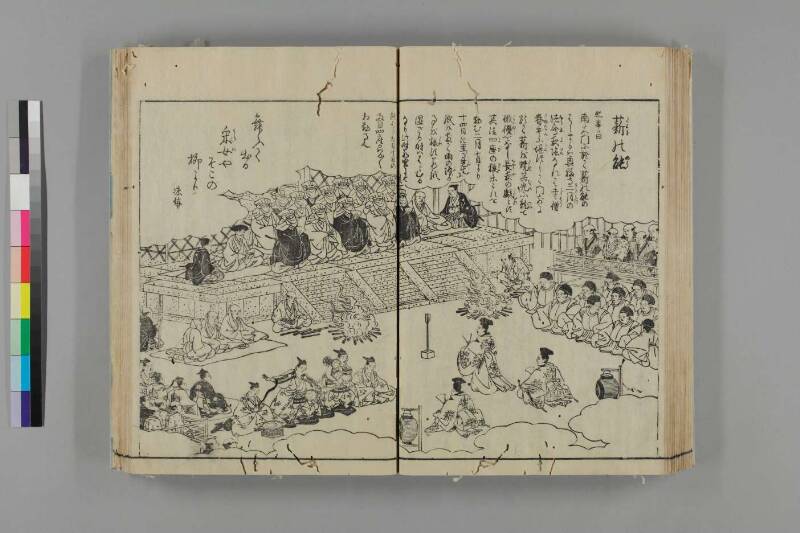
薪(たきぎ)の能(のう)
紀事ニ曰
南大門に於て薪の能の
はしまりは興福寺二月(きさらぎ)の
法会夜陰(ほうゑよいん)なれば寺僧(じそう)
春寒(しゅんかん)に堪(たへ)ずして門前に
於て薪を焼(たき)其光(ひかり)に就(つい)て
俳優(はいゆう)をなし長夜(ちょうや)の戯(たはむれ)とす
其後四座(よざ)の猿(さん)楽これを
初む二月七日より
十四日に至る芝生(しばふ)に
紙を散て雨の降(ふ)る
事を様(ため)す若紙
申上
湿ざる時ははじむる
なり此時若宮にて
能あり九日十日の
両日四座かはる〳〵
相勤る也
舞ふて
出る
采女(うねめ)や
そこの
柳より
涼袋
現代語訳
## 薪の能
紀事に曰く、
南大門において薪の能が始まったのは、興福寺の二月(如月)の法会が夜間に行われるためであり、寺の僧侶たちが春の寒さに堪えられず、門前で薪を焚き、その明かりのもとで芸能を行い、長い夜の慰みとしたことに由来する。その後、四座の猿楽がこれを始めるようになった。二月七日から十四日にかけて、芝生の上に紙を散らして雨が降るかどうかを試み、もし紙が湿らない場合には(能を)始めるのである。この時、若宮にて能があり、九日・十日の両日、四座が交互に勤める。
---
舞いながら出てくる
采女よ
そこの
柳より
涼袋(すずしぶくろ)
英語訳
## Takigi Nō (Firewood Nō)
According to the records:
The Takigi Nō performed at the South Great Gate (Nandaimon) of Kōfukuji temple originated from the temple's second-month (February) religious ceremonies, which were held at night. The temple monks, unable to endure the cold of early spring, would burn firewood in front of the gate and, by the light of the flames, perform various entertainments to pass the long winter nights. Subsequently, the four troupes of sarugaku began performing in this tradition. From the seventh to the fourteenth day of the second month, paper is scattered on the grass to test whether rain is falling; if the paper does not become wet, the performances begin. During this time, Nō is also performed at the Wakamiya Shrine, and on both the ninth and tenth days, the four troupes take turns in their duties.
---
*[Haiku]*
Dancing as she emerges—
the court lady (uneme);
from the willows there,
a summer sachet.