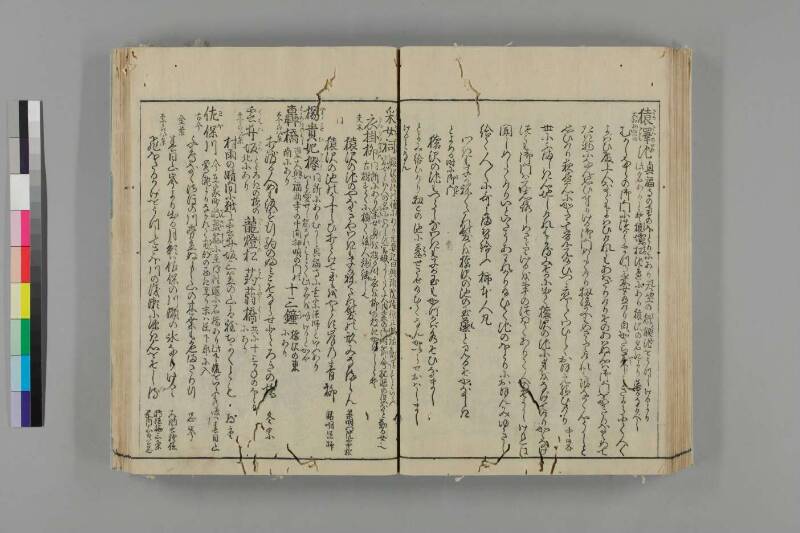
翻刻
猿澤池(さるさわのいけ)《割書:興福寺の南のほとりにあり。天竺(てんじく)の獼猴池(みこうち)をうつしけるより|此名ありとぞ。猿墳松(さるつかのまつ)、池辺にあり。猿沢の名により造るなるべし。》
大和物語曰、
むかしならの御門(みかど)につかうまつる采女有けり。貌かたち美じきうきよらにて、人々
よばひ、殿上人などもよばひけれともあはざりけり。そのあはぬ心は御門をかぎりなくめて
たき物になん思ひ奉りける。御門めでけり。さて後、又もめさざりければ、限なく心うしと
思ひけり。夜昼心にかゝりて覚見給ひつゝ、恋しくわびしくおぼえ給ひけり。中略
世にふまじき心地しければ、よるみそかに出でて猿沢の池に身をなげてけり。かくなげ
つとも御門は見しろしめさゞりけるを、事のつゐでありて人のそうしければ、
聞しめしてけり。いといたうあはれがり給ひて、池のほとりにおほんみゆきし
給ひて、人々に哥よませ給ふ。柿本人丸、
わぎも子がねくたれ髪を猿沢の池の玉藻と見るぞかなしき
とよめる。時に御門(みかど)、
猿沢の猿沢の池もつらしなわぎも子か玉もかづかば水そひなまし
とよみ給ひけり。さてこの池に墓せさせ給ひてなん、かへらせおはしまし
けるとなん。
【左丁】
采女祠(うねめのやしろ) 《割書:猿沢の池の傍にあり。元要記曰、興南院権僧正快祐勧請すといふ。|采女(うねめ)とは人の名にはあらず、官職にして大内裏の御時、節会、配膳の役など勤むる女なり。》
衣掛柳(きぬかけやなぎ) 《割書:同所にあり。采女身を投る時、衣を柳の枝にかけしとぞ|古樹すでに枯れて、後人種え継し也》
夫木
猿沢の池のやなぎやわぎも子がねくたれ髪の形みならん
承明門院宰相
同
猿沢の池のうすらひ打とけて玉もをやどす岸の青柳
勝明法師
楊貴妃桜(ようきひさくら) 《割書:同所にあり。むかし興福寺に玄宗法師といふあり。|いと愛せし桜なればとて、此名を呼けるとかや》
轟橋(とどろきのはし)《割書:東大興福両寺の中間、押明の門の|南にあり。》 十三鐘《割書:猿沢の東|にあり》
奈良八景
打渡る人めも絶えず行駒の ふみこそならせとどろきの橋
冬宗
雲井坂(くもいさか)《割書:とゞろきの橋の|北にあり》 龍燈松(りゅうとうまつ) 蒟蒻橋(こんにゃくばし)《割書:共に十三かねのほとり|にあり》
奈良八景
村雨の晴間に越えよ雲井坂三笠の山は程ちかくとも
為重
佐保川(さほがわ)《割書:今在家町転蓋筋に至る往還に石橋あり。此下流をいふ。水源は春日山|鶯瀧よりながれて南都の西に至り、末は添下郡に入る。》
古今
千鳥なくさほの川霧立ぬらし 山の木葉も色まさり行く
忠岑
金葉
春日山岑より出る月影は佐保の川瀬の氷なりけり
大納言経信
奈良八景
飛ほたるかげをうつしてさほ川の浅瀬に深き心をぞしる
転法輪三条前内大臣公忠
現代語訳
## 猿沢池(さるさわのいけ)
興福寺の南のほとりにある。天竺(インド)の獼猴池(みこうち)を模してこの名がついたと言われる。猿墳松(さるつかのまつ)は池のほとりにある。猿沢という名にちなんで作られたものであろう。
『大和物語』にいわく、
昔、奈良の帝(みかど)にお仕えする采女がいた。容姿が美しく優雅で、多くの人々が求婚し、殿上人なども求婚したが、彼女は誰とも交わらなかった。その理由は、帝を限りなく素晴らしい方と思い申し上げていたからである。帝もこの采女をお気に入りになった。しかしその後、再び帝に召されることがなくなったため、この世が限りなく辛いと思うようになった。昼も夜も帝のことが心に浮かび、恋しく悲しく思われた。(中略)
もはやこの世に生きていられない気持ちになり、夜ひそかに出て、猿沢の池に身を投げてしまった。このように身を投げたとも帝はご存じでなかったが、折に触れて人が奏上したため、お聞きになった。たいそう哀れに思われ、池のほとりにお出ましになり、人々に歌を詠ませになった。柿本人麻呂が、
> わぎも子がねくたれ髪を猿沢の池の玉藻と見るぞかなしき
>(愛しいあの子の寝乱れ髪を、猿沢の池の美しい藻と見るのは悲しいことだ)
と詠んだ。その時、帝は、
> 猿沢の池もつらしなわぎも子が玉藻かづかば水ぞひなまし
>(猿沢の池も薄情だ。あの子が水草の中に沈むならば、池の水も増してやればよかったのに)
とお詠みになった。そうしてこの池のほとりに墓を作らせなさって、お帰りになったということである。
---
### 【左丁】
## 采女祠(うねめのやしろ)
猿沢の池のほとりにある。『元要記』によれば、興南院権僧正快祐が勧請したという。「采女(うねめ)」とは人の名ではなく、官職の名であり、大内裏においての節会や配膳の役などを務める女性のことである。
## 衣掛柳(きぬかけやなぎ)
同じ場所にある。采女が身を投げる時、衣を柳の枝に掛けたと伝えられる。古い木はすでに枯れてしまい、後の人が植え継いだものである。
『夫木和歌抄』より
> 猿沢の池のやなぎやわぎも子がねくたれ髪の形みならん
>(猿沢の池のほとりの柳は、あの愛しい人の寝乱れ髪の姿を映しているのだろうか)
> 承明門院宰相
同じく
> 猿沢の池のうすらひ打とけて玉藻をやどす岸の青柳
>(猿沢の池の薄氷が溶け、美しい藻を映す岸辺の青柳よ)
> 勝明法師
## 楊貴妃桜(ようきひさくら)
同じ場所にある。昔、興福寺に玄宗法師という僧がいた。大変愛したサクラの木であったため、この名で呼ばれるようになったという。
## 轟橋(とどろきのはし)
東大寺と興福寺の間、押明の門の南にある。
## 十三鐘(じゅうさんかね)
猿沢の東にある。
『奈良八景』より
> 打渡る人めも絶えず行駒のふみこそならせとどろきの橋
>(人々が絶えず渡り、馬の足音が響き渡る轟橋よ)
> 冬宗
## 雲井坂(くもいさか)
轟橋の北にある。
## 龍燈松(りゅうとうまつ)・蒟蒻橋(こんにゃくばし)
ともに十三鐘のほとりにある。
『奈良八景』より
> 村雨の晴間に越えよ雲井坂三笠の山は程ちかくとも
>(にわか雨の晴れ間に越えよ、雲井坂を。三笠山は近くにあるといっても)
> 為重
## 佐保川(さほがわ)
今の在家町転蓋筋に至る往還に石橋がある。この下流のことをいう。水源は春日山の鶯滝から流れ出て、南都(奈良)の西に至り、その末は添下郡に入る。
『古今和歌集』より
> 千鳥なくさほの川霧立ぬらし山の木葉も色まさり行く
>(千鳥が鳴き、佐保川に霧が立ちこめているようだ。山の木の葉も色を増していく)
> 忠岑(壬生忠岑)
『金葉和歌集』より
> 春日山岑より出る月影は佐保の川瀬の氷なりけり
>(春日山の峰から出る月の光は、佐保川の瀬の氷のようだ)
> 大納言経信(源経信)
『奈良八景』より
> 飛蛍かげをうつしてさほ川の浅瀬に深き心をぞしる
>(飛ぶ蛍がその光を映して、佐保川の浅瀬に、深い心(想い)が知られる)
> 転法輪三条前内大臣公忠
英語訳
## Sarusawa Pond (猿沢池)
This pond lies on the southern shore of Kōfukuji Temple. It is said to have been modeled after the Mihōchi (獼猴池, "Monkey Pool") of India (Tenjiku), from which it takes its name. The Monkey Mound Pine (猿墳松, Sarutsuka no Matsu) stands by the pond's edge, likely created in association with the name "Sarusawa."
From *The Yamato Monogatari* (Tales of Yamato):
Long ago, there was a court lady (uneme) who served the Emperor of Nara. She was exceedingly beautiful and graceful, and many men sought her hand — including nobles of the court — but she refused them all. The reason she refused was that she had devoted her heart entirely to the Emperor, whom she considered incomparably magnificent. The Emperor too had favored her. But afterward, she was never again summoned to his presence, and she came to find the world unbearably painful. Day and night the Emperor weighed upon her heart; she felt longing and grief beyond endurance. (Excerpt omitted.)
Unable to bear living in this world any longer, she stole out one night and threw herself into Sarusawa Pond. The Emperor was unaware that she had done this, but someone brought the matter to his attention at an appropriate occasion, and he heard of it. He was deeply moved with sorrow, came in procession to the pond's edge, and had those around him compose poems. Kakinomoto no Hitomaro composed:
> *Wagimo ko ga nekutare kami wo sarusawa no / ike no tama mo to miru zo kanashiki*
> (How sorrowful it is to see the tangled hair of my beloved as the beautiful water-weeds of Sarusawa Pond.)
At that time, the Emperor composed:
> *Sarusawa no ike mo tsurashi na wagimo ko ga / tama mo kazukaba mizo hi namashi*
> (Even Sarusawa Pond is heartless — if my beloved sank among its water-weeds, the waters should have risen to embrace her.)
Thereupon, the Emperor had a grave made for her at the pond's edge and returned to the palace.
---
### [Left folio]
## Uneme Shrine (采女祠)
This shrine stands by the shore of Sarusawa Pond. According to the *Genyōki*, it was established at the behest of Kōnan-in Gon-Sōjō Kaiyu. "Uneme" is not a personal name but an official title — these were women who served in the imperial palace during ceremonial banquets (sekkai) and performed duties such as serving food.
## Kinukake Willow (衣掛柳, "Robe-Hanging Willow")
This is in the same location. It is said that when the uneme threw herself into the pond, she hung her robe on the branch of a willow. The original ancient tree has already withered, and later people planted a successor in its place.
From the *Fuboku Wakashō*:
> *Sarusawa no ike no yanagi ya wagimo ko ga / nekutare kami no katachi mi naran*
> (Does the willow by Sarusawa Pond reflect the form of my beloved's tangled, disheveled hair?)
> Shōmeimon'in no Saisho
Also from the same anthology:
> *Sarusawa no ike no usurai uchi tokete / tama mo wo yadosu kishi no aoyagi*
> (The thin ice of Sarusawa Pond has melted away, and the green willows on the bank shelter the beautiful water-weeds.)
> Shōmyō Hōshi
## Yōkihi Cherry Tree (楊貴妃桜)
This is in the same location. Long ago, there was a monk at Kōfukuji called Gensō Hōshi. Because he loved this cherry tree so dearly, it came to be called by this name (after Yang Guifei, the beloved consort of the Tang Emperor Xuanzong).
## Todoroki Bridge (轟橋)
Located between Tōdaiji and Kōfukuji Temples, to the south of the Ōshiake Gate.
## Jūsan Kane (十三鐘, "Thirteen Bells")
Located to the east of Sarusawa Pond.
From *Nara Hakkei* (Eight Views of Nara):
> *Uchiwataru hitome mo taezu yukikoma no / fumi koso narase todoroki no hashi*
> (A stream of people crosses ceaselessly; the hoofbeats of passing horses resound — thus rings the Todoroki Bridge.)
> Tōsō
## Kumoi Slope (雲井坂)
Located to the north of Todoroki Bridge.
## Dragon Lantern Pine (龍燈松) and Konnyaku Bridge (蒟蒻橋)
Both are located near the Jūsan Kane (Thirteen Bells).
From *Nara Hakkei*:
> *Murasame no harema ni koeyo kumoi zaka / Mikasa no yama wa hodo chikaku tomo*
> (Cross Kumoi Slope in the clearing after the passing shower — even though Mount Mikasa is near, the distance of the heart is great.)
> Tameshige
## Saho River (佐保川)
There is a stone bridge on the highway leading to what is now Zaike-chō Tengai-suji. The river referred to here is its lower reaches. Its source flows from Uguisu Falls (Uguisu Taki) on Mount Kasuga, passes to the west of Nanto (Nara), and eventually enters Soushimo District (添下郡).
From the *Kokinwakashū*:
> *Chidori naku saho no kawagiri tatinu rashi / yama no konoha mo iro masari yuku*
> (Plovers cry, and mist seems to rise over the Saho River; the leaves on the mountain deepen in color.)
> Tadamine (Mibu no Tadamine)
From the *Kin'yō Wakashū*:
> *Kasugayama mine yori izuru tsukikage wa / saho no kawase no kōri narikeri*
> (The moonlight emerging from the peak of Mount Kasuga is like ice upon the shallows of the Saho River.)
> Dainagon Tsunenobu (Minamoto no Tsunenobu)
From *Nara Hakkei*:
> *Tobu hotaru kage wo utsushite sahogawa no / asase ni fukaki kokoro wo zo shiru*
> (Flying fireflies cast their reflections upon the Saho River; in its shallow waters, one discerns a depth of feeling.)
> 転法輪三条前内大臣公忠 (Tenbōrin Sanjō Former Minister of the Interior Kimitada)