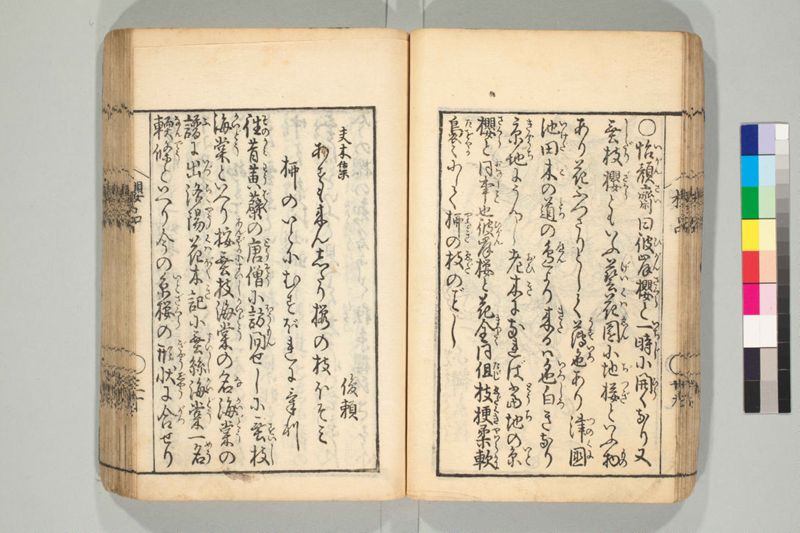
翻刻
【右丁】
○怡顔斎(いがんさい)曰 彼岸桜(ひがんさくら)と一時(いちじ)に開(ひら)くなり又
垂枝桜(しだりざくら)ともいふ芸花園(げいくはゑん)に地接(ぢつぎ)といふ物(もの)
あり花ふつさりとして薄色(うすいろ)あり津国(つのくに)
池田(いけだ)木(こ)の道(みち)の辺(へん)より来(きた)るは色(いろ)白(しろ)きなり
京地(きやうち)にうつし老木(おひき)になれば当地(とうち)の糸(いと)
桜(さくら)と同事(おなじこと)也 彼岸(ひがん)桜と花 全(まつたく)同 但(たゞし)枝梗(ゑだくき)柔軟(やわらかに)
裊々(たをやか)にして柳(やなぎ)の枝(ゑだ)のごとし
【左丁】
夫木集 俊頼
あすも来んしたり桜の枝ほそみ
柳のいとにむすぼれにけり
往昔(そのかみ)黄蘗(わうばく)の唐僧(とうそう)に訪問(ほうもん)せしに垂枝(すいし)
海棠(かいどう)といへり按(あんずるに)垂枝海棠(すいしかいどう)の名(な)海棠(かいどう)の
譜(ふ)に出(いづ)洛陽花木記(らくやうくはぼくき)に垂糸海棠(すいしかいどう)一 名(めう)
輭条(なんでう)といへり今の糸桜(いとざくら)の行状(ぎやうじやう)に合(がつ)せり
現代語訳
【右丁】
○怡顔斎が言うには、彼岸桜と同じ時期に開花する。また垂枝桜とも呼ぶ。芸花園に地接ぎというものがある。花はふさふさとして薄い色をしている。摂津国池田の木の道端から来たものは色が白い。京都に移植して老木になれば、当地の糸桜と同じである。彼岸桜と花は全く同じ。ただし枝や茎が柔らかくしなやかで、柳の枝のようである。
【左丁】
夫木集 俊頼
明日も来ようしだれ桜の枝が細いので
柳の糸に結ばれてしまった
昔、黄檗の中国僧を訪問した時に垂枝海棠と言っていた。考えてみると垂枝海棠の名前は海棠の図譜に出ている。洛陽花木記には垂糸海棠、別名軟条と言っている。今の糸桜の特徴に一致している。
英語訳
【Right page】
○Igansei says that it blooms at the same time as the Higan cherry. It is also called shidare-zakura (weeping cherry). In the flower garden there is something called ground grafting. The flowers are abundant and have a light color. Those that come from the roadside of Ikeda in Settsu Province are white in color. When transplanted to Kyoto and grown into old trees, they become the same as the local ito-zakura (thread cherry). The flowers are exactly the same as Higan cherry. However, the branches and stems are soft and supple, like willow branches.
【Left page】
Fuboku-shū Toshiyori
Tomorrow I will come again, but the weeping cherry's branches are so thin
They have become bound to willow threads
Long ago, when I visited a Chinese monk of Ōbaku, he called it suishi-kaidō (drooping branch begonia). Upon reflection, the name suishi-kaidō appears in begonia catalogs. The Luoyang Flower and Tree Record mentions suishi-kaidō, also known as nanjo (soft branch). This matches the characteristics of today's ito-zakura.