翻刻
【コマ4】
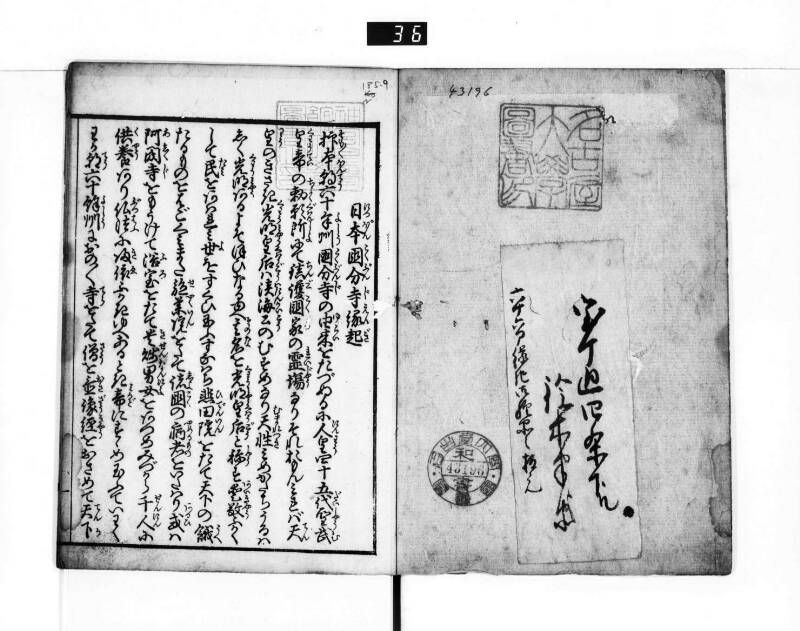
【見返し】
【付箋】
宝丁廻四条下る
鈴木半兵衛
六十六部縁記御経品之板元
【左丁】
《振り仮名:日本國分寺縁起󠄁|につぽんこくぶんじえんぎ》
抑(そも〳〵)本朝(ほんてう)六十余州( よしう)国分寺(こくぶんじ)の由來(ゆらい)をたづぬるに人皇(にんわう)四十五代( だい)聖武(しやうむ)
皇帝(くわうてい)の勅願所(ちよくぐはんしよ)にて鎮護国家(ちんごこくか)の霊塲(れいじやう)なりそれおもんみれば天(てん)
皇(わう)のきさき光明皇后(くわうみやうくはうごう)は(は)淡海公(たんかいこう)のむすめなり天性(むまれつき)みめかたちうるは
しく光明(くわうみやう)あるよそほひなるゆへ其名(そのな)を光明皇后(くわうみやうくはうごう)と称(しやう)す愛敬(あいきやう)ふかく
して民(たみ)をあはれみ世(よ)をすくひ玉ふすなはち悲田院(ひでんいん)をたて天下の餓(うへ)
たるものをはごくみまた施薬院(せやくいん)をたて諸國(しよこく)の病者(やめるもの)をいたはり或(あるひ)は
阿閦寺(あしくじ)をもうけて浴室(ふろ)をたて貴賤男女(きせんなんによ)をあつめみづから千人(せんにん)に
供養(くやう)あり仏法(ぶつはふ)に皈依(きゑ)ふかきゆへあるとき帝(みかど)にすゝめ玉ふていわく
わか朝(てう)六十餘州( よしう)におの〳〵寺(てら)をたて僧(さう)を置(おき)像經(ざうきやう)経をおさめて天下(てんか)
現代語訳
【付箋(貼り紙)】
宝町、四条を下る
鈴木半兵衛
六十六部縁起・御経品の版元
【本文】
《日本国分寺縁起》
そもそも、わが国六十余州における国分寺の由来を尋ねると、人皇第四十五代・聖武皇帝の勅願所であり、鎮護国家のための霊場である。その由来を思いみれば、天皇の后である光明皇后は、淡海公(藤原不比等)の娘である。生まれつき容姿が美しく、光明のある輝かしい姿であったため、その名を光明皇后と称した。慈悲の心が深く、民を憐れみ、世を救われた。すなわち悲田院を建てて天下の飢えた者を養い、また施薬院を建てて諸国の病人を労わり、あるいは阿閦寺に浴室を設けて、貴賤・男女を集め、みずから千人に供養された。仏法への帰依が深かったため、あるとき帝にお勧め申し上げ、こう仰った。「わが国六十余州にそれぞれ寺を建て、僧を置き、仏像・お経を納めて、天下(の安泰を祈り)……」
英語訳
【Attached Label (Fuda)】
Takara-machi, below Shijō
Suzuki Hanbee
Publisher of the Rokujūrokubu Engi and sutra-related works
【Main Text】
《Origins of Japan's Kokubunji Temples》
To begin, tracing the origins of the Kokubunji temples across the sixty-odd provinces of our land, they were founded as temples built by imperial vow under the forty-fifth Emperor, Emperor Shōmu, serving as sacred sites for the protection and peace of the nation. Reflecting upon their history: the consort of the Emperor, Empress Kōmyō, was the daughter of Tankai-kō (Fujiwara no Fuhito). Blessed from birth with a beautiful countenance and a radiant, luminous appearance, she came to be called Empress Kōmyō ("Empress of Radiant Light"). Possessing a profound spirit of compassion, she pitied the people and worked to save the world. She established the Hiden'in (Institute for the Poor) to care for the hungry throughout the land; she established the Seyaku-in (Institute for Medicine) to tend to the sick in all provinces; and at Ashiku-ji Temple she built a bathhouse, gathering people of all ranks and both sexes, personally providing offerings of merit to one thousand persons. Because of her deep devotion to the Buddhist teachings, she once urged the Emperor, saying: "In each of the sixty-odd provinces of our land, let us build temples, place monks, enshrine Buddhist images and sutras, and pray for the peace of the realm throughout the land..."
[Text continues on the next page]