翻刻
【コマ5】
【右丁】
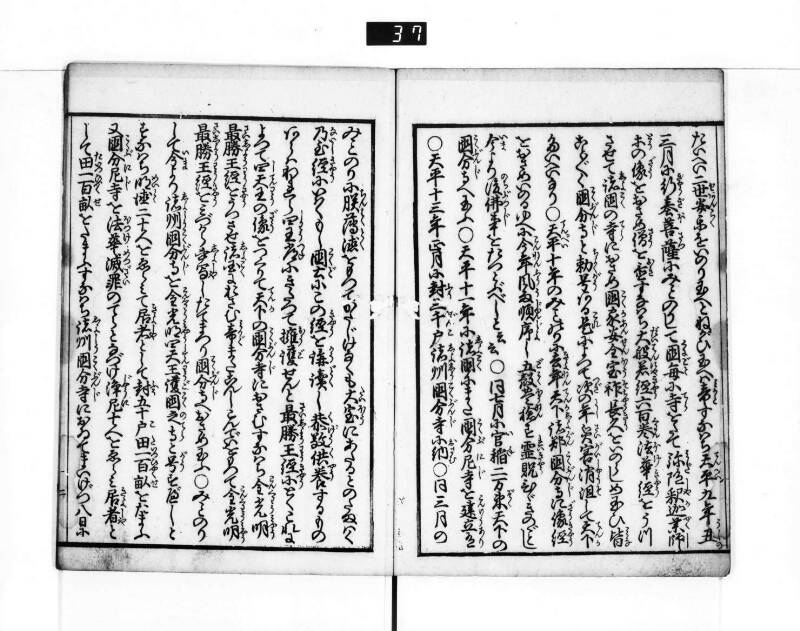
たいへい二世安楽( せあんらく)をいのり玉へとねがひ玉へは帝(みかと)すなはち天平九年 丑(うしの)
三月に行基菩薩(ぎやうぎぼさつ)にみとのりして國毎(くにごと)に寺(てら)をたて弥陀(みだ)釈迦(しやか)薬師(やくし)
等(とう)の像(ざう)をおさめ僧(さう)を置(おき)すなはち大般若經(だいはんにやきやう)六百巻( くわん)法蕐經(ほけきやう)をうつ
させて諸國(しよこく)の寺(てら)におさめ國家安全(こくかあんせん)宝祚長久(ほうそちやうきう)をいのらしめ玉ひ皆(みな)
こと〴〵く國分寺(こくぶんじ)と勅号(ちよくがう)ある是(コレ)によつて次(つぎ)の年(とし)災害(さいがい)消沮(しやうそ)して天下(てんか)
たいへいなり○天平(てんぺい)十年のみことのりに去年(きよねん)天下(てんか)諸郡國分寺(しよぐんこくぶんじ)に像經(ざうきやう)
をおさめいのるゆへに今年(こんねん)風雨(ふう)順序(じゆんじよ)し五殻豊稔(ごこくほうねん)#1す霊貺(れいきやう)ひゞきのごとし
今(いま)より後(のち)佛事(ぶつじ)をたつとぶべしと云云○同七月に官稲(いね)二万束( ぞく)天下の
國分寺(こくぶんじ)へ玉ふ○天平十一年に諸國(しよこく)にまた國分尼寺(こくぶにじ)を建立(こんりう)有(あり)
○天平十三年正月に封(ふう)三千戸( ぜんこ)諸州國分寺(しよしうこくぶんじ)に納(おさむ)○同三月の
【左丁】
みことのりに朕(ちん)薄徳(はくとく)をもつてかたじけなくも大宝(たいほう)にあたるとのたまはく
乃至經(ないしきやう)にいはくもし國土(こくど)にこの經(きやう)を講讀(かうどく)し恭敬供養(くげうくやう)するもの
あらはわれら四王(しわう)常(つね)にきたつて擁護(おうご)せんと最勝王經(さいしようわうきやう)にとくこれに
よつて四天王(してんわう)の像(ざう)をつくりて天下(てんか)の國分寺(こくぶんじ)におさむすなはち金光明(こんくわうみやう)
最勝王經(さいしようわうきやう)をうつさせ諸國(しよこく)におさむ帝(みかど)またこんしこんでいをもつて金光明(こんくわうみやう)
最勝王經(さいしようわうきやう)をみづから書写(しよしや)したてまつり國分寺(こくぶんじ)へおさめ玉ふ○みことのり
して今(いま)より諸州國分寺(しよしうこくぶんじ)を金光明四天王護國之寺(こんくわうみやうしてんわうごこくのてら)と号(がう)すべしと
すなはち明徳(めいとく)二十人をゑらみて居者(きよしや)として封(ふう)五十戸( こ)田(た)一百畒(いつひやくせ)をたまふ
又 國分尼寺(こくぶにじ)を《振り仮名:法蕐滅罪のてら|ほつけめつざい 》となづけ浄尼(じやうに)十人をゑらみ居者(きよしや)と
して田(た)一百畒(いつひやくせ)をたまふすなはち諸州國分寺(しよしうこくぶんじ)におゐてまいげつ八日に
現代語訳
【右丁】
……天下の太平と二世の安楽をお祈りくださいと願われたので、帝はすなわち天平九年(丑年)三月に行基菩薩にご命令になり、国ごとに寺を建て、阿弥陀・釈迦・薬師などの仏像を安置し、僧を置かれた。そして『大般若経』六百巻および『法華経』を書き写させて諸国の寺に納め、国家安全・宝祚長久をお祈りさせになった。それらすべてを「国分寺」と勅号された。これによって翌年、災害が消え失せて天下は太平となった。
○天平十年の詔に、「昨年、天下の諸郡の国分寺に仏像・お経を納めて祈ったゆえに、今年は風雨が順調で五穀豊穣となった。霊験はまるで響きのようにたちどころに現れた。今より後、仏事を尊ぶべし」とおっしゃった。
○同年七月に、官稲二万束を天下の国分寺へ賜った。
○天平十一年に、諸国にまた国分尼寺を建立された。
○天平十三年正月に、封三千戸を諸州の国分寺に納められた。
○同年三月の
【左丁】
詔に、「朕は薄徳であるにもかかわらず、かたじけなくも大宝(天子の位)にあたっている」とおっしゃり、続いて経文に、「もし国土においてこの経を講読し、恭しく供養するものがあれば、われら四天王は常に来たって擁護しよう」と『最勝王経』に説かれていることにより、四天王の像を作って天下の国分寺に納められた。そして『金光明最勝王経』を書き写させて諸国に納められた。帝はまた、金の糸・金泥をもって『金光明最勝王経』をみずから書写され、国分寺へ納められた。
○詔して「今より諸州の国分寺を『金光明四天王護国之寺』と号すべし」とされた。そして明徳ある僧二十人を選んで居住者とし、封五十戸・田百畝を賜った。
また国分尼寺を「法華滅罪の寺」と名づけ、清浄な尼十人を選んで居住者とし、田百畝を賜った。そして諸州の国分寺において、毎月八日に……
英語訳
【Right Page】
...to pray for peace throughout the realm and for the happiness of people in this life and the next. The Emperor thereupon, in the third month of Tenpyō 9 (the Year of the Ox), issued an imperial command to Gyōgi Bosatsu, ordering that temples be built in each province, that images of Amida, Śākyamuni, Yakushi, and other Buddhas be enshrined, and that monks be stationed there. He then had six hundred scrolls of the *Daihanya-kyō* (Great Prajñāpāramitā Sūtra) and the *Hokke-kyō* (Lotus Sūtra) copied and deposited in temples throughout the provinces, with prayers offered for the safety of the nation and the longevity of the imperial line. All of these temples were granted the imperial name "Kokubunji." As a result, in the following year, calamities ceased and peace prevailed throughout the realm.
○ In an imperial edict of Tenpyō 10, it was declared: "Because last year Buddhist images and sūtras were enshrined in the Kokubunji temples of all districts throughout the realm and prayers were offered, this year the winds and rains came in proper season and the five grains yielded an abundant harvest. The divine response was as immediate as an echo. Henceforth, Buddhist rites shall be held in high esteem."
○ In the seventh month of the same year, twenty thousand bundles of government rice were granted to the Kokubunji temples throughout the realm.
○ In Tenpyō 11, Kokubuni-ji (provincial nunneries) were additionally established in each of the provinces.
○ In the first month of Tenpyō 13, a grant of three thousand households was allocated to the Kokubunji temples of the various provinces.
○ In the third month of the same year,
【Left Page】
an imperial edict declared: "Though We are of little virtue, We have been graciously entrusted with the supreme imperial dignity." Furthermore, as the sūtra states: "If there are those in the land who lecture and recite this sūtra and reverently make offerings to it, we, the Four Heavenly Kings, shall always come and protect them"—as taught in the *Saishōō-kyō* (*Suvarṇaprabhāsa-sūtra*)—images of the Four Heavenly Kings were therefore crafted and enshrined in Kokubunji temples throughout the realm. The *Konkōmyō Saishōō-kyō* (*Golden Light Sūtra of the Most Victorious King*) was copied and distributed to the various provinces. Furthermore, the Emperor personally copied the *Konkōmyō Saishōō-kyō* in gold thread and gold ink, and presented it to the Kokubunji temples.
○ An edict was issued declaring: "Henceforth, the Kokubunji temples of the various provinces shall be called 'Konkōmyō Shitennō Gokoku no Tera' (Temples for the Protection of the Nation by the Golden Light and the Four Heavenly Kings)." Twenty monks of outstanding virtue were selected to reside there, and they were granted a stipend of fifty households and one hundred *se* (畝) of land.
The Kokubuni-ji (nunneries) were named "Hokke Metsuzai no Tera" (Temples of the Lotus Sūtra for the Eradication of Sin). Ten pure nuns were selected to reside there, and they were granted one hundred *se* of land. Furthermore, at the Kokubunji temples throughout the provinces, on the eighth day of every month...
[Text continues on the next page]