翻刻
【コマ3】
【見返し】
【左丁】
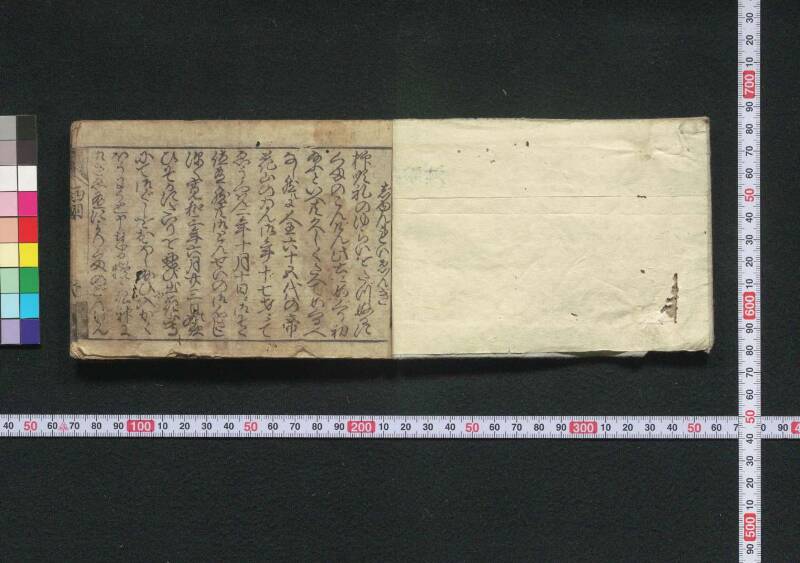
じゆんれいゑんぎ
抑順礼のゆらいをたづぬるに
くまのこんげん此土にめぐり初
給ふといへ共久しくたへてめくるへ
なし然 ̄ルに人王六十五代の帝
花山のゐん御年十七才にて
ゑうくはん二年十月十日に御そく
位有然共御とんせいの御心さし
深く寛和三年六月廿三日の夜
ひそかにだいりを忍び出花山寺
にて御ぐしをおろし給ひ入(にう)がく
ほうわうと申奉る猶々 仏神に
御きゑ有によりくまのごんげん
現代語訳
【見返し】
巡礼縁起
そもそも巡礼の由来を尋ねるに、熊野権現がこの世を巡り始めなさったといえども、長い間それが絶えて巡ることがなかった。ところが人王六十五代の帝、花山院は御年十七歳にて、永観二年十月十日に御即位なさった。しかしながら、御遁世(出家)のご志が深く、寛和三年六月二十三日の夜、ひそかに内裏をお忍び出て、花山寺にて御髪をおろしなさり、入覚法皇と申し奉る。さらに仏神への御帰依により、熊野権現が
英語訳
[Flyleaf]
The Origins of the Pilgrimage
To trace the origins of the pilgrimage: although the deity Kumano Gongen first began to make rounds through this world, for a long time this practice had fallen into abeyance. However, the sixty-fifth emperor of Japan, known as the Cloistered Emperor Kazan, ascended to the throne at the age of seventeen on the tenth day of the tenth month of Eikan 2 (984). Nevertheless, having a deep desire to renounce the world, on the night of the twenty-third day of the sixth month of Kanna 3 (987), he secretly slipped out of the imperial palace and had his head shaved at Kazan-ji temple, thereafter being reverently referred to as the Nyūgaku Hōō (Retired Emperor Nyūgaku). Through his deep devotion to the Buddhas and gods, Kumano Gongen [continued on next page]...