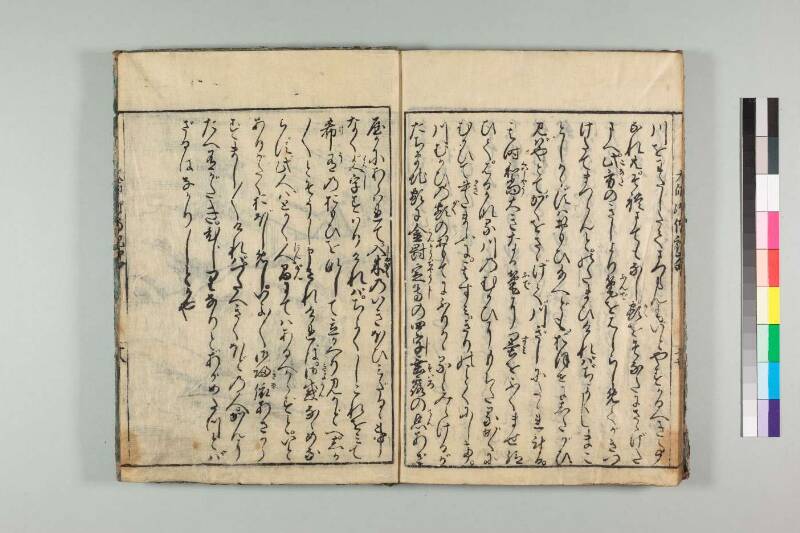
翻刻
川をわたしたてまつらんも。いとやすかるへき事
なれ共。それまてもなし。額(がく)をそなたにさゝげた
まへ。此方のきしより筆(ふんで)をはしらしめて。かきつ
けたてまつらんと。のたまひければ。ちよくしまこ
としからずはおもひ給へども。おほせにしたがび
見ばやとて。がくをさゝげて。川ぎしにたゝれける。
其時 和尚(くはしやう)大きなる筆(ふで)に墨(すみ)をふくませ給
ひて。はるかなる川のむかひにもちたるがくに
むかひて書(かき)たまふに。其すみ。きりのことくにして。
川むかひの額(がく)のおもてにふりかゝるとみえけるが
たちまち額に金剛定寺の四字(じ)垂露(すいろ)の点(てん)あざ
やかにあらはれて。入木(しゆほく)のいきほひみだるゝ事
なく。文字(もんじ)すはりければ。ちよくしこれをみて
希有(けう)のおもひをなして立かへりみかどへ。しか
〳〵とそうし申されければ。御感(きよかん)なゝめな
らず。此人はとかく人間(にんげん)にていはあるへからずと。いと
ありがたくおぼしめし。いよ〳〵御 帰依(きゑ)あさから
ずまし〳〵ければ。つたへきくほどの人。かんに
たへ有がたき。ひじりなりと。あがめたつとば
ざるはなかりしとかや
現代語訳
川を渡らせて差し上げることも、まことに容易なことではあるが、そこまでする必要もない。額をそちらに掲げてください。こちらの岸から筆を走らせて、書いて差し上げましょう」とおっしゃったので、勅使はまことのこととは思いながらも、仰せに従って見届けようと、額を掲げて川岸にお立ちになった。
その時、和尚は大きな筆に墨を含ませ、はるか川の向こうに持たれている額に向かって書かれると、その墨が霧のように川向こうの額の面に降りかかると見えたところ、たちまち額に「金剛定寺」の四文字が、垂露の点も鮮やかに現れ、入木の勢いも乱れることなく、文字がしっかりと落ち着いて収まった。勅使はこれを見て、まれにみる不思議なことと深く感じ入り、都へ帰って帝に詳しく申し上げたところ、帝のご感動はこの上なく、「この方はとても人間とは言えないほどの存在である」と、まことにありがたくお思いになり、ますます深く御帰依なさったので、伝え聞く人々は皆、感嘆に堪えず、ありがたい聖人であると、崇め尊ばない者はなかったということである。
英語訳
"It would also be a simple enough matter to have you cross the river, but there is no need to go so far. Please hold the plaque up on your side. I shall set my brush running from this bank and write it for you." Upon hearing this, the imperial envoy, though scarcely believing it could be true, resolved to follow the Master's instructions and see for himself, and so held up the plaque and stood at the river's edge.
At that moment, the Venerable Master loaded a large brush with ink and, facing the plaque held far across the river on the opposite bank, began to write. The ink appeared to drift like a mist and settle upon the face of the plaque on the far shore — and in an instant, the four characters reading "Kongōjō-ji" appeared vividly upon the plaque, their *suiro* dots precise and clear, the powerful strokes of the brush unwavering, and every character perfectly and firmly settled in place. The imperial envoy, witnessing this, was filled with a sense of awe at this most extraordinary marvel, and upon returning to the capital reported the event in full detail to the Emperor. The Emperor's admiration knew no bounds, declaring: "This person cannot possibly be an ordinary human being," and held the Master in the deepest veneration. His devotion to Kūkai grew ever more profound, and among all those who came to hear of these events, there was not one who did not revere and honor him as a holy man beyond all wonder and gratitude.