翻刻
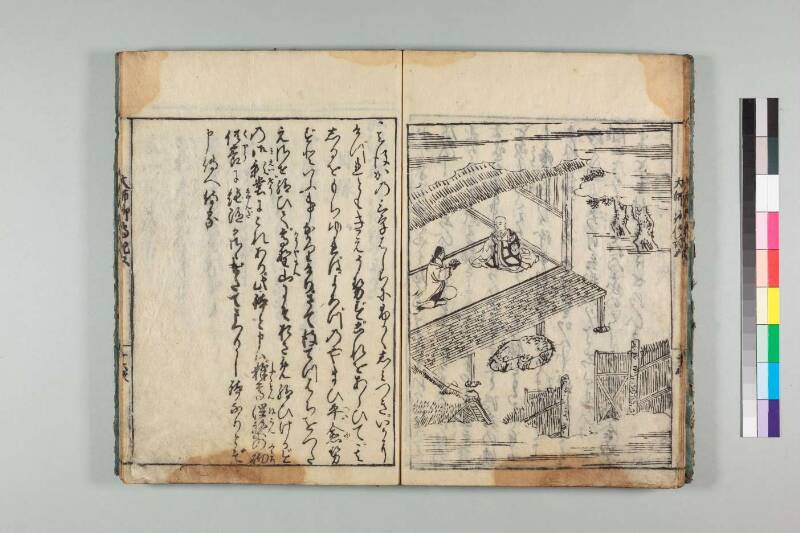
【挿し絵】
其後かの三字はしらにふかくしみつき。いかに
けづれともきえうせず。これをあらひて。其
しるをもちゆれば。よろづのやまひ平癒(へいゆ)せ
ずといふ事なかりけり。さて後てつはちをつた
えさせ給て。高野(かうや)山(さん)にそおさめ給ひける。今
の御影(みえい)堂(だう)にこれあり。此鉢と申は。釈尊(しやくそん)涅槃(ねはん)の砌(みきり)
供養に純陀(しゆんだ)かさゝげたてまつりし鉢なりとぞ
申伝へ侍る
現代語訳
【挿し絵】
その後、あの三字は柱に深くしみつき、いかに削っても消え失せることがなかった。これを洗って、その洗い汁を用いれば、あらゆる病が平癒しないということはなかった。さて、後に(大師は)鉄鉢をお伝えになって、高野山にお納めになった。今の御影堂にこれがある。この鉢というのは、釈尊が涅槃に入られる折に、純陀が供養として捧げ申し上げた鉢であると伝え申されている。
英語訳
【Illustration】
Thereafter, those three characters became deeply embedded in the pillar, and no matter how much one scraped at them, they could not be effaced. If one washed the pillar and used that water, there was no illness that would fail to be cured. In due time, the Great Master passed on the iron bowl and had it enshrined at Mount Kōya. It remains there to this day in the Mieidō Hall. This bowl, it is said and handed down, is none other than the bowl that Cunda offered to Śākyamuni as a final offering at the time of the Buddha's passing into nirvāṇa.