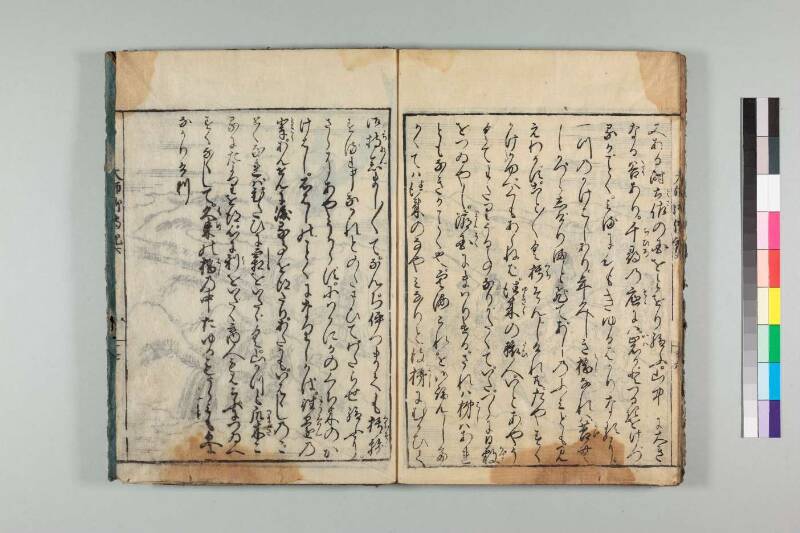
翻刻
【土佐国朽木の橋の事】
又ある時 土佐(とさ)の国をとをり給ふ。山中に大き
なる谷(たに)あり。千尋(ちひろ)の底(そこ)には岩かどつるぎをけづ
るがごとく。みるに心もきゆるばかりなるに。
一つのかけはしあり。年久しき橋(はし)なれば苔(こけ)む
しかづらしげりまとひて。あしのふみども見
えわかず。こと〳〵く朽(くち)そんじけれ共。たやすく
かけかゆべくもあらねば。往来(ゆきゝ)の旅(たび)人。いとあやう
くてわたりうる事なりがたくて。いたづらに日 数(かず)
をつゐやし。隣国(りんごく)にまはりける。されは梯(はし)はあれ
ともなきがことく也。空海これを御覧じて
かくては往来のなやみなりと。彼 梯(はし)にむかひて
御 持念(ぢねん)まし〳〵て。なんぢいつまても朽(くち)損(そん)
する事なかれとのたまひて。わたらせ給ふに。
さらにあやうからず。にはかにかのくち木のか
けはし。石はしのことくになりしかば。往還(おうくはん)の
輩(ともから)。あんせんに渡る事を得たり。あたかも。いはゝしのご
とくなれば。ひたひに霜(しも)をいたゞく。山かつも爪木(つまぎ)こ
るにたよりを得。心に利(り)をいだく商人もはこぶにつゐへ
すくなくして。久米(くめ)の橋(はし)の中たゆるもうらみも更に
なかりけり
現代語訳
【土佐国の朽ちた橋のこと】
またある時、空海は土佐の国を通られた。山の中に大きな谷があり、千尋もの深さの底には岩の角が剣を削り立てたように鋭く、見るだけで心が凍りつくほどであった。そこに一つの桟橋があったが、長年を経た橋であったため、苔が生え、葛が繁り絡みついて、足の踏み場も見分けられないほどであった。橋はすっかり朽ち損じていたが、容易に架け替えることもできないため、行き来する旅人たちは、たいそう危なくて渡ることができず、いたずらに日数を費やし、隣国へ迂回していた。つまり、橋はあっても無いも同然の状態であった。空海はこれをご覧になり、「このままでは往来の妨げになる」と、その橋に向かって御持念(祈念)をなさり、「汝よ、いつまでも朽ち損ずることなかれ」とおっしゃって渡られると、まったく危なげもなく、にわかにかの朽ちた桟橋が石橋のようになった。そのため、往来する人々は安全に渡ることができるようになった。まるで石橋のようになったので、額に霜を戴く山賤(山の民)も薪を取りに行くのに便宜を得、利益を求める商人も荷を運ぶのに費用が少なく済んで、久米の橋が途絶えたことを恨む者もまったくいなくなった。
英語訳
【The Story of the Rotting Bridge in Tosa Province】
Once, Kūkai was passing through the province of Tosa. Deep in the mountains, there was a great ravine, at the bottom of which, a thousand fathoms below, sharp rocks jutted out like sword blades, so terrifying to behold that one's heart would go cold at the sight. There was a single plank bridge spanning the ravine, but as it was a bridge of many years' age, moss had grown over it, wisteria vines had spread and entangled themselves across it, and one could not even make out where to place one's feet. The bridge was thoroughly rotten, yet it could not easily be rebuilt or replaced. Therefore, travelers passing along the road found it far too dangerous to cross, and wasted many days going around through neighboring provinces instead. In effect, though the bridge existed, it was as if it did not exist at all. Kūkai, seeing this, thought, "This is a great hindrance to those who travel," and facing the bridge, he performed a meditation and prayer, declaring, "Thou shalt never rot or fall to ruin again." When he then crossed the bridge, there was no danger whatsoever — and suddenly, the decayed plank bridge became like a bridge of stone. From then on, all those who traveled the road were able to cross it safely. As it had become like a stone bridge, even the mountain peasants with frost upon their brows who came to gather firewood found it convenient, and merchants with profit in their hearts were able to carry their goods with little expense. No one lamented any longer that the bridge of Kume had fallen into disuse.