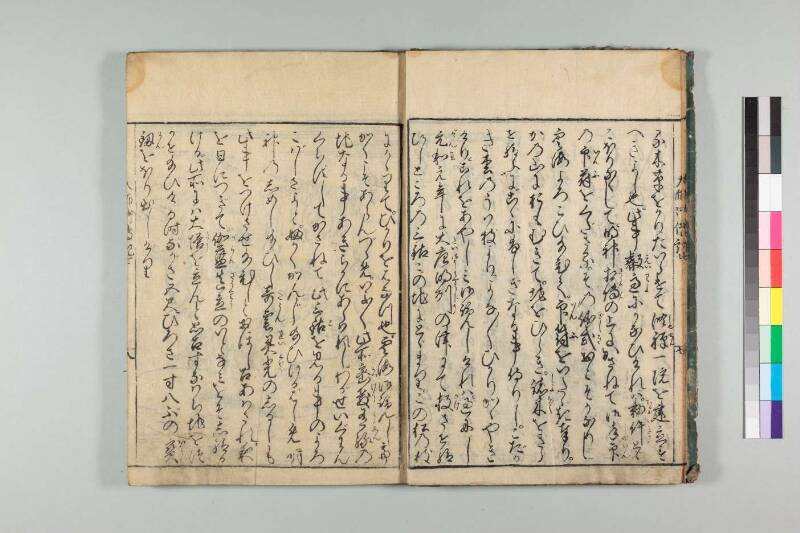
翻刻
【三鈷宝剱の事】
る草木をかりたいらげて修禅(しゆぜん)一院を建立す
へきよし也。此事 叡慮(えいりよ)にかなひけれは。勅許(ちよくきよ)とゞ
こほりなくして。明神 相伝(さうでん)の上にかさねて御 手印(しゆいん)
の印符(いんふ)をくださる。その儀式(ぎしき)おこそかなりし
空海よろこひ給ひて。印符(いんふ)をいたゝき奉り。
かの山におもむきて。地をひらき。諸木(しよぼく)をきら
せ給ふに。こゝにふしぎなる事侍りし。こだか
き松のうは枝より。よな〳〵ひかりかゝやき
けり。これをあやしみ御覧しければ。過にし
元和(げんわ)元年に大唐(だいたう)明州(みやうじう)の津にて投させ給
ひしところの三 鈷(こ)この地にとゞまり。この松の枝
【大塔御建立の事(目録の順だとこのあたり)】
にかゝりて。ひかりをはなつ也。空海御覧じて
かくこそあらんづらめ。いよ〳〵此所 密教(みつけう)有縁(うえん)の
地なる事あきらかにあらはれし。わがせいぐわん
くちずしてかさねて此三 鈷(こ)を見る事のよろ
こばしさよと。ふかくかんじ給ひける。はしめ明
神のしめし給ひし奇雲(きうん)霊光(れいくはう)のしるしも
此事をつけさせ給ひしとおほし召あはされ。夜
を日につぎて。伽藍(がらん)造立(ぞうりう)のいとなみをぞし給り
ける。此所には大 塔(たう)を立んと思召すなはち地をつ
かせ給ひける時。ながさ五尺ひろさ一寸八ぶの宝(ほう)
剱(けん)をほり出しけり
現代語訳
【三鈷宝剣の事】
荒れた草木を刈り払い、禅の修行のための一院を建立すべきである、という内容でありました。この事が叡慮にかない、勅許はとどこおりなく下され、大明神が(山を)相伝してくださったことに加えて、さらに御手印の印符をくださいました。その儀式はおごそかなものでありました。空海は喜ばれて、印符を頂戴され、あの山に赴いて地を開き、諸々の木を切り払わせられました。
ここに不思議なことがございました。こんもりと茂った松の高い枝より、夜な夜なひかりが輝いておりました。これを不思議に思い、よくよく御覧になりますと、過ぎにし元和元年(※)に大唐・明州の港において投げさせられたところの三鈷が、この地にとどまり、この松の枝にかかって光を放っているのでありました。空海は御覧になって、「さてもさても、このようなことであったのか。いよいよこの場所が密教とゆかりの深い土地であることが明らかに現れた。わが誓願が空しくならずして、重ねてこの三鈷を見ることの嬉しさよ」と、深く感じ入られました。はじめに大明神がお示しになった奇しき雲や霊光のしるしも、この事を(予め)お知らせになっていたのだとお思い合わされ、夜を日に継いで、伽藍造立の営みに励まれました。
【大塔御建立の事】
この場所に大塔を建てようとお思いになり、さっそく地を掘らせになった時、長さ五尺、幅一寸八分の宝剣を掘り出しました。
(※ 原文「元和元年」は「弘仁元年」などの誤りか、あるいは後世の写本における混乱の可能性があります。文脈上は空海が唐に渡った際のことを指すため、延暦二十三年〔804年〕ごろを指すと考えられます。)
英語訳
**[On the Matter of the Three-Pronged Vajra (sankō) and the Sacred Sword]**
...that the overgrown vegetation should be cleared away and a single hall for meditative practice (zen) established. This matter was found to accord with the imperial will, and the imperial sanction (chokukyō) was granted without delay. Moreover, in addition to the Great Deity's transmission of the mountain, a hand-sealed document of authorization (inpu) was also bestowed. The ceremony held on that occasion was one of great solemnity. Kūkai rejoiced and, reverently receiving the sealed document upon his head, he proceeded to that mountain, cleared the land, and had the various trees cut down.
Here, a wondrous thing occurred. From the upper branches of a tall, leafy pine tree, a radiant light shone forth every night. Thinking this strange, he looked carefully, and found that the three-pronged vajra (sankō) which he had thrown from the harbor at Mingzhou in Great Tang in the former year of Genna [*] had come to rest in this very place, and was hanging from a branch of this pine tree, emanating light. Upon seeing this, Kūkai exclaimed: "Ah, so this is how it was! It has become ever more clear that this place is a land with a deep karmic connection to Esoteric Buddhism (mikkyō). How joyful it is that my vow has not been made in vain, and that I behold this three-pronged vajra once more." He was moved to deep and profound emotion. He also came to understand that the signs of the miraculous clouds and sacred light which the Great Deity had shown him at the outset had been given to foretell this very event. And so he devoted himself day and night, without rest, to the work of constructing the monastery complex (garan).
**[On the Construction of the Great Pagoda (Daitō)]**
Intending to erect a Great Pagoda at this place, he immediately had the ground dug, whereupon a sacred sword (hōken) measuring five shaku in length and one sun and eight bu in width was unearthed.
*[Translator's note: The original text reads "Genna gannen" (元和元年), which would correspond to 1615 CE — an anachronism, as Kūkai lived in the late 8th and early 9th centuries. This is very likely a scribal error or confusion in the manuscript. The intended reference is almost certainly to Kūkai's voyage to Tang China, which departed Japan in Enryaku 23 (延暦二十三年, 804 CE). See annotation below.]*