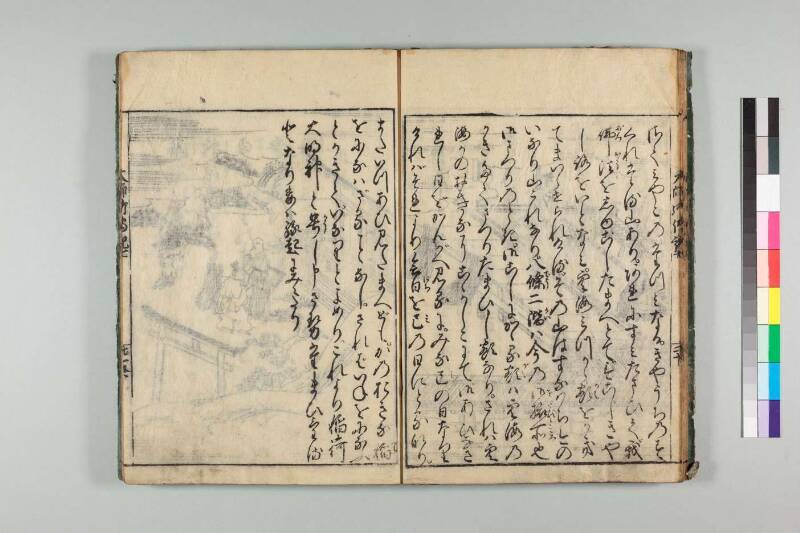
翻刻
さてみやこのたつみなる。きやうちのす
くれたる山あり。あれにすみたまひて。我
仏法(ぶつほう)をしゆごしたまへとて。すこしきや
しろをいとなみ。空海みづから額(がく)をかき
てまいらせられける。その山はすなはち今の
いなり山これなり。八 条(でう)二 階(かい)は今の御(を)旅所(たびところ)也
御まつりのとき。御こしにかゝる額(がく)は。空海の
かきたてまつりたまひし額なり。されは空
海かのおきなにこゝかしこにて。御あひなさ
れし日をかんがへ見るに。みな巳(み)の日なり
ければそれより会 日(にち)を巳の日にとるなり。
またいつあひ見たまへども。かのおきな稲(いね)
をになはざることなし。さればいねをになふ
とかきて。いなりとよめり。これより稲荷
大明神と号(かう)し申させたまひける
となり委は縁起にみえたり
現代語訳
さて、都の東南の方角に、境内として優れた山があります。「あの山に住まわれて、我が仏法をお守りください」と申し上げ、小さな社を設け、空海が自ら額を書いて奉納されました。その山こそ、すなわち今の稲荷山がこれにあたります。八条二階(にかい)は、今の御旅所(おたびしょ)です。祭りの際に御輿にかかる額は、空海が書き奉られた額です。さて、空海があの翁とあちらこちらでお会いになった日を考えてみますと、すべて巳(み)の日でありましたので、それより会日(えにち)を巳の日に定めるようになりました。
また、いつお会いになりましても、あの翁が稲を担っていないことはありませんでした。そこで、稲を担うと書いて「いなり」と読むのです。これより「稲荷大明神」と号し申し上げるようになったということです。詳しくは縁起に見えております。
英語訳
Now, to the southeast of the capital, there is a mountain of outstanding quality, suitable as sacred grounds. Kūkai addressed the old man, saying, "Please dwell upon that mountain and protect my Buddhist dharma," and had a small shrine built there, with Kūkai himself writing and dedicating the votive plaque. That mountain is none other than the present-day Mount Inari. The "Nikai" of Hachijō is today's Otabisho (the temporary resting place of the divine palanquin during festivals). The plaque that hangs upon the mikoshi (portable shrine) during festivals is the very plaque written and dedicated by Kūkai. Moreover, when one reflects upon the days on which Kūkai encountered the old man here and there, they were all days of the Snake (mi no hi), and thus from that time on, the days of assembly (e-nichi) came to be set on the days of the Snake.
Furthermore, no matter when Kūkai met the old man, the old man was never without rice (ine) upon his back. Therefore, writing the characters for "carrying rice" (稲荷), this is read as "Inari." From this, the deity came to be revered under the name "Inari Daimyōjin." For further details, please refer to the engi (founding legend).