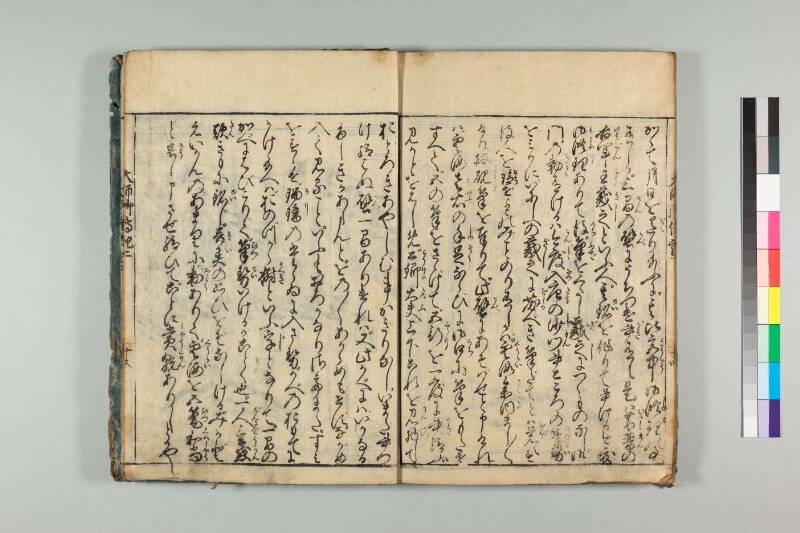
翻刻
【五筆上人と勅号を得給ふ事】
かくて月日を送(をく)り給ふに。其頃 宮中(きうちう)御 修理(しゆり)の事
有しか。三間(げん)の壁(かべ)にうちつけ書(かき)有し。是は昔(むかし)晋(しん)の
右軍(ゆうぐん)王(わう)羲之(ぎし)といふ人。其 銘(めい)を作りて書る今度
御(み)修(しゅ)理(り)ありて後(のち)筆(ふで)をくたし羲之(ぎし)につゝくものなし。御
門の勅(ちよく)有けるは今度(こんど)入唐(につたう)の沙門(しやもん)書ところの筆勢(ひつせい)
をみるに。いにしへの羲之(ぎし)に劣(おとる)べき筆だてとは覚(おぼ)えす
彼人を請(しよう)ぜよとのみことのり有しかば。空海(くうかい)参内(さんだい)まし〳〵
けり。硯(すゝり)筆を奉りて。此 壁(かべ)にあそばせと申けれ
は。空海 左右(さゆふ)の手足(しゆそく)ならびに御口(くち)に。筆をもたせ
すへて。五の筆をさゝげて五 行(くたり)を一度に書(かき)給ふ。
みかどをはしめ。公卿(こうけい)大夫(たいふ)上下これを見物(けんふつ)して
おとろきあやしむ事かぎりなし。いまだ筆つ
け給はぬ壁(かべ)一間ありければ又此かべにはいかなる
けしきかあらんと。をの〳〵あからめもせず。ながめ
入て見ること。いふもおろかなりさてまた。すみ
をすらせ。瑠璃(るり)のたらゐに入させ。かべのおもてに
かけ給へばおのづから樹(うへき)といふ字(じ)となりて。一間の
かべにはびこりて。筆勢(ひつせい)いけるがことく也。一 人(じん)三(さん)《振り仮名:□|はう》感(かん)
歎(たん)きもに銘(めい)じ。奇異(きい)の思ひをぞなしける。みかど
えいらんのあまりに。勅(ちよく)あありて。空海を五 筆(ひつ)和尚(くはしやう)
と号(かう)し申させ給ひて。ことに賞(しやう)観(くはん)ありしとかや
現代語訳
【五筆上人と勅号を得給う事】
こうして月日を過ごされていた時、その頃宮中で御修理の事があった。三間の壁に以前から書があった。これは昔、晋の右軍王羲之という人がその銘を作って書いたものであった。今度御修理があって後、筆を下す者で羲之に続く者はいなかった。御門の勅があったのは「今度入唐した沙門が書いた所の筆勢を見るに、いにしえの羲之に劣るべき筆立てとは思えない。彼の人を請じよ」との詔があったので、空海は参内なさった。硯と筆を奉って「この壁にお書きください」と申し上げると、空海は左右の手足並びにお口に筆を持たせ据えて、五つの筆を掲げて五行を一度に書かれた。帝をはじめ、公卿大夫上下これを見物して驚き怪しむことこの上なかった。
まだ筆をつけられていない壁が一間あったので「また此の壁にはいかなる様子であろうか」と、おのおの瞬きもせずに眺め入って見ることは言うまでもない。さてまた、墨を摺らせ、瑠璃の盥に入れさせ、壁の面にかけられると自然と「樹」という字となって、一間の壁に広がって、筆勢が生きているようであった。一人として感嘆せず肝に銘じない者はなく、奇異の思いをなした。帝は叡覧の余りに勅があって、空海を五筆和尚と号し申させられて、ことに賞観があったということである。
英語訳
【The Matter of Receiving the Imperial Title of Gohitsu Shonin (Five Brush Master)】
While he was spending his days thus, at that time there was repair work being done at the imperial palace. On the walls of three ken (bays) there was calligraphy that had been written previously. This was created and written long ago by a man of Jin dynasty named Wang Xizhi, the General of the Right Army. After the current palace repairs, there was no one who could take up the brush and follow in Xizhi's footsteps. The emperor issued an edict saying, "Looking at the brush power of the monk who recently returned from Tang, his calligraphic skill does not seem inferior to that of ancient Xizhi. Summon that person." So Kukai entered the palace. When an inkstone and brushes were offered and he was told "Please write on this wall," Kukai held brushes in his left and right hands and feet as well as in his mouth, and raising five brushes, he wrote five lines simultaneously. From the emperor down to the court nobles and officials, high and low, all who witnessed this were amazed and bewildered beyond measure.
Since there was still one ken of wall where no brush had been applied, everyone wondered "What kind of spectacle will this wall show?" and watched intently without even blinking. Then again, he had ink ground and placed in a lapis lazuli basin, and when he splashed it on the surface of the wall, it naturally formed the character "tree" (樹), spreading across the entire ken of wall with brush power as if alive. Not a single person failed to be moved to admiration and etch this in their hearts, filled with wonder at this marvel. The emperor, in his great appreciation, issued an edict calling Kukai "Gohitsu Osho" (Five Brush Monk) and bestowed special honors upon him.