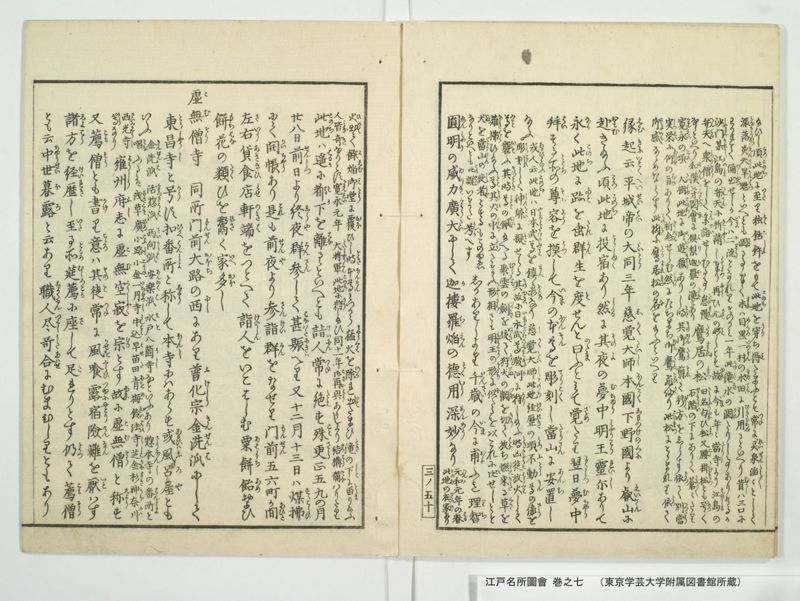
翻刻
【右丁】
《割書:給ひし頃(ころ)此地(このち)に至(いた)り《振り仮名:独鈷𫒍|とくこしよ》#1をもて此地(このち)を穿(うか)ち得(え)たまふとそ常(つね)に灵泉(れいせん)㴞々(たう〳〵)として|漲落(みなきりおつ)炎天(えんてん)旱魃(かんはつ)といへとも涸(かる)る事なく末(すゑ)は目黑(めくろ)一村(いつそん)の水田(すゐてん)に引用(ひきもちゆ)るといへり昔(むかし)は三口に》
《割書:わかれて涌出(ゆしゆつ)せしか今(いま)は二流(にりう)となれりそのかみ一年 此(この)滝水(たき)の涸(かれ)たりし事ありけるか|沙門(しやもん)某(それかし)江島(えのしま)の弁天(へんてん)に祈請(きしやう)し奉(たてまつ)り再(ふたゝ)ひ元(もと)の如(こと)しとそ故(ゆゑ)に今(いま)も年々 當寺(たうし)より江島(えのしま)の》
《割書:弁天(へんてん)へ衆僧(しゆうそう)をして参詣(さんけい)せしむる事 怠慢(たいまん)|なしといへり和漢三才図會(わかんさんさいつゑ)に倶梨迦羅(くりから)の滝(たき)とあり》《振り仮名:鷹居の松|たかすゑ まつ》《割書:旧名(きうみやう)《振り仮名:匂ひ松|にほ まつ》又 腰掛松(こしかけまつ)とも号(なつ)く|石階(せきかい)の下にありて蒼々(さう〳〵)たり》
《割書:寛永(くわんえい)の頃(ころ) 大樹(たいしゆ)此地(このち)に御遊猟(こいうりやう)ありし時(とき)其(その)御鷹(おんたか)翦(それ)て行方(ゆくへ)をしらす依(よつ)て別當(へつたう)|実栄(しつえい)に仰(あふせ)の旨(むね)ありて祈念(きねん)せしむ然(しかり)にたちまち御鷹(おんたか)飛帰(とひかへ)り此松(このまつ)にとゝまれり依(よつ)て》
《割書:御感(きよかん)なゝめならす此樹(このき)に鷹居松(たかすゑまつ)の名(な)を給ふといへり|》
縁起云(えむきにいはく)平城帝(へいせいてい)の大同(たいとう)三年 慈覚大師(しかくたいし)本國(ほんこく)下野國(しもつけのくに)より叡山(えいさん)に
赴(おもむ)き給ふ頃(ころ)此地(このち)に投宿(とうしゆく)あり然(しかる)に其夜(そのよ)の夢中(むちゆう)明王(みやうわう)靈尓(れいし)ありて
永(なか)く此地(このち)に跡(あと)を垂(たれ)群生(くん )を度(と)せんと曰(のたま)ふとみて覚(さめ)たり翌日(よくしつ)夢中(むちゆう)
拜(はい)する所(ところ)の尊容(そんよう)を摸(うつ)して今(いま)の本尊(ほんそん)を彫刻(てうこく)し當山(たうさん)に安置(あんち)し
給ふ《割書:或人云(あるひといふ)此地(このち)は日本武尊(やまとたけのみこと)を鎮(まへ)#2る所(ところ)なり慈覚大師(しかくたいし)此地(このち)経歴(けいれき)の頃(ころ)不動尊(ふとうそん)の像(さう)を
|彫刻(てうこく)して神躰(しんたい)に擬(き)せらる其故(そのゆゑ)に日本武尊(やまとたけのみこと)駿河(するか)に狩(かり)し給ふ時(とき)凶徒(きやうと)放火(はうくわ)して》
《割書:尊(みこと)を襲(おそ)ふ其時(そのとき)尊(みこと)の佩(おひ)給へる《振り仮名:聚雲の劍|むらくも つるき》を抜(ぬき)て狩犬(かりいぬ)の綱(つな)を切(きり)て放(はな)ち燃来(もえきた)る草(くさ)を|薙拂(なきはら)ひ給ふ尊(みこと)其火(そのひ)の中(うち)に立(たち)たまふ形相(きやうさう)さも明王(みやうわう)の形(かたち)に似(に)たるを以これに比(ひ)せしとそ》
《割書:犬(いぬ)を當山(たうさん)の使者(ししや)とするもこのゆゑ|なりといへとも此説(このせつ)いまた考(かんか)へす》しかありしより千歳(せんさい)の今(いま)に甫(およ)ふ迄 理智(りち)
圓明(ゑんみやう)の威力(ゐりき)廣大(くわうたい)にして迦樓羅㷔(かるらえん)の德用(とくいう)深妙(しんめう)なり《割書:元和(けんわ)元年の春(はる)|此地(このち)の在家(ざいけ)より》
【左丁】
《割書:火(ひ)出(いて)て餘㷔(よえむ)御堂(みたう)に覆(おほ)ひし時(とき)本尊(ほんそん)みつから猛火(みやうくわ)を除(のか)れ出(いて)たまひ滝(たき)の下(した)に留(とゝま)り給ふ|人 皆(みな)奇(き)なりとす寛永(くわんえい)元年 大将軍(たいしやうくん)此地(このち)に狩(かり)し給ひ同十一年 御再興(こさいこう)ありしより結構(けつこう)備(そな)はりたり》
此地(このち)は遥(はるか)に都下(とか)を離(はな)るゝといへとも詣人(けいにん)常(つね)に絶(たえ)す殊更(ことさら)正五九の尽月
廿八日 前日(せんしつ)より終夜(しうや)群参(くんさん)して甚(はなはた)賑(にきは)へり又十二月十三日は煤拂(すゝはらひ)
にて開帳(かいちやう)あり是(これ)も前夜(せんや)より参詣(さんけい)群(くん)をなせり門前(もんせん)五六町か間(あひた)
左右(さいう)貨食店(あきなひみせ)軒端(のきは)をつとへて詣人(けいしん)をいこはしむ粟餅(あはもち)飴(あめ)およひ
餅(もち)花(はな)の類(たく)ひを鬻(ひさ)く家(いへ)多(おほ)し
虚無僧寺(こむそう ) 同所 門前大路(もんせんおほち)の西(にし)にあり普化宗(ふけしう)金洗派(きんせんは)にして
東昌寺(とうしやうし)と号(かう)す扣番所(ひかへはんしよ)と称(しよう)して本寺(ほんし)にはあらす或(あるひは)風呂屋(ふろや)とも
いふ《割書:金洗派(きんせんは) 活惣派(くわつさうは) 西向派(さいかうは) 安樂派(あんらくは) 《振り仮名:水戸八 箇寺|みと かし》なといふあり惣本寺(さうほんし)の番所(はんしよ)と|唱(とな)ふるは浅草(あさくさ)廣小路(ひろこふし)小金(こかね)一月寺(いちけつし)牛込(うしこみ)早苗田(わせた)青梅(あをめ)鈴法寺(れいはふし)芝(しは)金杉(かなすき)神奈川(かなかは)》
《割書:西光寺(さいくわうし)|等(とう)なり》雍州府志(ようしうふし)に虚無空寂(こむくうしやく)を宗(むね)とす故(ゆゑ)に虚無僧(こむそう)と称(しよう)す
又 薦僧(こもそう)とも書(かけ)り意(こゝろ)は其徒(そのと)常(つね)に風喰(かせをくらひ)露宿(つゆにやとり)險難(けんなん)を厭(いと)はす
諸方(しよはう)を経歴(けいれき)し至(いた)る所(ところ)莚薦(むしろこも)に座(さ)して足(た)れりとす仍(よつ)て薦僧(こもそう)
とも云 中世(ちゆうせい)暮露(ほろ)と云あり職人尽哥合(しよくにんつくしうたあはせ)にむまひしりともあり
現代語訳
【右丁】
その頃この地に至り、独鈷杵を用いてこの地を掘り当てられたという。常に霊泉が湧々として満ち溢れ、炎天や旱魃であっても涸れることなく、最終的には目黒一村の水田に引用されるという。昔は三口に分かれて湧出していたが、今は二流となっている。かつて一年、この滝水が涸れたことがあったが、沙門某が江島の弁天に祈請し奉り、再び元のようになったという。故に今も年々当寺より江島の弁天へ衆僧をして参詣させることを怠らないという。和漢三才図会には倶梨迦羅の滝とある。
鷹居の松(旧名は匂い松、また腰掛松とも号する)は石階の下にあって蒼々としている。寛永の頃、大樹(将軍)がこの地に御遊猟された時、その御鷹が逃げて行方を知らず、よって別当実栄に仰せの旨があって祈念させた。するとたちまち御鷹が飛び帰り、この松にとまった。よって御感斜めならず、この樹に鷹居松の名を賜ったという。
縁起によると、平城帝の大同三年、慈覚大師が本国下野国より叡山に赴かれる頃、この地に投宿された。その夜の夢中に明王が霊示されて、永くこの地に跡を垂れ群生を度そうと仰せになるのを見て覚めた。翌日、夢中に拝する所の尊容を模して今の本尊を彫刻し、当山に安置された。
ある人は言う。この地は日本武尊を鎮める所である。慈覚大師がこの地を経歴された頃、不動尊の像を彫刻して神体に擬せられた。その故に日本武尊が駿河で狩りをされた時、凶徒が放火して尊を襲った。その時尊が佩かれていた草薙剣を抜いて狩犬の綱を切って放ち、燃え来る草を薙払われた。尊がその火の中に立たれる形相がさも明王の形に似ていたので、これに比せしたという。犬を当山の使者とするのもこの故であるというが、この説はまだ考証していない。
このようであってから千歳の今に及ぶまで、理智円明の威力広大にして迦楼羅炎の徳用深妙である。元和元年の春、この地の在家より火が出て余炎が御堂を覆った時、本尊がみずから猛火を除かれ出て、滝の下に留まられた。人皆奇なりとした。寛永元年、大将軍がこの地で狩りをされ、同十一年に御再興があってから結構が備わった。
【左丁】
この地は遥かに都下を離れるというものの、詣人が常に絶えず、殊更正月・五月・九月の晦日二十八日は前日より終夜群参して甚だ賑わう。また十二月十三日は煤払いで開帳があり、これも前夜より参詣が群をなす。門前五六町の間、左右に商店が軒端を連ねて詣人を憩わせる。粟餅、飴および餅花の類いを売る家が多い。
虚無僧寺 同所門前大路の西にあり、普化宗金洗派にして東昌寺と号する。控番所と称して本寺ではない。或いは風呂屋ともいう。金洗派、活惣派、西向派、安楽派、水戸八箇寺などというものがある。惣本寺の番所と唱えるのは浅草広小路、小金一月寺、牛込早苗田、青梅鈴法寺、芝金杉、神奈川西光寺等である。
雍州府志に「虚無空寂を宗とする故に虚無僧と称す」とある。また薦僧とも書く。意味は、その徒が常に風を食らい露宿し、険難を厌わず諸方を経歴し、至る所で莚薦に座して足れりとすることによって薦僧ともいう。中世には暮露ともいう。職人尽歌合にも「むまいしり」ともある。
英語訳
【Right Page】
It is said that during that time, he came to this place and used a vajra pestle to dig and obtain water here. The sacred spring constantly bubbles forth abundantly, and even during blazing heat and drought, it never runs dry. Eventually, it is channeled for use in the rice fields of Meguro village. In ancient times, it gushed forth from three outlets, but now it has become two streams. Once, for one year, this waterfall dried up, but a certain monk prayed to Benten of Enoshima, and it returned to its original state. Therefore, even now, the temple annually sends monks to worship at Benten of Enoshima without fail. The Wakan Sansai Zue refers to it as Kurikara Falls.
The Takasue Pine (formerly called Nioi Pine, also known as Koshikake Pine) stands beneath the stone steps, verdant and flourishing. During the Kan'ei period, when the Shogun went hunting in this area, his hawk escaped and its whereabouts became unknown. Therefore, the temple administrator Jitsue was ordered to pray. Immediately, the hawk flew back and perched on this pine tree. The Shogun was greatly pleased and bestowed upon this tree the name "Takasue Pine" (Hawk's Perch Pine).
According to the temple's origin story, in the third year of Daido under Emperor Heizei, when the Great Master Jikaku was traveling from his home province of Shimotsuke to Mount Hiei, he lodged in this place. That night in a dream, the Wisdom King appeared with a divine revelation, saying he would eternally leave his traces in this place to save all living beings. The next day, he carved the current principal image, modeling it after the sacred form he had worshipped in his dream, and enshrined it in this temple.
Some say this place enshrines Prince Yamato Takeru. When the Great Master Jikaku passed through this area, he carved an image of Fudo Myoo as a representation of the deity. This is because when Prince Yamato Takeru was hunting in Suruga, villains set fires to attack the prince. At that time, the prince drew his Kusanagi sword, cut the leashes of his hunting dogs to release them, and cut away the burning grass. The prince's appearance standing in the flames resembled that of a Wisdom King, which is why this comparison was made. The reason dogs serve as messengers of this temple is also said to be due to this story, though this theory has not yet been thoroughly examined.
From that time until now, spanning a thousand years, the威power of perfect wisdom has been vast, and the miraculous virtue of Garuda flames profound. In the spring of the first year of Genna, when a fire broke out from a house in this area and the flames covered the hall, the principal image itself removed the fierce fire and emerged to remain beneath the waterfall. Everyone found this miraculous. In the first year of Kan'ei, the Shogun hunted in this area, and in the eleventh year of the same era, reconstruction took place, and the temple's structure was completed.
【Left Page】
Although this place is far removed from the capital, worshippers never cease coming. Especially on the 28th day of the last months of the first, fifth, and ninth months, crowds gather from the previous day throughout the night, creating great bustle. Also, on December 13th, there is an opening ceremony for temple cleaning, and for this too, worshippers gather in crowds from the previous evening. For five or six blocks in front of the temple gates, shops line both sides of the street to provide rest for visitors. Many houses sell millet rice cakes, candy, and decorative rice cake flowers.
Komusō Temple: Located west of the main road in front of the temple gates, it belongs to the Fuke sect's Kinsen branch and is called Tōshōji. It is called a "control station" and is not a head temple. It is sometimes also called a bathhouse. There are branches such as Kinsen, Katsusō, Saikō, Anraku, and Mito Eight Temples. Those that claim to be stations of the head temples include Asakusa Hirokoji, Kogane Ichigatsuji, Ushigome Waseda, Ōme Reihōji, Shiba Kanasugi, and Kanagawa Saikōji.
The Yōshū Fushi states: "They take emptiness and void tranquility as their doctrine, hence they are called komusō (monks of emptiness)." They are also written as komosō. The meaning is that their followers constantly eat wind and sleep in dew, do not fear hardships, travel through various places, and wherever they go, they sit on straw mats and are satisfied. Therefore, they are also called komosō. In medieval times, they were also called "boro." In the Shokunin Zukushi Uta-awase, they are also referred to as "umaishiri."