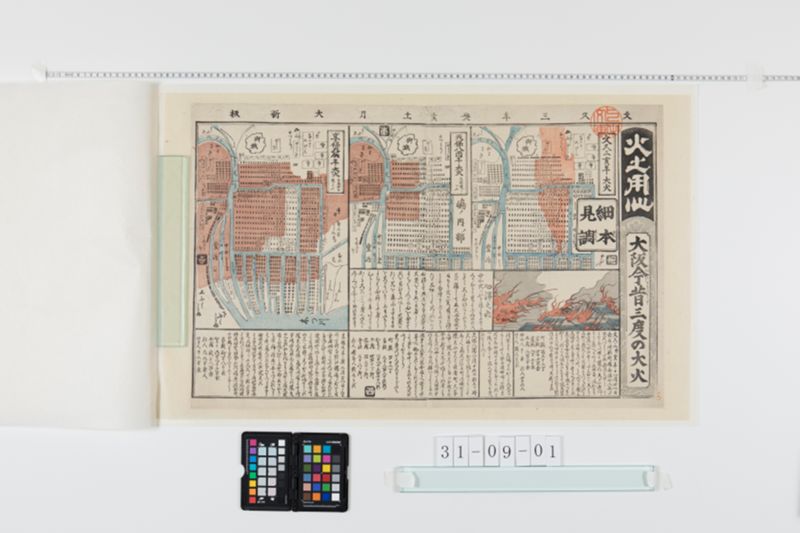
翻刻
【頭部枠外】文久三年癸亥十一月大新板
火之用心【黒地に白抜き文字】 大阪/今昔(むかしよりいまゝで)三度の大火【表題 四角い枠取り】
【上段】文久三亥年大火【四角で囲む】 細見/本(ほん)/調(しらべ)【四角い枠取り】
天保八酉年大火《割書:大坂焼と|いふ》【四角で囲む】島ノ内ノ部【四角で囲む】
享保九辰年大火《割書:金屋妙智|焼といふ》【四角で囲む】
【中段】心得の為
世に火はおそろしきものとは
しりなから足にてふみけす人
多し 大に心得ちかひなり
火は陽にして木火土金水の
司なり火は実に有用の随一
にして勿体なきものなり
ただ大切にして火に礼をいふ
心得にて始末をすればか#111ゝる
火災をまぬがるべし
よく〳〵人々の心を合せて
火を用ひ給ふべし火災は
ただ火を麁末にするもの
を天よりいましめ給ふなり
よく〳〵心得給ふべし
むかしより今年にいたる迄
かゝる大火は三ヶ度也ゆへに
今三ツを図して出すものなり
【下段】【一番右】
文久三癸亥年十一月廿一日
夜五ツ時新町橋東詰北入所より
出火いだし候所西風はげしく
して東へ一時に焼行夫より北西風に
なり巽【東南】へうつる又西南に風かわり
丑寅へやけゆく事はげしく夫より
上町へ飛火にて火勢ます〳〵はげしく
せんば上町とも一事にもへあがり誠に
大坂中火となるやう相見へ候まことに
老若男女のおどろき筆紙につくし
がたし終には大坂東のはしまて焼失仕候
見る人大坂市中のそうどふさつし給ふべし
同月廿三日昼四ツ時に火鎮り申候
町数 百五十二町【「丁」は「町」の略字】
家数 四千七百余
竈数 二万五千余
土蔵 三百二十余
神仏 八十余 死人四十六人
けが人数しれず
【右から2番目】
往古より大坂にてはかゝる大火めづ
らしき事也依而後世咄しの種且は
火の元心得のためにもならんか【本文では歟。「や」の読みもある】と
一紙に図して諸人の見覧にそなへ
たてまつる
【右から3番目】
天保八酉二月十九日朝五ツ時
天満より出火風はけしくして
所々へ飛火いたし上町御城辺まて
焼失北せんば長者町大家
処々焼失夫より南え【(助詞の)江】本町まで
やけ然るに火事場にて何者とも
しれずあやしき風俗にて大坂市中
あれ廻り人々の昆【ママ】雑いわんかたなき
次第それゆへ諸国在々へ逃【迯】る事
実に蜘の子をちらすがごとく
にて日本国中に其節は此大火の
噂さはかりなり
実に希代の大火大そうどふ也
町数 百十二町
家数 三千三百八十九軒
かまど 一万八千五百七十八軒
土蔵 四百十一ヶ所
穴蔵 百三十ヶ所
寺社 三十六ヶ所
死人 怪我人数しらず
【右から4番目】
享保九年辰三月廿一日之ひる
九ツ半時南堀江橘通り弐丁目
金屋妙智といふ人の宅より出火いたし
南風はげしく新町へやけ出終に北野迄
焼抜西はあみた池迄東は木綿はし辺
にて火鎮り西横堀北へ焼行博労町
北がはへ火移り夫より北は船場のこらず
焼失又天満へ飛火川崎迄中ノ島
堂島西天満東天満のこらず焼失
廿二日朝北東風になり上町へ飛火致
追々北風はげしく上町一面に成それより
高津へ移り島ノ内一円【円(の旧字体)】それより道頓ほり
芝居へ飛火いたし火先いくつにも相なり
難波新地長町不残焼失す
其節大坂四百八十余町之内四百丗町余
実に大坂初《割書:マッテ|》の大火にて親子兄弟
はなれ〴〵となり五畿内は勿論丹波
丹後伊賀伊勢江州播磨淡州等へ
にけ誠に其なんぎいわんかたなし
家数 弐万八千余
かまど 九万八千七百余
土蔵 弐千八百余
死人 凡三万余人
けが人 十二万余
現代語訳
【頭部枠外】文久三年(1863年)癸亥十一月 新版
「火の用心」【黒地に白抜き文字】 大阪/今昔(昔より今まで)三度の大火【表題】
---
【上段】
- 文久三亥年の大火【枠内】 詳細/本調べ【枠内】
- 天保八酉年の大火《「大坂焼」ともいう》【枠内】 島之内の部【枠内】
- 享保九辰年の大火《「金屋妙智焼」ともいう》【枠内】
---
【中段】心得のために
世の中で火は恐ろしいものだと知りながら、足で踏み消す人が多い。これは大変な心得違いである。火は陽の気であり、木・火・土・金・水(五行)を司るものである。火は実に有用なものの筆頭であり、粗末にしてはならないものである。ただ大切に扱い、火に礼を尽くすという心がけで始末をすれば、このような火災を免れることができるであろう。よくよく人々が心を合わせて火を扱うべきである。火災とは、ただ火をぞんざいに扱う者を天が戒めるものである。よくよく心得ておくべきである。
昔より今年に至るまで、このような大火は三度あった。それゆえ、今その三つを図にして出すものである。
---
【下段 右から一番目】
文久三年癸亥(1863年)十一月二十一日、夜五つ時(午後8時頃)、新町橋東詰北入の場所より出火した。西風が激しく、東へ一気に焼け広がり、それより北西風になり、東南へ移り、また西南に風が変わり、北東へ焼け広がること激しく、それより上町へ飛び火し、火勢はますます激しくなった。船場・上町ともに一斉に燃え上がり、誠に大坂全体が火に包まれるように見受けられた。まことに老若男女の驚きは筆紙に尽くし難く、ついには大坂東の端まで焼け失った。見る人は大坂市中の騒動を察せられたい。同月二十三日、昼四つ時(午前10時頃)に火は鎮まった。
町数 百五十二町
家数 四千七百余
竈数 二万五千余
土蔵 三百二十余
神仏 八十余 死人四十六人
けが人 数知れず
---
【右から二番目】
往古より大坂においてはこのような大火は珍しいことである。それゆえ、後世に語り伝える種として、また火の元への心がけのためにもなるかと、一枚の紙に図にして諸人の覧に供え申し上げる。
---
【右から三番目】
天保八酉年(1837年)二月十九日、朝五つ時(午前8時頃)、天満より出火し、風が激しく所々へ飛び火し、上町・御城辺まで焼け失い、北船場・長者町・大家など処々が焼け失った。それより南へ本町まで焼けた。然るに火事場にて何者ともしれない怪しい風体の者が大坂市中を荒れ回り、人々の混雑は言いようがない有様であった。それゆえ諸国・在々へ逃げること、まさに蜘蛛の子を散らすがごとくであり、日本国中でその頃はこの大火の噂ばかりであった。
まことに希代の大火・大騒動であった。
町数 百十二町
家数 三千三百八十九軒
かまど 一万八千五百七十八軒
土蔵 四百十一か所
穴蔵 百三十か所
寺社 三十六か所
死人・怪我人 数知らず
---
【右から四番目】
享保九年(1724年)辰三月二十一日の昼、九つ半時(午後1時頃)、南堀江橘通り二丁目の金屋妙智という人の屋敷より出火し、南風が激しく新町へ焼け出て、ついに北野まで焼き抜け、西は阿弥陀池まで、東は木綿橋辺にて火が鎮まった。西横堀北へ焼け広がり、博労町北側へ火が移り、それより北は船場が残らず焼け失った。また天満へ飛び火し、川崎まで、中之島・堂島・西天満・東天満が残らず焼け失った。二十二日朝、北東風になり上町へ飛び火し、次第に北風が激しくなり上町一面となり、それより高津へ移り、島之内一円、それより道頓堀の芝居へ飛び火し、火の先がいくつにも分かれ、難波・新地・長町が残らず焼け失った。
その時、大坂四百八十余町のうち四百三十町余が焼け、まことに大坂始まって以来の大火であって、親子兄弟が離れ離れとなり、五畿内はもちろん、丹波・丹後・伊賀・伊勢・江州(近江)・播磨・淡州(淡路)などへ逃げ、まことにその難儀は言いようがなかった。
家数 二万八千余
かまど 九万八千七百余
土蔵 二千八百余
死人 およそ三万余人
けが人 十二万余
英語訳
**[Header, outside the frame]** Newly Printed, Eleventh Month of Bunkyū 3 (1863), Year of the Boar
"Fire Safety" [white text on black background] **Osaka: Three Great Fires, Past and Present (from ancient times to today)** [Title]
---
**[Upper Section]**
- The Great Fire of Bunkyū 3 (1863), Year of the Boar [boxed] — Detailed Investigation [boxed]
- The Great Fire of Tenpō 8 (1837), Year of the Rooster (*also called "the Osaka Burning"*) [boxed] — Shimanōchi Section [boxed]
- The Great Fire of Kyōhō 9 (1724), Year of the Dragon (*also called "the Kanaya Myōchi Burning"*) [boxed]
---
**[Middle Section] — For Your Edification**
Though everyone knows that fire is a fearsome thing, many people casually stomp out flames with their feet. This is a grave misunderstanding. Fire is of the yang principle and governs the Five Elements: Wood, Fire, Earth, Metal, and Water. Fire is truly the foremost of all useful things, and must not be treated carelessly. If one treats fire with care and respect, and disposes of it properly with a mindset of reverence, one shall be spared from such conflagrations. People must truly come together in heart and mind in their use of fire. A great fire is nothing but Heaven's warning to those who treat fire with negligence. Please take this deeply to heart.
From ancient times to this very year, such great fires have occurred three times. Therefore, we now present all three in illustrated form.
---
**[Lower Section — First Column, Rightmost]**
On the night of the twenty-first day of the eleventh month of Bunkyū 3, Year of the Boar (1863), at the Hour of the Dog (around 8 p.m.), a fire broke out from a place north of the eastern end of Shinmachibashi Bridge. With a fierce westerly wind, the fire spread instantly to the east; then the wind shifted to the northwest, moving the fire to the southeast; it changed again to the southwest, burning intensely toward the northeast. From there, sparks flew to Uemachi, and the fire's intensity grew ever more fierce. Both Senbayama and Uemachi burst into flames simultaneously, and it appeared that all of Osaka was engulfed in fire. The shock felt by men and women, young and old alike, was truly beyond the power of brush and paper to describe. In the end, the fire consumed everything to the eastern edge of Osaka. Let those who see this imagine the chaos that overtook the city. The fire was finally brought under control at the Hour of the Snake (around 10 a.m.) on the twenty-third day of the same month.
Number of town blocks burned: 152
Number of houses destroyed: over 4,700
Number of hearths (households): over 25,000
Storehouses (dozō): over 320
Shrines and temples: over 80
Deaths: 46
Injuries: Countless
---
**[Second Column from Right]**
Throughout history, such a great fire has been a rare occurrence in Osaka. We therefore present these three fires in illustrated form on a single sheet, both as a tale to be passed down to future generations, and in the hope that it may serve as a reminder of the importance of fire safety.
---
**[Third Column from Right]**
On the morning of the nineteenth day of the second month of Tenpō 8, Year of the Rooster (1837), at the Hour of the Rabbit (around 6 a.m.), a fire broke out in Tenma. The fierce wind caused sparks to fly to many locations; the fire burned as far as Uemachi and the area around Osaka Castle. North Senba, Chōjamachi, and large residences in various locations were burned down. The fire spread southward as far as Honmachi. Furthermore, at the scene of the fire, suspicious-looking individuals of unknown identity ran amok throughout Osaka, creating an indescribable state of confusion among the people. As a result, people fled to provinces and villages throughout the land like scattered baby spiders, and for some time afterward, news of this great fire was the talk of the entire country.
It was truly an unprecedented great fire and a massive upheaval.
Number of town blocks burned: 112
Number of houses destroyed: 3,389
Number of hearths (households): 18,578
Storehouses (dozō): 411 locations
Underground storage cellars (anagura): 130 locations
Temples and shrines: 36 locations
Deaths and injuries: Countless
---
**[Fourth Column from Right]**
At midday on the twenty-first day of the third month of Kyōhō 9, Year of the Dragon (1724), at half past the Hour of the Sheep (around 1 p.m.), a fire broke out at the residence of a person named Kanaya Myōchi, on the second block of Tachibana Street in Minamihorie. A fierce southerly wind spread the fire to Shinmachi, which burned all the way to Kitano. To the west, the fire was stopped at Amida-ike Pond; to the east, it was brought under control around Momenba-shi Bridge. The fire spread northward along Nishi-yokobori and moved to the north side of Bakurōmachi, from which point all of Senba to the north was burned to the ground. Sparks also flew to Tenma, burning as far as Kawasaki; Nakanoshima, Dōjima, West Tenma, and East Tenma were all completely destroyed. On the morning of the twenty-second day, as the wind shifted to the northeast, sparks reached Uemachi; with the north wind growing ever fiercer, the fire consumed all of Uemachi, then spread to Kōzu. All of Shimanōchi was burned, and from there sparks flew to the theaters of Dōtonbori, with fire spreading in multiple directions, completely burning Namba, Shinchi, and Nagamachi.
At that time, more than 430 of Osaka's over 480 town blocks were burned. It was truly the greatest fire in Osaka's history. Parents were separated from children, brothers from brothers, and people fled not only within the Kinai region but as far as Tanba, Tango, Iga, Ise, Ōmi, Harima, and Awaji. Their suffering was truly beyond words.
Number of houses destroyed: over 28,000
Number of hearths (households): over 98,700
Storehouses (dozō): over 2,800
Deaths: approximately 30,000
Injuries: over 120,000