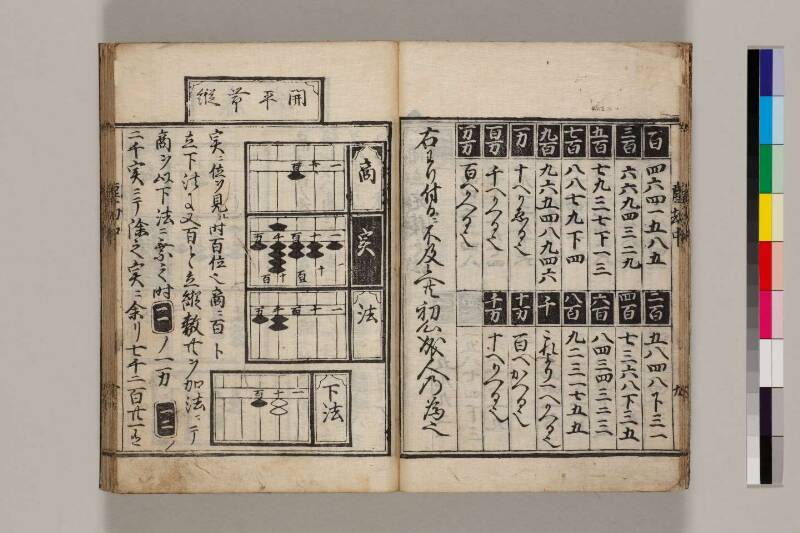
翻刻
【中巻九丁裏】
百 四六四一五八五 二百 五八四八下三一
三百 六六九四三二九 四百 七三六八下三五
五百 七九三七下一三 六百 八四三四三二三
七百 八八七九下四 八百 九二三一七五五
九百 九六五四八九四六 千 これより一へかへる也
万 十へかゑる也 十万 百へかへる也
百万 千へかへる也 千万 十へかへる也
万万 百へかへる也
右わり付るに不及候へ共初心成人の為也
【中巻十丁表】
《題:開平帯縦》
商 実(黒地に白) 法
一 一 1 一
十 十 2 十 下法
百 1 百 2 百 一
千 9 千 2 十 2(白)
万 1 万 1 百 1(黒)
実に位を見る時百位の商に百と
立下法に又百と立縦数廿を加法にて
商を以下法に乗之時[一一]の一万[一二]の
二千実にて除之実に余り七千二百廿一有
現代語訳
【中巻九丁裏】
百 4.6415885 二百 5.8480031
三百 6.6943229 四百 7.3680035
五百 7.9370013 六百 8.4343223
七百 8.8790094 八百 9.2317550(9.2317555)
九百 9.6548946 千 これより「一」に戻る
万 「十」に戻る 十万 「百」に戻る
百万 「千」に戻る 千万 「十」に戻る
万万 「百」に戻る
以上の割り付け(表)は必ずしも必要ではないが、初心者のために載せるものである。
---
【中巻十丁表】
《題:開平帯縦(かいへいたいじゅう)》
商 実 法
一 一 1 一
十 十 2 十 下法
百 1 百 2 百 一
千 9 千 2 十 2
万 1 万 1 百 1
実(被開方数)の位を見るとき、百の位の商に「百」と立て、下法にもまた「百」と立て、縦数(じゅうすう)二十を加法として、商をもって下法に乗ずる。このとき〔一×一〕の一万、〔一×二〕の二千、実にて除す。実に余り七千二百二十一あり。
英語訳
【Volume 2, Folio 9 Verso】
100 4.6415885 200 5.8480031
300 6.6943229 400 7.3680035
500 7.9370013 600 8.4343223
700 8.8790094 800 9.2317550 (9.2317555)
900 9.6548946 1000 Return to "1" from here
10,000 Return to "10" 100,000 Return to "100"
1,000,000 Return to "1,000" 10,000,000 Return to "10"
100,000,000 (万万) Return to "100"
Although the above table (allocation) is not strictly necessary, it is provided here for the benefit of beginners.
---
【Volume 2, Folio 10 Recto】
《Problem: Square Root with Longitudinal (Remainder) Term — 開平帯縦》
Quotient Dividend (shi) Divisor (hō)
1 1 1 1
10 10 2 10 Sub-divisor (kahō)
100 1 100 2 100 1
1,000 9 1,000 2 10 2
10,000 1 10,000 1 100 1
When examining the place value of the dividend (the number whose square root is to be extracted), set "hundred" as the quotient in the hundreds place, and also set "hundred" as the sub-divisor. With 20 as the longitudinal number (jūsū) added to the divisor, multiply the sub-divisor by the quotient. At this point: [1×1] gives 10,000; [1×2] gives 2,000; divide by the dividend. There remains a remainder of 7,221 in the dividend.