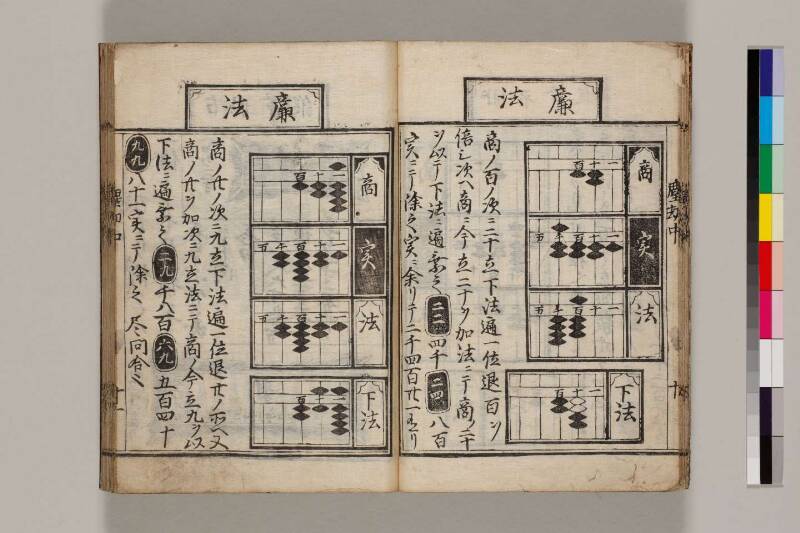
翻刻
【中巻十丁裏】
《題:廉法》
商 実(黒地に白) 法
一 一 1 一 下法
十 2 十 2 十 一
百 1 百 2 百 8 十 2(白)2(黒)
千 7 千 4 百 2
万 万
商の百の次に二十立下法遍一位退百を
倍し次へ商に今立二十を加法にて商の二十
を以て下法に遍乗之[二二]四千[二四]八百
実にて除之実に余りて二千四百廿一有り
【中巻十一丁表】
《題:廉法》
商 実(黒地に白) 法 下法
一 9 一 1 一 1 一 9
十 2 十 2 十 2 十 6
百 1 百 4 百 4 百 2
千 2 千 2
万 万
商の廿の次に九立下法遍一位退廿の所へ又
商の廿を加次に九立法にて商の今立九を以
下法に遍乗之[二九]千八百[六九]五百四十
[九九]八十一実にて除之 尽問合也
現代語訳
【中巻十丁裏】
《題:廉法(れんほう)》
商 実 法
一 一 1 一 下法
十 2 十 2 十 一
百 1 百 2 百 8 十 2 2
千 7 千 4 百 2
万 万
商(の位置)の百の次に二十を立て、下法を一位退けて「百」を倍し、次に商として今立てた「二十」を加法として、その二十をもって下法に遍乗する。〔二×二〕で四千、〔二×四〕で八百、実にて除す。実に余りて二千四百二十一あり。
---
【中巻十一丁表】
《題:廉法(れんほう)》
商 実 法 下法
一 9 一 1 一 1 一 9
十 2 十 2 十 2 十 6
百 1 百 4 百 4 百 2
千 2 千 2
万 万
商の二十の次に九を立て、下法を一位退けて「二十」の位置にまた商の「二十」を加え、次に「九」を立てる。法として、今立てた「九」をもって下法に遍乗する。〔二×九〕で千八百、〔六×九〕で五百四十、〔九×九〕で八十一、実にて除す。(割り)尽きて問いに合う。
英語訳
【Volume 2, Folio 10 Verso】
《Problem: Ren-hō (Diminished Divisor Method — Second Digit Extraction)》
Quotient Dividend (shi) Divisor (hō)
1 1 1 1 Sub-divisor (kahō)
10 2 10 2 10 1
100 1 100 2 100 8 10 2 2
1,000 7 1,000 4 100 2
10,000 10,000
After "hundred" in the quotient column, set down "twenty" (i.e., the next quotient digit 2 in the tens place). Shift the sub-divisor back one place and double the "hundred," then add the "twenty" just set as the quotient to the divisor as the additive term. Using this twenty, multiply throughout (遍乗) against the sub-divisor. [2×2] gives 4,000; [2×4] gives 800. Divide these from the dividend. There remains a remainder of 2,421 in the dividend.
---
【Volume 2, Folio 11 Recto】
《Problem: Ren-hō (Diminished Divisor Method — Third Digit Extraction)》
Quotient Dividend (shi) Divisor (hō) Sub-divisor (kahō)
1 9 1 1 1 1 1 9
10 2 10 2 10 2 10 6
100 1 100 4 100 4 100 2
1,000 2 1,000 2
10,000 10,000
After "twenty" in the quotient column, set down "nine." Shift the sub-divisor back one place; to the position of "twenty," again add the quotient "twenty," then set down "nine." Using the "nine" just set as the new quotient, multiply throughout against the sub-divisor. [2×9] gives 1,800; [6×9] gives 540; [9×9] gives 81. Divide these from the dividend. It divides evenly — the answer agrees with the problem.