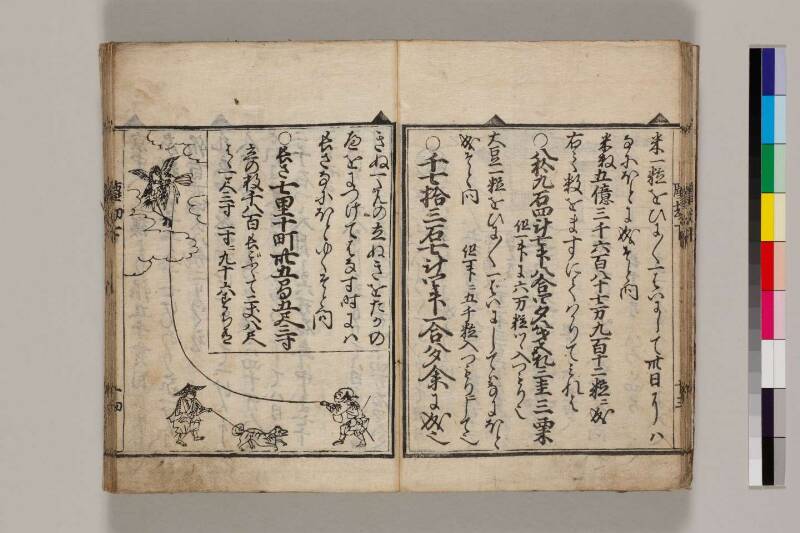
翻刻
【下巻十三丁裏】
▲米一粒をひにひに一はいにして丗日には
なにほとに成そと問
米数 五億三千六百八十七万九百十二粒に成
右の数をますにてはかりてみれは
○八拾九石四斗七升八合四勺八才五札三圭三粟
但一升に六万粒つゝ入つもり也
▲大豆一粒をひにひに一ばいにしてはなにほと
成そと問 但一升に五千粒入つもりにして也
○千七拾三石七斗四升一合八勺余に成也
【下巻十四丁表】
▲きぬ一たんの立ぬきをたかの
やをにつけてはなす時には
長さなにほとゆくそと問
○長さ七里十町丗五間五尺三寸
立の数千八百長 ごふくて二丈八尺
はゝ一尺三寸 一寸に九十六すち有
現代語訳
【下巻十三丁裏】
▲米一粒を日に日に一倍ずつにして、三十日にはどれほどになるかと問う。
米の数:五億三千六百八十七万九百十二粒になる。
右の数を枡にて量ってみれば、
○八十九石四斗七升八合四勺八才五抄三圭三粟
ただし、一升に六万粒ずつ入るものとして計算する。
▲大豆一粒を日に日に一倍ずつにすれば、どれほどになるかと問う。ただし、一升に五千粒入るものとして計算する。
○千七十三石七斗四升一合八勺余になる也。
【下巻十四丁表】
▲絹一反の縦糸(立糸)を鷹の矢(矢羽)につけて放つ時には、長さどれほど行くかと問う。
○長さ七里十町三十五間五尺三寸
縦糸の数:千八百本、呉服(反物)の寸法:丈二丈八尺、幅一尺三寸、一寸に九十六筋あり。
英語訳
**[Volume 2, Folio 13, Verso]**
▲ If one grain of rice were doubled every day for 30 days, how much would it amount to? — So the question is posed.
The number of grains: 536,870,912 grains.
Measuring this quantity with a *masu* (measuring box):
○ 89 *koku*, 4 *to*, 7 *shō*, 8 *gō*, 4 *shaku*, 8 *sai*, 5 *satsu*, 3 *kei*, 3 *zoku*.
Note: This calculation assumes 60,000 grains fit in one *shō*.
▲ If one soybean were doubled every day, how much would it amount to? — So the question is posed. Note: This calculation assumes 5,000 beans fit in one *shō*.
○ It comes to 1,073 *koku*, 7 *to*, 4 *shō*, 1 *gō*, 8 *shaku*, and a remainder.
---
**[Volume 2, Folio 14, Recto]**
▲ If the warp threads (*tatenuki*) of one *tan* of silk were attached to a hawk's arrow (*taka no ya*) and released, how far would it travel? — So the question is posed.
○ The distance: 7 *ri*, 10 *chō*, 35 *ken*, 5 *shaku*, 3 *sun*.
The number of warp threads: 1,800 threads. The dimensions of the fabric (*gofuku*): length 2 *jō* 8 *shaku*, width 1 *shaku* 3 *sun*, with 96 threads per *sun*.