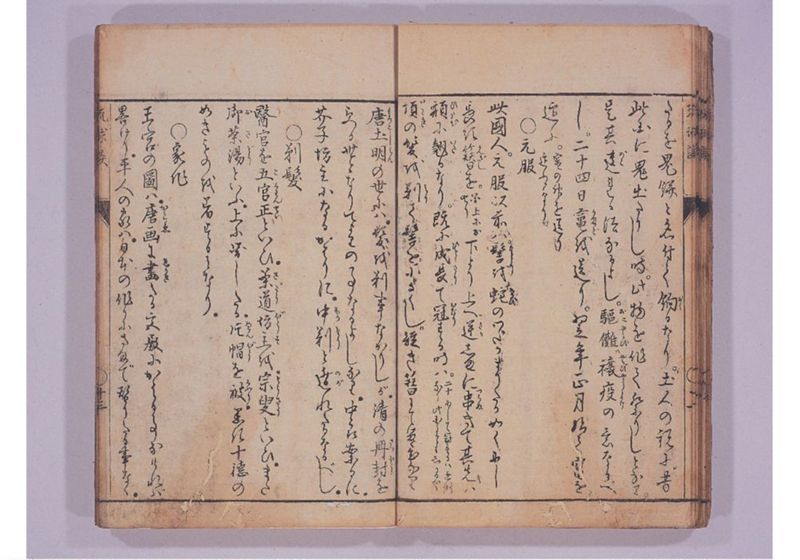
翻刻
たるを鬼餅と名付て餉(おく)るなり、土人の説に、昔
此国に鬼出たりし時、此物を作て祭りしとなり、
是其 遺(のこ)れる法なるよし、駆儺(おにやらひ)。禳疫(やくびやうよけ)の意なるべ
し、二十四日 竈(かまど)を送り、翌年正月始て竈を
迎ふ、《割書:竈の神を送り|迎ふるなり》
○元服
此国人。元服以前は、髻(もとゝり)を蛇(へび)のわだかまりたる如くにし
長き簪(かんざし)を、《割書:図上に出|せり》下より上へ逆(さか)しまに串(つらぬ)きて其先 ̄キ は
額(ひたび)に翹(いた)るなり、既に成長(ひとゝなり)て冠(かむり)する時は、《割書:二十にして冠するは通例|なり此国にてもしかるへし》
頂(いたゝき)の髪を剃(そり)て髻を小さくし、短き簪にて留置なり
唐土明(もろこしみん)の世には、髪を剃事なかりしが、清の冊封(さつほう)を
受る世となりてよりの事なるよしなり、中良案るに、
芥子坊主になるかはりに、中剃(なかそり)と遁(のが)れたるなるべし、
○剃髪
医官を五官正(こかんせい)といひ、茶道(さだう)坊主(ぼうす)を、宗叟(そうさう)といひ、また
御茶湯(おさどう)といふ、上に図したる、片帽(へんぼう)を被(かふり)、黒き十徳の
如きものを着するとなり、
○家作
王宮の図は、唐画(からゑ)に画(ゑかき)たる宮殿にかはる事なければ
略けり、平人の家は、日本の作りにさまで替りたる事なく、
現代語訳
たるを鬼餅と名付けて贈るのである。土地の人の説によると、昔この国に鬼が出た時、この物を作って祭ったという。これはその遺された慣習であるということで、鬼払い・疫病除けの意味であろう。二十四日に竈神を送り、翌年正月に初めて竈神を迎える。《割書:竈の神を送り迎えるのである》
○元服
この国の人は、元服以前は、髻を蛇がとぐろを巻いたようにし、長い簪を《割書:図上に出している》下から上へ逆さまに刺し通して、その先端は額に達している。既に成長して冠をする時は、《割書:二十歳で冠するのが通例である。この国でもそうであろう》頭頂の髪を剃って髻を小さくし、短い簪で留めるのである。中国明の時代には、髪を剃ることはなかったが、清朝の冊封を受ける時代となってからのことであるという。私(中良)が考えるに、完全に剃髪する代わりに、部分的な剃髪で逃れたのであろう。
○剃髪
医官を五官正といい、茶道坊主を宗叟といい、また御茶湯ともいう。上に図示した片帽をかぶり、黒い十徳のようなものを着るという。
○家作
王宮の図は、中国画に描かれた宮殿と変わることがないので省略する。一般人の家は、日本の造りとそれほど変わったことはなく、
英語訳
This is called "oni-mochi" (demon rice cake) and given as gifts. According to local people's explanation, long ago when demons appeared in this country, they made these items for rituals. This is said to be a surviving custom from that time, likely meaning demon expulsion and plague prevention. On the 24th day, they send off the kitchen god, and welcome the kitchen god back for the first time in the new year's first month. {{Marginal note: They send off and welcome back the kitchen god}}
○Coming of Age
Before coming of age, people of this country arrange their topknots like coiled snakes, and pierce long hairpins {{Marginal note: Shown in the diagram above}} from bottom to top in reverse, with the tips reaching their foreheads. When they have grown up and receive the cap ceremony, {{Marginal note: Capping at twenty is the common practice. This should be the case in this country as well}} they shave the hair on the crown to make the topknot smaller and secure it with short hairpins. During China's Ming dynasty, there was no hair shaving, but this practice began from the era when they accepted investiture from the Qing dynasty. In my (Nakara's) opinion, instead of becoming completely shaven like monks, they escaped with partial shaving.
○Hair Shaving
Medical officers are called "gokansē," and tea ceremony monks are called "sōsō," also referred to as "osadō." They wear the flat caps illustrated above and dress in something like black tokusen robes.
○Architecture
I omit the diagram of the royal palace since it does not differ from the palaces depicted in Chinese paintings. Common people's houses are not much different from Japanese construction,