翻刻
床の高 ̄サ三四尺、棟は甚高からず、海風を避(さく)るを
以てなり、屋根は瓦をもちゆ、畳、戸、障子、日本に
同し、柱は大島、鬼界か島に産する羅漢杉(らかんさん)を
用ゆ《割書:羅漢松はまきなり|羅漢杉もまきの類か》価【人へんに買】いたつて貴し、木目至極 麗(うる)
はしく、数千年 蠧(むしばま)ず、年を歴(ふる)に従ひて、その光潤(つや)
鑑(かゝみ)の如し、壁は板羽目にし、粉箋(からかみ)を以て是を張る、
竹簾(すだれ)は極めて麁(あら)く、細(ほそ)き丸竹にて編(あみ)、簷(のき)に挂(かく)、庭
の構へ、築山(つきやま)に黄楊(つげ)、桧松の類、あるひは円(まるく)、或は方(かく)に
苅込(かりこみ)たるを植、小池を掘て魚を畜(かひ)、水中に小石を
立、其上に鉄蕉(そてつ)、其外小紅木なとを植て玩となす、
大抵 外囲(そとかこひ)は、蠣石を塁(たゝみ)て作る、《割書:蠣石は礪石にて|砥石の類か》大家に
ては殊さらに磨(みがき)て削合(けつりあは)する故、一 ̄チ枚石にて切 ̄リ立たる
が如く、甚立派なる事なり、寺院は多く黄楊(つげ)の生(いけ)
墻(がき)を苅込たるなり、また此国にのみ産する、
【縦線】
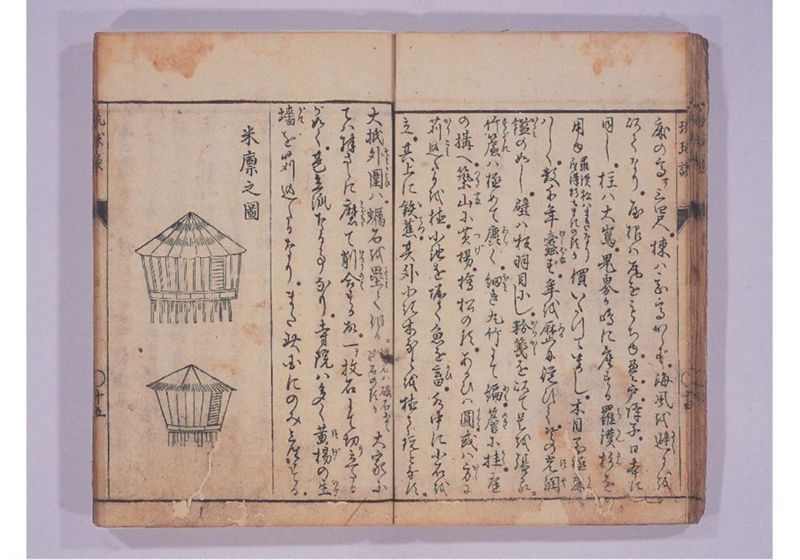
米廩之図
【二棟の図】
現代語訳
床の高さは三、四尺、棟はそれほど高くない。海風を避けるためである。屋根は瓦を用いる。畳、戸、障子は日本と同じ。柱は大島、鬼界ヶ島に産する羅漢杉を用いる《割書:羅漢松は槇である|羅漢杉も槇の類であろうか》価格は非常に高い。木目は極めて美しく、数千年虫に食われず、年を経るに従って、その光沢は鏡のようである。壁は板羽目にして、唐紙を貼る。竹簾は極めて粗く、細い丸竹で編み、軒に掛ける。庭の構え、築山に黄楊、檜松の類を、あるいは丸く、あるいは四角に刈り込んだものを植え、小池を掘って魚を飼い、水中に小石を立て、その上に蘇鉄、その他小紅木などを植えて楽しみとする。大抵外囲いは、蠣石を積み重ねて作る《割書:蠣石は礪石で|砥石の類であろうか》。大家では特に磨いて削り合わせるため、一枚石で切り立てたかのようで、非常に立派である。寺院は多く黄楊の生垣を刈り込んだものである。またこの国にのみ産する。
【縦線】
米廩の図
【二棟の図】
英語訳
The floor height is three to four shaku, and the ridge is not very high, in order to avoid sea winds. The roof uses tiles. Tatami mats, doors, and shoji screens are the same as in Japan. For pillars, they use rakan-sugi (arhat cedar) that grows on Oshima and Kikaigashima islands. 《Marginal note: Rakan-matsu is maki (podocarpus) | Perhaps rakan-sugi is also a type of maki》 The price is extremely high. The wood grain is extremely beautiful, does not get worm-eaten for thousands of years, and as years pass, its luster becomes mirror-like. Walls are made with board paneling and covered with karakami paper. Bamboo blinds are extremely coarse, woven from thin round bamboo and hung from the eaves. For garden design, they plant boxwood and cypress pine on artificial hills, trimmed either round or square, dig small ponds to keep fish, place small stones in the water, and plant cycads and other small flowering trees on top for enjoyment. Generally, outer enclosures are made by piling up oyster stones. 《Marginal note: Oyster stones are whetstone-like | Perhaps a type of grinding stone》 In large houses, they especially polish and fit them together, so they appear as if cut from a single stone slab, which is very magnificent. Temple grounds mostly have boxwood hedges that are trimmed. This also grows only in this country.
【Vertical line】
Diagram of Rice Granaries
【Diagram of two buildings】