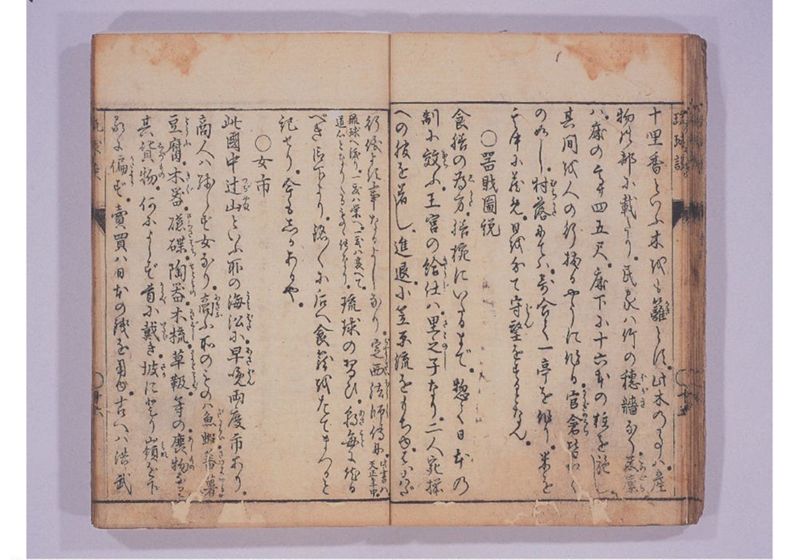
翻刻
十里香といふ木を籬(かき)とす、此木の事は、産
物の部に載たり、民家は竹の穂牆(ほがき)なり、米廩(こめぐら)
は、床の高 ̄サ四五尺、床下に十六本の柱を施し、
其間を人の行抜るやうに作る、官倉(かうぎのくら)皆かく
の如し、村落(むらかた)にては、寄合て一亭を作り、米を
其中に蔵め、日を分て守望(ばん)をするとなん、
○器財図説
食膳の為方(しかた)、膳椀にいたるまで、惣て日本の
制に效(なら)ふ、王宮の給仕(きうじ)は、里之子(さとのし)なり、二人宛揃
への服を着し、進退、小笠原流をもちゆ、はなはだ
行儀よき事なるよしなり、定西(ぢやうさい)法師(ほうし)伝に、《割書:此書は|天正年中、》
《割書:琉球へ渡り、一度は栄へ、一度は衰へて、|道心となりたるものゝ伝なり、》琉球の習ひ、朝毎(あさこと)に然る
べき臣下より、銘〳〵に后へ食籠をたてまつると
記せり、今もしかあるや、
○女市
此国中 辻山(つぢやま)といふ所の海沿(うみばた)に、早晩(あさばん)両度市あり、
商人は残らず女なり、商(あきな)ふ所のものは魚蝦(ぎよるい)、蕃薯(さつまいも)、
豆腐(とうふ)、木器(きぐ)、礠碟(さらさはち)、陶器(せともの)、木梳(きぐし)、草靸(さうりわらぢ)、等の、麁物(あらもの)なり、
其 貨物(しろもの)、何によらず首(かうべ)に戴(いたゞ)き、坡(さか)に登り嶺(みね)を下
るに偏(かたよら)ず、売買は日本の錢を用ゆ、古へは洪武
現代語訳
十里香という木を垣根とする。この木のことは、産物の部に記載している。民家は竹の穂垣である。米蔵は、床の高さが四、五尺で、床下に十六本の柱を設け、その間を人が通り抜けられるように作る。官倉もみなこのようである。村では、寄り合って一つの建物を作り、米をその中に蔵し、日を分けて見張りをするという。
○器財図説
食膳の仕方、膳椀に至るまで、すべて日本の制度に倣っている。王宮の給仕は、里之子である。二人ずつ揃いの服を着して、進退は小笠原流を用いる。はなはだ行儀が良いということである。定西法師伝に《割書:この書は|天正年中、》《割書:琉球へ渡り、一度は栄え、一度は衰えて、|道心となった者の伝である》琉球の習いで、朝毎に然るべき臣下より、銘々に后へ食籠を奉ると記されている。今もそうであろうか。
○女市
この国中の辻山という所の海沿いに、朝晩両度市がある。商人は残らず女である。商うものは魚蝦類、薩摩芋、豆腐、木器、皿鉢、陶器、木櫛、草履草鞋等の、粗物である。その貨物は、何によらず首に戴き、坂に登り峰を下るのも傾かない。売買は日本の銭を用いる。古くは洪武
英語訳
They use a tree called "jūrikō" (ten-ri fragrance) for hedges. This tree is described in the section on products. Common houses have bamboo spike fences. Rice granaries have floors four to five shaku high, with sixteen pillars installed under the floor, constructed so that people can pass through between them. All government storehouses are like this. In villages, they gather together to build one building, store rice inside it, and take turns keeping watch by day.
○Illustrated Description of Utensils and Goods
The manner of dining, down to the trays and bowls, all follow Japanese customs. The attendants at the royal palace are satonoshi. They wear matching clothes in pairs of two, and their movements employ the Ogasawara style, which is said to be extremely well-mannered. In the biography of the monk Jōsai, 《Marginal note: This book is|from the Tenshō period,》《Marginal note: about one who crossed to Ryukyu, once prospered, once declined, and|became a religious devotee》it records that according to Ryukyu custom, every morning appropriate retainers each present food boxes to the queen. Is this still the case today?
○Women's Market
In this country, at a place called Tsujiyama along the seashore, there is a market twice daily, morning and evening. The merchants are all women. What they trade are fish and shellfish, sweet potatoes, tofu, wooden vessels, plates and bowls, pottery, wooden combs, straw sandals, and other coarse goods. Whatever their wares, they carry them on their heads, going up slopes and down peaks without tilting. For trading they use Japanese coins. In ancient times, Kōbu