翻刻
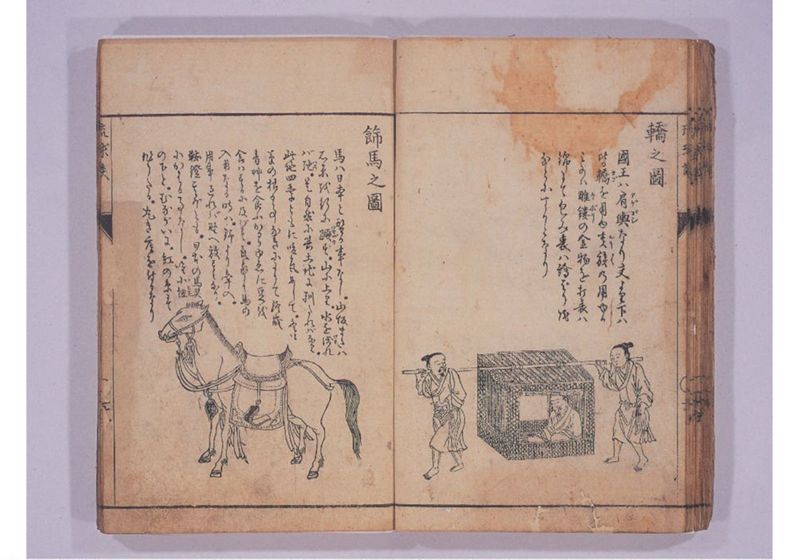
轎之図
国王は肩輿(アゲゴシ)なり夫より下は
皆 轎(カゴ)を用ゆ貴族(レキ〳〵)の用ゆる
ものは雕鏤(チボリ)の金物を打表は
錦にて包み裏は絵ばり附
などにするとなり
飾馬之図
馬は日本と替る事なし、山坂または
石原を行に躓(ツマヅカ)ず、山に上り、水を渉(ワタ)れ
ば馳(ハス)、是自然に其土地に馴たればなり、
此地四季ともに暖気にして、冬も
草の枯る事なきによりて終歳
青草を食ふかるかゆゑに豆を
食はするに及ばす、民家にて馬の
入用なる時は、野より牽入、
用事過れば野へ放すとなり、
鞍鐙其外とも、日本の馬具
にかはる事なし、唯 小紐(コヒモ)
の下と、むながいに、紅の糸にて
作りたる、丸き房を付るなり
【右いずれも図の説明】
現代語訳
轎(駕籠)の図
国王は肩輿(アゲゴシ)である。それより下の身分の者は
皆、轎(カゴ)を用いる。貴族(レキレキ)の用いる
ものは彫刻(チボリ)の金物を打ち、表は
錦で包み、裏は絵を貼り付ける
などにするということである。
飾馬の図
馬は日本と変わることがない。山坂または
石原を行くのに躓(つまず)かず、山に登り、水を渡る
時は駆ける。これは自然にその土地に慣れたからである。
この地は四季ともに暖かく、冬も
草が枯れることがないので一年中
青草を食べることができるため、豆を
食べさせる必要がない。民家で馬が
入用な時は、野から牽いて入れ、
用事が過ぎれば野へ放すということである。
鞍鐙その他とも、日本の馬具
に変わることがない。ただ小紐(コヒモ)
の下と、胸懸けに、紅の糸で
作った、丸い房を付けるのである。
【右はいずれも図の説明】
英語訳
Illustration of Palanquins
The king uses a shoulder-carried palanquin (agekoshi). Those of lower rank
all use sedan chairs (kago). Those used by nobles
are decorated with carved metalwork, the exterior is
wrapped in brocade, and the interior has paintings pasted
on it, and so forth.
Illustration of Decorated Horses
The horses are no different from those in Japan. They do not stumble when traveling
over mountain slopes or rocky fields, and when climbing mountains or crossing water
they gallop. This is because they have naturally become accustomed to that terrain.
This land is warm in all four seasons, and even in winter
the grass does not wither, so throughout the year
they can eat green grass, therefore there is no need
to feed them beans. When common households need
horses, they bring them in from the fields,
and when their business is finished, they release them back to the fields.
The saddles, stirrups and other equipment are no different
from Japanese horse gear. However, they attach
round tassels made of red thread
to the bottom of the small cords and to the breast strap.
[The above are all explanations of illustrations]