翻刻
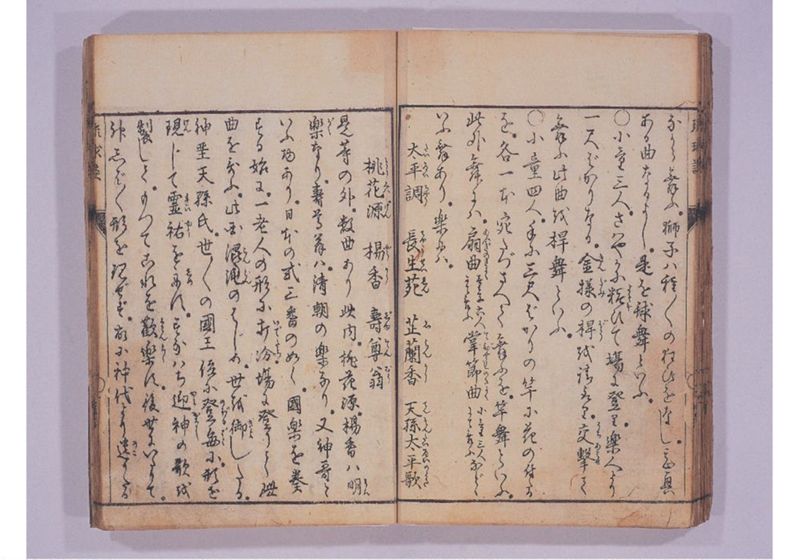
なから舞ふ、獅子は種〳〵の狂ひをなし、甚興
ある曲なるよし、是を毬舞といふ、
〇小童三人、さはやかに粧(よそほ)ひて場に登り、楽人より
一尺ばかりなる、金様(きんだみ)の桿(ぼう)を請取り、交撃(うちあはせ)て
舞ふ此曲を桿舞といふ、
〇小童四人、手に三尺ばかりの竿に花の付たる
を、各一本宛たづさへて舞ふを、竿舞といふ、
此外舞には、扇曲(あふぎのきよく)《割書:童子六人|にて舞ふ》掌節曲(てびやうしのきよく)《割書:小童三人|にて舞ふ》などゝ
いふ舞あり、楽には、
太平調(たいへいちやう) 長生苑(ちやうせいゑん) 芷蘭香(しらんかう) 天孫太平歌(てんそんたいへいのうた)
桃花源(とうくはげん) 楊香(やうかう) 寿尊翁(じゆそんおう)
是等の外、数曲あり此内、桃花源、楊香は明(みん)
楽(がく)なり、寿尊翁は、清朝の楽なり、又神歌と
いふ物あり、日本の式三番の如く、国楽を奏
する始に、一老人の形に打汾(いでたち)、場に登りて瑞
曲を歌ふ、此国 混沌(こんとん)のはじめ、世を御(ぎよ)したる、
神聖天孫氏、世〳〵の国王位に登毎(のぼるごと)に、形を
現(けん)じて霊祐(れいゆう)を示(しめ)す、すなはち迎神(かみおろし)の歌を
製して、もつてこれを歓楽(くわんらく)す、後世にいたりて、
神しば〳〵形を現ぜず、故に神代より遺(のこ)りたる
現代語訳
ながら舞う。獅子は種々の狂いをなし、甚だ興のある曲であるという。これを毬舞という。
○小童三人が、爽やかに装って舞台に登り、楽人より一尺ばかりの金様の棒を受け取り、打ち合わせて舞う。この曲を棒舞という。
○小童四人が、手に三尺ばかりの竿に花の付いたものを、各一本ずつ携えて舞うのを、竿舞という。
このほか舞には、扇曲(童子六人にて舞う)、掌節曲(小童三人にて舞う)などという舞がある。楽には、
太平調 長生苑 芷蘭香 天孫太平歌
桃花源 楊香 寿尊翁
これらの外、数曲ある。この内、桃花源、楊香は明楽である。寿尊翁は、清朝の楽である。また神歌というものがあり、日本の式三番のように、国楽を奏する始めに、一老人の姿に身をやつし、舞台に登って瑞曲を歌う。この国の混沌の始め、世を治めた神聖天孫氏が、代々の国王が位に登るごとに、姿を現して霊験を示す。すなわち迎神の歌を作って、これを歓楽する。後世に至って、神がしばしば姿を現さなくなったため、神代より残った
英語訳
while dancing. The lions perform various frenzied movements, making it a very entertaining piece. This is called the Ball Dance.
○ Three small children dress themselves smartly and enter the stage. They receive golden staffs about one shaku (foot) long from the musicians and dance while striking them together. This piece is called the Staff Dance.
○ Four small children each carry bamboo poles about three shaku long with flowers attached and dance with them. This is called the Pole Dance.
Besides these dances, there are other dances such as the Fan Dance (performed by six boys) and the Clapping Rhythm Dance (performed by three small children). As for music, there are:
Taiheichō, Chōseien, Shirankō, Tenson Taihei no Uta,
Tōkagen, Yōkō, Juson'ō
There are several other pieces besides these. Among them, Tōkagen and Yōkō are Ming music. Juson'ō is music from the Qing dynasty. There is also something called Divine Songs (Shinuta). Like Japan's Shiki Sanban, at the beginning of performing national music, an old man in costume enters the stage and sings auspicious songs. At the beginning of chaos in this country, the divine Tenson-shi who ruled the world would manifest himself to show spiritual protection each time successive kings ascended to the throne. Divine welcoming songs were composed to celebrate this with joy. In later generations, the deity rarely manifested himself, so what remained from the age of the gods