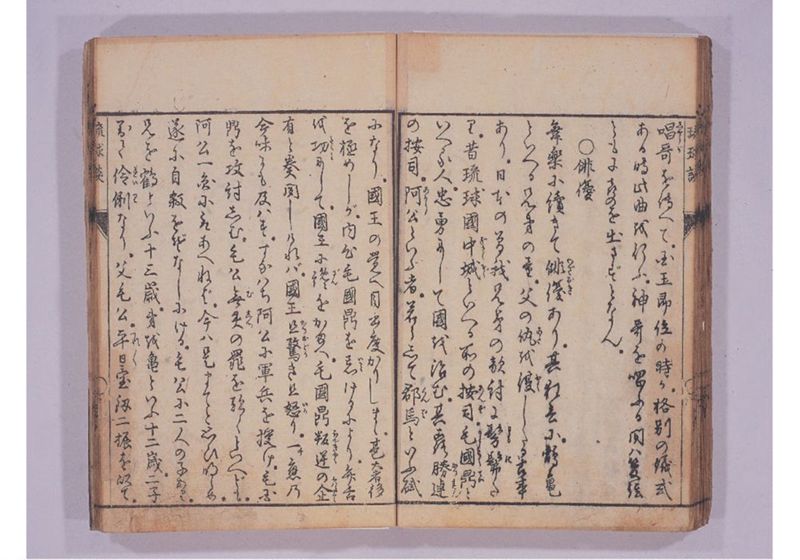
翻刻
唱歌(しやうが)を伝へて、国王即位の時か、格別の儀式
ある時此曲を行ふ、神歌を唱ふる間は管弦
ともに声を出さずとなん、
〇俳優
舞楽に続きて俳優(わざおき)あり、其狂言に、鶴亀
といへる兄弟の童、父の仇(あた)を復(ふく)したる古事
あり、日本の曽我兄弟の敵討に髣髴(さもに)た
り、昔琉球国 中城(なかくすぐ)といへる所の按司(あんず)、毛国鼎(もうこくてい)と
いへる人、忠勇にして国を治む、其ころ勝連(かつれん)
の按司、阿公(あかう)といふ者、若くして郡馬(くんば)といふ職
になり、国王の覚へ目出度かりしまゝ、甚奢侈
を極めしが、内心毛国鼎を忌(いみ)けるにより、弁舌
を巧(たくみ)にして、国王に讒(ざん)をかまへ、毛国鼎 叛逆(ほんきやく)の企(くはたて)
有と奏聞しければ、国王 且(かつ) 驚(おどろ)き且 怒(いか)り、一 ̄チ応の
今【吟】味にも及はす、すなはち阿公に軍兵を授け、毛国
鼎を攻討しむ、毛公 無失(むしつ)の罪を歎くといへども、
阿公一円に取あへねば、今は是まてと思ひ明らめ、
遂に自殺をぞなしにける、毛公に二人の子あり、
兄を鶴といふ十三歳、弟を亀といふ十二歳、二子
到て伶俐(れいり)なり、父毛公、平日(つね〳〵)宝釼二振を以て、
現代語訳
歌謡を伝えて、国王即位の時か、格別の儀式がある時にこの曲を行う。神歌を歌う間は管弦ともに音を出さないという。
○俳優
舞楽に続いて俳優がある。その狂言に、鶴亀という兄弟の童が、父の仇を討った古い話がある。日本の曽我兄弟の敵討ちに似ている。昔琉球国の中城という所の按司で、毛国鼎という人がいた。忠勇で国を治めていた。そのころ勝連の按司で、阿麻和利という者が、若くして郡馬という職に就き、国王の覚えがめでたかったので、甚だ奢侈を極めていたが、内心毛国鼎を憎んでいたため、弁舌巧みに国王に讒言を仕掛け、毛国鼎に謀反の企てがあると奏上した。国王は驚き怒って、一切の吟味にも及ばず、すなわち阿麻和利に軍兵を与えて、毛国鼎を攻撃させた。毛公は無実の罪を嘆いたけれども、阿麻和利が全く取り合わないので、今はこれまでと観念して、ついに自殺をしてしまった。毛公に二人の子がいた。兄を鶴といい十三歳、弟を亀といい十二歳で、二人ともとても賢かった。父毛公は、平素宝剣二振りを以て、
英語訳
songs were transmitted and performed during the king's enthronement or special ceremonial occasions. During the singing of divine songs, it is said that both wind and string instruments remain silent.
○Theatrical Performances
Following the court music and dance, there are theatrical performances. Among their plays is an ancient story of two brothers named Tsuru and Kame who avenged their father. This resembles the vendetta of the Soga brothers in Japan. Long ago in the Ryukyu Kingdom, there was an aji (lord) of a place called Nakagusuku named Mō Kokutei, who was loyal and brave in governing the land. At that time, there was an aji of Katsuren called Akō, who became a gunba (military official) at a young age and enjoyed great favor with the king, leading him to live in extreme luxury. However, harboring inner hatred toward Mō Kokutei, he skillfully used his eloquence to slander him before the king, reporting that Mō Kokutei was plotting rebellion. The king was both shocked and enraged, and without any proper investigation, immediately gave Akō military forces to attack Mō Kokutei. Although Lord Mō lamented this false accusation, Akō would not listen at all, so resigned to his fate, he ultimately committed suicide. Lord Mō had two sons: the elder called Tsuru, aged thirteen, and the younger called Kame, aged twelve. Both children were extremely intelligent. Their father Lord Mō had always kept two precious swords, and