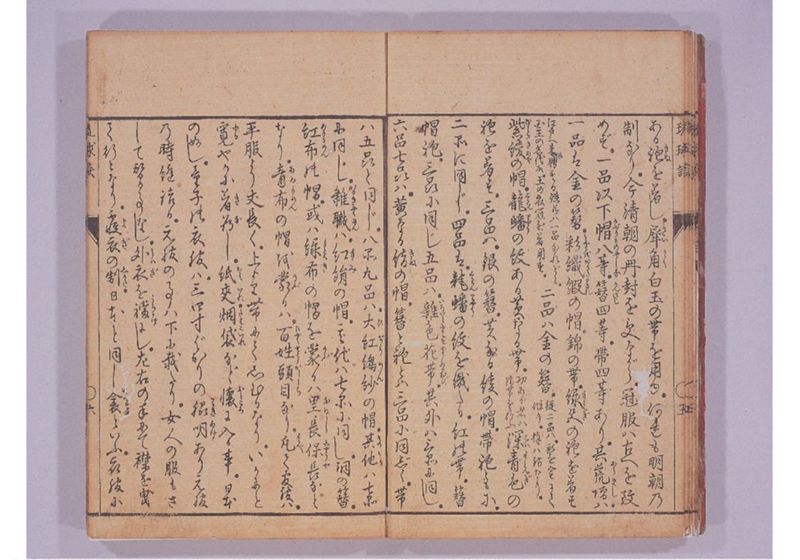
翻刻
【右丁】
ある袍(きぬ)を着し•犀角(さいかく)白玉の帯を用ゆ•何れも明朝の
制なり•今清朝の冊封を受ながら•冠服は古へを改
めず•一品以下帽八等(かぶりものやしな)•簪(かんさし)四等•帯四等あり•荒増(あらまし)は•
一品は金の簪•彩織緞(もやうをおきたるきれ)の帽•錦の帯•緑色(もえぎ)の袍着す
《割書:江戸へ来聘する使臣は一品なれども•|国王の名代故•王の衣冠を着用す•》二品は金の簪•《割書:従二品は•彩を金にて|作り•棒は銀なり•》
紫綾(むらさきあや)の帽•龍蟠(くわんりやう)の紋ある黄•なる帯•《割書:功ある者は|錦帯を給ふ》深青色(こいもえぎ)の
袍を着す•三品は•銀の簪•黄なる綾の帽•帯袍ともに•
二品に同じ•四品は•龍蟠(くわんりやう)の紋を織たる•紅の帯•簪
帽袍•三品に同じ五品は•雑色花帯(いろいとにてもやうあるおび)•其外は三品に同じ•
六品七品は•黄なる絹(きぬ)の帽•簪と袍とは三品に同じく•帯
【左丁】
は五品と同じ•八品九品は•大(ひ)紅縐(ぢりめん)の帽•其他(そのほか)は七品
に同じ•雑職(かるきやくにん)は•紅絹の帽•其他は七品に同じ•同の簪•
紅布(あかもめん)の帽•或は緑布(もえき)の帽を蒙るは里長(なぬし)保長(しやうや)など
なり•青布(あゐもめん)の帽を蒙るは•百姓(ひやくせう)頭目(かししら)なり•凡(すべ)て官服は•
平服より丈長く•上より帯にてしむるなり•いかにも
寛(ゆる)やかに着為(きな)し•紙夾(かみいれ)•烟袋(たはこいれ)など懐(ふところ)に入る事•日本
の如し•童子の衣服は•三四寸ばかりの脇明(わきあけ)あり元服
の時縫詰る•元服の事は下に載たり•女人服もさ
して替る事なし•外衣(うはぎ)を襠(うちかけ)にし•左右の手にて襟を曳
て行となり•寝衣(よぎ)の制(しかた)•日本と同し•衾(ふすま)といふ•衣服に
現代語訳
【右丁】
ある袍(長衣)を着し、犀角と白玉の帯を用いる。いずれも明朝の制度である。今は清朝の冊封を受けているが、冠服は古来のものを改めていない。一品以下、帽子八等、簪四等、帯四等がある。大略は次の通りである。一品は金の簪、彩織緞の帽子、錦の帯、緑色の袍を着用する。《江戸へ来聘する使臣は一品であるが、国王の名代であるため、王の衣冠を着用する》二品は金の簪《従二品は、彩を金で作り、棒は銀である》、紫綾の帽子、龍蟠の紋のある黄色い帯《功のある者は錦帯を給う》、深青色の袍を着用する。三品は銀の簪、黄色い綾の帽子、帯と袍はともに二品と同じ。四品は龍蟠の紋を織った紅の帯、簪・帽子・袍は三品と同じ。五品は雑色花帯、その他は三品と同じ。六品・七品は黄色い絹の帽子、簪と袍は三品と同じく、帯は
【左丁】
五品と同じ。八品・九品は緋紅縮緬の帽子、その他は七品と同じ。雑職は紅絹の帽子、その他は七品と同じ。同じ簪で、紅布の帽子、或いは緑布の帽子を被るのは里長・保長などである。青布の帽子を被るのは百姓頭目である。すべて官服は平服より丈が長く、上から帯で締めるのである。いかにも寛やかに着なし、紙入れ、煙草入れなどを懐に入れることは日本と同様である。童子の衣服は三四寸ばかりの脇明けがあり、元服の時に縫い詰める。元服のことは下に記載してある。女人の服もさほど変わることはない。外衣を打掛けにし、左右の手で襟を引いて歩くのである。寝衣の制度は日本と同じ。衾という衣服に
英語訳
[Right Page]
They wear robes (long garments) and use belts made of rhinoceros horn and white jade. All of these follow the Ming dynasty system. Although they now receive investiture from the Qing dynasty, they have not changed their traditional court dress. Below first rank, there are eight grades of hats, four grades of hairpins, and four grades of belts. The general outline is as follows: First rank wears gold hairpins, brocaded caps, brocade belts, and green robes. 《Envoys who come to Edo are first rank, but as they represent the king, they wear the king's court dress》 Second rank wears gold hairpins 《junior second rank has decorations made of gold, but the stick is silver》, purple silk caps, yellow belts with dragon coil patterns 《those with merit are given brocade belts》, and deep blue robes. Third rank wears silver hairpins, yellow silk caps, with belts and robes the same as second rank. Fourth rank wears red belts with woven dragon coil patterns, with hairpins, caps, and robes the same as third rank. Fifth rank wears multicolored floral belts, with everything else the same as third rank. Sixth and seventh ranks wear yellow silk caps, with hairpins and robes the same as third rank, and belts
[Left Page]
the same as fifth rank. Eighth and ninth ranks wear bright red crepe caps, with everything else the same as seventh rank. Minor officials wear red silk caps, with everything else the same as seventh rank. With the same hairpins, those who wear red cloth caps or green cloth caps are village heads and ward heads. Those who wear blue cloth caps are peasant headmen. All official garments are longer than ordinary clothes and are fastened with belts from above. They are worn quite loosely, and paper cases, tobacco pouches, and such are kept in the breast, just as in Japan. Children's clothing has openings of about three to four inches at the sides, which are sewn up during the coming-of-age ceremony. The coming-of-age ceremony is described below. Women's clothing is not much different. They use outer garments as overcoats and walk while pulling the collar with both hands. The system of sleeping garments is the same as Japan's. There are garments called fusuma