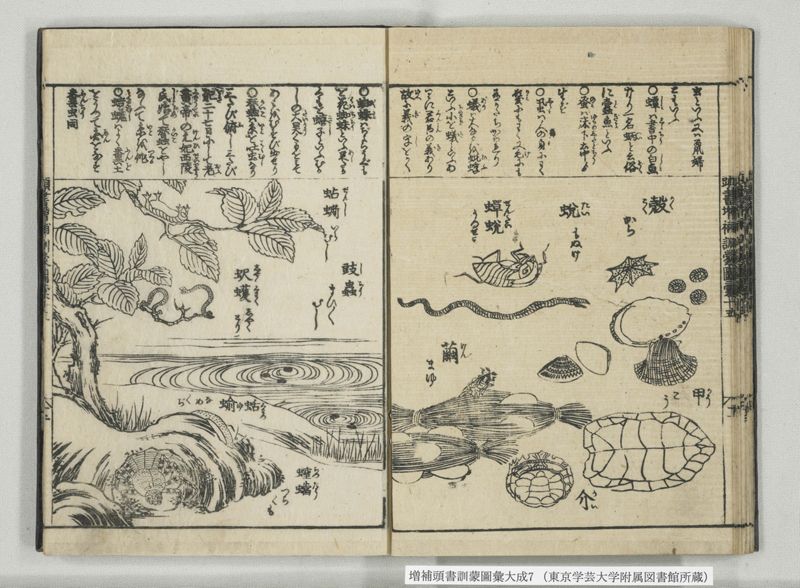
翻刻
【右丁上段】
虫といふ又は鼠婦
ともいふ
○蟫(しみ)は書中(しよちう)の白魚(しみ)
なり一名/蛃(へい)と云/俗(ぞく)
に蠧魚(とぎよ)といふ
○/𤼭(のみ)は床下(ゆかのした)土中(どちゅう)ゟ
生ず
○蝨(しらみ)は人 (補)の身(み)にわく
髪(かみ)にもわく又/毛(け)にも
有かたちかはれり
○蟻(あり)は大なるを蚍蜉(ひふ)
といふ小(ちいさき)を蟻(き)といふあ
りに君臣(くんしん)の義(き)あり
故(ゆへ)に義(ぎ)の字(し)をかく
【左丁上段】
○蜘蛛(くも)はぢようらうぐも
を花蜘蛛(くはちらう)といふ足(あし)たか
くもを蟢子(きし)といふむか
しの大昊(たいかう)くもをみて
あみをむすび出せり
○蚕(かいこ)は糸(いと)を吐(はく)虫(むし)なり
三たび俯(ふ)し三たび
起(をき)二十七日にして老(おふ)
黄帝(くはうてい)の元妃(けんひ)西陵(せいりやう)
氏(し)始(はじめ)て蚕(かいこ)をやし
なふて糸(いと)を作(つくる)
○蛣蜣(くそむし)はよく糞土(ふんど)
をうつて円(ゑん)をなす
糞虫(ふんちう)同
【右丁下段挿絵】
殻(かく)《割書:から》 蛻(たい)《割書:もぬけ》 蝉蛻(せんたい)《割書:うつせみ》
甲(かう)《割書:こう》 介(かい) 繭(けん)《割書:まゆ》
【左丁下段挿絵】
蛅蟖(せんし)《割書:いらむし》 豉虫(しちう)《割書:まひくむし》
蚇蠖(しやくくわく)《割書:しやくとり》 蛞蝓(くわつゆ)《割書:なめくぢ》
螲蟷(ちつたう)《割書:つちくも》
現代語訳
【右丁上段】
(前ページから続いて)虫という。また鼠婦(そふ)ともいう。
○シミは書物の中の白魚(しみ)である。別名を蛃(へい)という。俗に蠧魚(とぎょ)という。
○ノミは床下の土中から発生する。
○シラミは人の身体に湧く。髪にも湧く。また体毛にもいて、形が変わっている。
○アリは大きなものを蚍蜉(ひふ)といい、小さなものを蟻(き)という。アリには君臣の義がある。そのため「義」の字を書く。
【左丁上段】
○クモは女郎蜘蛛を花蜘蛛(かちろう)という。足高蜘蛛を蟢子(きし)という。昔の大昊(たいこう)はクモを見て網を結ぶことを考え出した。
○カイコは糸を吐く虫である。三回俯き三回起きて、二十七日で老いる。黄帝の元妃である西陵氏が初めて蚕を養って糸を作った。
○フンコロガシはよく糞土を運んで円を作る。糞虫も同じである。
【右丁下段挿絵】
殻 から 脱皮 もぬけ 蝉の脱け殻 うつせみ
甲 こう 介 繭 まゆ
【左丁下段挿絵】
イラガの幼虫 いらむし 豉虫 まいくむし
シャクトリムシ しゃくとり ナメクジ なめくじ
ツチグモ つちくも
英語訳
[Right page, upper section]
(Continuing from previous page) ...insect. It is also called sofu (sow bug).
○Silverfish are the white fish found in books. They are also called hei. Commonly they are called togyo.
○Fleas develop from soil under floors.
○Lice infest human bodies. They also appear in hair and body hair, with varying forms.
○Among ants, the large ones are called hifu and the small ones are called ki. Ants have the righteousness of ruler and subject relationships. Therefore the character for "righteousness" is written.
[Left page, upper section]
○Among spiders, the jorō spider is called kachirō (flower spider). The long-legged spider is called kishi. In ancient times, Taikō saw spiders and conceived the idea of weaving nets.
○Silkworms are insects that spin silk. They bow down three times and rise three times, aging in twenty-seven days. The Yellow Emperor's principal consort, Lady Seiriō, was the first to raise silkworms and make silk.
○Dung beetles skillfully move dung soil to form circles. Dung insects are the same.
[Right page, lower section illustrations]
Shell kara Molt monuke Cicada shell utsusemi
Carapace kō Shell kai Cocoon mayu
[Left page, lower section illustrations]
Slug caterpillar ira-mushi Grain moth larva maiku-mushi
Inchworm shakutori Slug namekuji
Trapdoor spider tsuchi-gumo