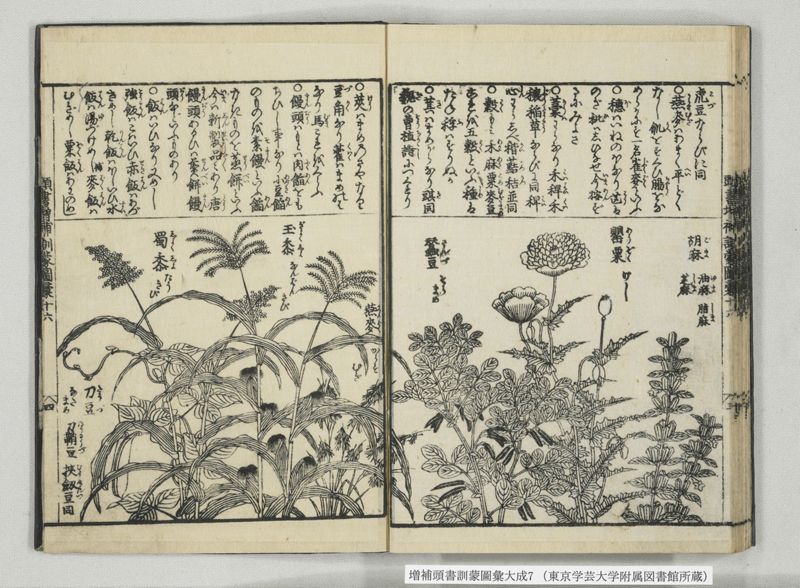
翻刻
【上段】
虎豆(こづ)ならびに同
○燕麦(からすむぎ)はあまく平(へい)どく
なし飢(うへ)をすくひ腸(ちやう)をな
めらかにす一名 雀麦(じやくばく)といふ
○穂(ほ)はいねのほなり芒(はう)は
のぎ秕(ひ)はしひなせ今按(いまあん)ず
るにみよさ
○藁(かう)はわらなり禾稈(くははい)禾(くは)
穣(じやう)稲草(たうさう)ならびに同 稈(はい)
心(しん)わらしべ稭(かい)䕸(かつ)秸(かつ)並同
○穀(こく)もみ禾(あわ)麻(あさ)粟(こめ)麦(むぎ)豆(まめ)
これを五 穀(こく)といふ種(しゆ)は
たね稃(ふ)はすりぬか
○萁(き)はまめがらなり𧯯(き)同
魏の曹植(そうちよく)詩(し)につくれり
○莢(けう)はまめのさやなり
豆角(づかく)なり藿(くはく)はまめのは
なり馬(むま)これをくらふ
○饅頭(まんぢう)はもとは肉餡(にくあん)をも
ちひし事なり小豆餡(あづきあん)
のものを素饅(そまん)といふ餡(あん)
なきものを蒸餅(せうべい)といふ
今(いま)は新製(しんせい)品々(しな〳〵)あり唐(とう)
饅頭(まんぢう)あるひは煎餅(せんべい)饅(まん)
頭(ぢう)などいふものあり
○飯(はん)はいひなり又めし
強飯(こうはん)はこはいひ赤飯(せきはん)はあづ
きめし乾飯(かんはん)はほしいひ水(すい)
飯(はん)は湯(ゆ)づけめし補 麦飯(ばくはん)は
むぎめし粟飯(ぞくはん)はあわのめし
【下段】
胡麻(ごま)
油麻(ゆま) 脂麻(しま)
芝麻(しま)
罌粟(あうぞく) けし
蚕豆(さんづ) そらまめ
燕麦(えんばく) からすむぎ
玉黍(ぎよくしよ) なんばんきび
蜀黍(しよくしよ) たうきび
刀豆(たうづ)
なたまめ 刀鞘豆(たうさうづ) 挟剣豆(けうけんつ)同
現代語訳
【上段】
虎豆(コヅ)も同じ効果である。
○燕麦(カラスムギ)は甘く平性で毒がなく、飢えを救い、腸を滑らかにする。別名を雀麦(ジャクバク)という。
○穂(ホ)は稲の穂のことである。芒(ボウ)は芒(のぎ)のこと、秕(ヒ)は不稔の籾のことである。今考えるに三節である。
○藁(ワラ)は稲わらのことである。禾稈(カカン)、禾穣(カジョウ)、稲草(トウソウ)もすべて同じ。稈心(カンシン)はわら芯、稭(カイ)、䕸(カツ)、秸(カツ)もすべて同じ。
○穀(コク)は籾のこと。稲、麻、粟、麦、豆をこれを五穀という。種(シュ)は種子、稃(フ)は籾殻のことである。
○萁(キ)は豆がらのことである。𧯯(キ)も同じ。魏の曹植が詩に詠んでいる。
○莢(キョウ)は豆の莢のことである。豆角(ズカク)ともいう。藿(カク)は豆の葉のことで、馬がこれを食べる。
○饅頭(マンジュウ)は元来は肉餡を用いたものである。小豆餡のものを素饅(ソマン)という。餡のないものを蒸餅(ジョウヘイ)という。現在は新しい製法で品々があり、唐饅頭あるいは煎餅饅頭などというものもある。
○飯(ハン)は御飯のことである。また「めし」ともいう。強飯(コウハン)は硬い飯、赤飯(セキハン)は小豆飯、乾飯(カンパン)は干し飯、水飯(スイハン)は湯漬け飯のこと。補:麦飯(バクハン)は麦飯、粟飯(ゾクハン)は粟の飯である。
【下段】
胡麻(ゴマ)
油麻(ユマ)、脂麻(シマ)、芝麻(シマ)
罌粟(オウゾク) ケシ
蚕豆(サンズ) ソラマメ
燕麦(エンバク) カラスムギ
玉黍(ギョクショ) ナンバンキビ
蜀黍(ショクショ) トウキビ
刀豆(トウズ)
ナタマメ 刀鞘豆(トウショウズ)、挟剣豆(キョウケンズ)も同じ
英語訳
【Upper Section】
Tiger beans (kozu) have the same effects.
○Oats (karasu-mugi) are sweet and neutral in nature with no toxicity, rescue from hunger, and make the intestines smooth. Also called sparrow wheat (jaku-baku).
○Ears of grain (ho) refer to rice ears. Awns (bō) are the bristle-like appendages, and blighted grain (hi) refers to sterile husks. Upon present consideration, there are three segments.
○Straw (wara) refers to rice straw. Grain stalks (ka-kan), grain chaff (ka-jō), and rice grass (tō-sō) are all the same. Stalk pith (kan-shin) is straw core, and stubble (kai), cut stalks (katsu), and stalk remnants (katsu) are all the same.
○Grain (koku) refers to unhulled rice. Rice, hemp, millet, wheat, and beans are called the five grains. Seeds (shu) are seeds, and husks (fu) are rice hulls.
○Bean stalks (ki) refer to bean stems. 𧯯 (ki) is the same. Cao Zhi of the Wei dynasty composed poetry about this.
○Pods (kyō) refer to bean pods, also called bean horns (zu-kaku). Bean leaves (kaku) are bean foliage that horses eat.
○Steamed buns (manjū) originally used meat filling. Those with adzuki bean paste are called plain buns (so-man). Those without filling are called steamed cakes (jō-hei). Now there are various new preparations, including Tang-style buns and rice cracker buns.
○Cooked rice (han) refers to rice meals, also called "meshi." Hard rice (kō-han) is firm rice, red rice (seki-han) is adzuki bean rice, dried rice (kan-pan) is dried cooked rice, and water rice (sui-han) is rice with hot water poured over it. Supplement: barley rice (baku-han) is barley rice, millet rice (zoku-han) is millet rice.
【Lower Section】
Sesame (goma)
Oil hemp (yuma), fat hemp (shima), sesame (shima)
Poppy (ō-zoku) - Opium poppy
Broad beans (san-zu) - Fava beans
Oats (en-baku) - Wild oats
Corn (gyoku-sho) - Corn
Sorghum (shoku-sho) - Grain sorghum
Sword beans (tō-zu)
Jack beans - Sword sheath beans (tō-shō-zu), sword-clamping beans (kyō-ken-zu) are the same