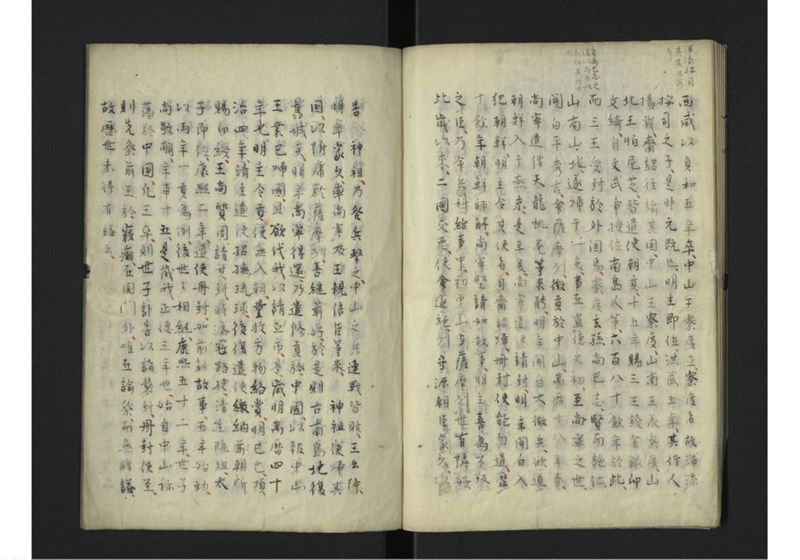
翻刻
西威以貞和五年卒、中山王察度立、察度者故浦添
按子之子、是時元既亡、明主即位、洪武五年、其行人
揚載、齎詔往諭其国、中山王察度、山南王承察度、山
北王帕尼芝、皆遣使朝貢、十五年賜三王錂金銀印
文綺、自文武帝授位南島人等、六百八十余年於此、
而三王受封於外国焉、察度玄孫尚巴志、賢而施仁、
山南山北、遂帰于一矣、事在宣徳之初、至尚寧之世、
関白平秀吉、命薩摩州、徴貢於中山、万暦十八年春、
尚寧遣僧天龍桃庵等来聘、明年関白大徵兵、欲道
朝鮮入于燕京、是年夏、尚寧遣使請封、明年関白入
犯朝鮮、明主令其使者、自齎詔帰、冊封使能勿遣、歷
十余年朝鮮師解、尚寧堅請如故事、明王喜為不叛
之臣、乃命兵科給事中、初中山与薩摩州、世有隣好、
比歳以来、二国交悪、使命遂絶、州守源朝臣家久、以
告 神祖、乃発兵撃之、中山之兵連戦皆敗、王出降、
明年家久、率尚寧及王親倍臣等来、 神祖使帰其
国、以附庸於薩摩州、善継前好、於是則古南島地復
舊【旧】城矣、明年尚寧得還、乃遣修貢於中国、以報中山
王業已帰国、■【且】欲代我以請互市、是歳明万暦四十
年也、明主令貢使無入朝、量収方物絡賞、明已亡、順
治四年、清主遣使招撫琉球、後復遣使繳納前朝所
賜印綬、王尚質因請其封、時海冠路梗、清主既殂、太
子即位、康熙二年遣使冊封、如前朝故事、五年始勅、
以両年一貢為例、後世々相継、康熙五十二年、世子
尚敬嗣、年甫十五、是歲我正徳三年也、始自中山称
藩於中国、凡王卒、則世子訃告以諸襲封、冊封使至、
則先祭前王於寝廟、在国門外、唯在諭祭、而無贈謚、
故歴世未得有謚云、
【欄外】
浦添按司
其系不可
考
【欄外2】
自尚巴志之
後以尚為姓
未知其所由
也
現代語訳
西威は貞和五年(1349年)に卒去し、中山王察度が立った。察度は故浦添按司の子である。この時、元は既に滅亡し、明の君主が即位していた。洪武五年(1372年)、明の使者楊載が詔勅を携えてその国に赴き諭した。中山王察度、山南王承察度、山北王帕尼芝は、皆使者を遣わして朝貢した。十五年(1382年)に三王に鍍金銀印と文綺を賜った。文武帝が南島の人々に位を授けてから六百八十余年ここに至り、三王が外国(明)から封を受けたのである。察度の玄孫尚巴志は賢明で仁を施し、山南・山北を統一した。これは宣徳の初め(1429年頃)のことである。尚寧の世に至り、関白豊臣秀吉が薩摩国に命じて中山に貢納を求めた。万暦十八年(1590年)春、尚寧は僧天龍桃庵らを遣わして来聘させた。翌年関白は大いに兵を徴し、朝鮮を経由して北京に入ろうと欲した。この年の夏、尚寧は使者を遣わして冊封を請い、翌年関白は朝鮮に侵攻した。明の君主はその使者に詔勅を自ら携えて帰らせ、冊封使は派遣しなかった。十余年を経て朝鮮の戦いが終わり、尚寧は旧例通りを堅く請うた。明王は叛かない臣として喜び、兵科給事中に命じた。初め中山と薩摩国は、代々隣国としての親交があったが、近年来二国の交わりが悪くなり、使命も絶えた。薩摩の守護源朝臣家久(島津家久)がこれを神祖(徳川家康)に告げ、兵を発してこれを攻めた。中山の兵は連戦皆敗れ、王は降伏した。翌年家久は尚寧及び王の親族重臣らを伴って来た。神祖はその国に帰らせ、薩摩国の附庸とし、従前の友好を続けさせた。ここに古の南島の地は旧領を回復した。翌年尚寧は帰国を得て、中国に修貢し、中山王は既に帰国したことを報告し、また我々に代わって互市を請うことを欲した。この歳は明の万暦四十年(1612年)である。明の君主は貢使の入朝を許さず、方物を少量収めて恩賞を与えた。明が滅亡し、順治四年(1647年)、清の君主は使者を遣わして琉球を招撫した。後に再び使者を遣わして前朝から賜った印綬を納めさせた。王尚質はこれを機に冊封を請うた。時に海賊が横行し道路が険しく、清の君主が崩御し、太子が即位した。康熙二年(1663年)に使者を遣わして冊封し、前朝の故事の通りとした。五年(1666年)に初めて両年に一度の朝貢を例とする勅を出した。後世代々継承し、康熙五十二年(1713年)、世子尚敬が継ぎ、年はわずか十五歳であった。この歳は我が正徳三年である。中山が中国に称藩してより、凡そ王が卒去すれば、世子が訃告して襲封を諸(請)い、冊封使が到着すれば、まず前王を寝廟で祭る。国門の外にあり、ただ諭祭があるのみで贈謚はない。故に歴代謚号を得ることができないという。
英語訳
Seiwei died in the fifth year of Jōwa (1349), and King Satto of Chūzan ascended to power. Satto was the son of the former Urasoe Aji. At this time, the Yuan dynasty had already fallen and the Ming emperor had ascended the throne. In the fifth year of Hongwu (1372), the Ming envoy Yang Zai carried an imperial edict to that country to instruct them. King Satto of Chūzan, King Shōsatto of Nanzan, and King Haniji of Hokuzan all sent envoys to pay tribute. In the fifteenth year (1382), the three kings were granted gold-plated silver seals and silk brocade. It had been over 680 years since Emperor Bunmu granted positions to the people of the southern islands, and now the three kings received investiture from a foreign country (Ming). Satto's great-great-grandson Shō Hashi was wise and benevolent, and unified Nanzan and Hokuzan. This occurred at the beginning of the Xuande era (around 1429). During the reign of Shō Nei, Regent Toyotomi Hideyoshi ordered Satsuma Province to demand tribute from Chūzan. In the spring of the eighteenth year of Wanli (1590), Shō Nei sent the monk Tenryū Tōan and others as envoys. The following year, the regent greatly conscripted troops, wanting to enter Beijing via Korea. In the summer of that year, Shō Nei sent envoys requesting investiture, and the following year the regent invaded Korea. The Ming emperor had the envoys carry the edict back themselves and did not dispatch investiture envoys. After more than ten years, the Korean campaign ended, and Shō Nei firmly requested the restoration of former practices. The Ming king, pleased with this non-rebellious vassal, ordered the Military Affairs Secretary. Initially, Chūzan and Satsuma Province had maintained neighborly relations for generations, but in recent years relations between the two countries deteriorated and diplomatic missions ceased. The Satsuma lord Minamoto no Ason Iehisa (Shimazu Iehisa) reported this to the Divine Ancestor (Tokugawa Ieyasu), who dispatched troops to attack. Chūzan's forces were defeated in successive battles, and the king surrendered. The following year, Iehisa brought Shō Nei and the king's relatives and retainers. The Divine Ancestor allowed them to return to their country as vassals of Satsuma Province, continuing their former friendship. Thus the ancient southern island territory was restored to its former domain. The following year, Shō Nei was allowed to return and sent tribute to China, reporting that the Chūzan king had already returned to his country and also wanting to request trade on our behalf. This year was the fortieth year of Wanli of Ming (1612). The Ming emperor did not permit tribute envoys to enter court, accepting only small amounts of local products and giving rewards. After Ming's fall, in the fourth year of Shunzhi (1647), the Qing emperor sent envoys to pacify Ryukyu. Later, envoys were again sent to collect the seals and ribbons granted by the previous dynasty. King Shō Shitsu took this opportunity to request investiture. At that time, pirates infested the seas making travel dangerous, the Qing emperor died, and the crown prince ascended the throne. In the second year of Kangxi (1663), envoys were sent for investiture following the precedent of the former dynasty. In the fifth year (1666), an edict was first issued establishing biennial tribute as the rule. Later generations continued this practice, and in the fifty-second year of Kangxi (1713), Crown Prince Shō Kei succeeded at the age of only fifteen. This year was the third year of our Shōtoku era. Since Chūzan became a tributary to China, whenever a king died, the crown prince would announce the death and request succession investiture. When investiture envoys arrived, they would first perform sacrificial rites for the previous king at the mortuary temple outside the country gate. There were only imperial sacrificial rites but no posthumous titles were granted. Therefore, throughout the generations, no posthumous titles could be obtained.