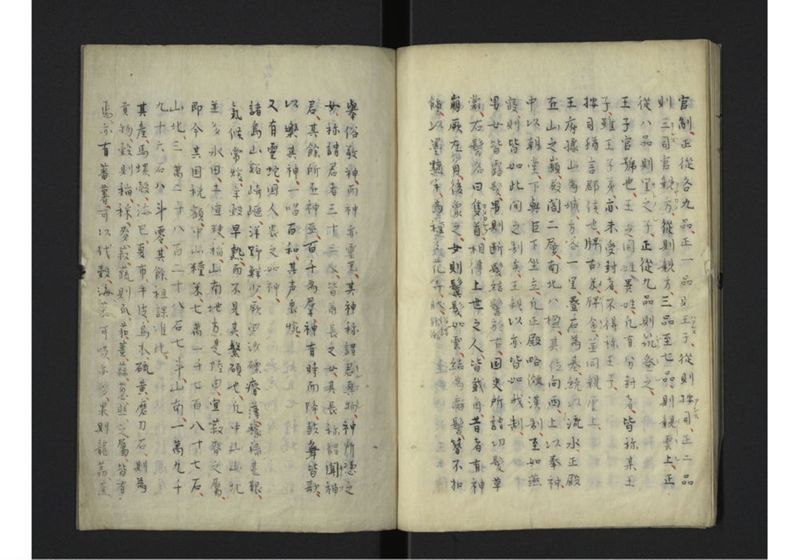
翻刻
官制、正従各九品、正一品□【則】王子(ハアンス)、従則 按司(アンス)、正二品
則 三司(サンズ)官 親方(ヲヤカタ)、従則親方。三品至七品、則親雲上(バーキシ)、正
従八品則 里之子(サトノシ)、正従九品則 筑登之(ヂクトシ)、
王子官號【号】也、王之同姓、異姓、凡有分封者、皆称某王
子、雖王子弟、亦未受封者、不得称王子、
按司尚言郡侯也、牌古米(バイクメ)、牌金(バイキン)、並同親雲上、
王府據山為城、方各一里、畳石為基、繞以流水、正殿
在山之嶺、殿閣二層、南北八楹、其位向西、上以奉神、
中以朝堂、下与臣下坐立、凡正殿略傚漢制、至如燕
寝、則皆如此間之制矣、王親以亦皆如我制、
男女皆露髪、男則断髪結髻於右、国史所謂切髪草
裳、右髻名曰 隻首(カタカシラ)、相伝上世之人、皆載角、昔者有神
崩厥左角、後象之、女則鬒髪如雲、結為高髻、簪不加
飾、以墨黥手、為種々花卉、状、《割書:俗謂|針衝(ハリツキ)》
擧【挙】俗敬神、而神亦霊也、其神称謂 君真者(キンマモン)、神所憑之
女、称謂君者三十三人、皆酋長之女、其長称謂 聞補(キクフ)
君、其余所在神巫、百千為群。神有時而降、鼓舞皆歌、
以楽其神、一唱百和、其声哀婉、
又有霊蛇、国人畏之如神、
諸島山谿崎嶇、洋野鮮少、厥田沙礫瘠薄、稼穡甚艱、
気候常煖、年穀早熟、而不見其繁碩也、凡中山山北
並多水田、土宜粳稲、山南地方是陸田、宜菽麦之属、
即今其国税額、中山糧米、七万一千七百八十七石、
山北、三万二千八百二十八石七斗、山南、一万九千
九十六石八斗零、其余租課准此、
其産、馬螺殻、海巴、夏布、牛皮、鳥木、硫黄、磨刀石、則為
貢物、殻則稲、䅘【⿰禾釆】、麦、菽、蔬則瓜、茄、薑、蒜、葱、韭、之属、皆有
焉、又有蕃薯、可以代穀、海菜可啖亦多、果則龍茘、蕉
現代語訳
官制は正従各九品あり、正一品は王子(ハアンス)、従一品は按司(アンス)、正二品は三司官(サンズ)・親方(ヲヤカタ)、従二品は親方である。三品から七品までは親雲上(バーキシ)、正従八品は里之子(サトノシ)、正従九品は筑登之(ヂクトシ)である。
王子は官号であり、王の同姓・異姓を問わず、分封を受けた者は皆「某王子」と称する。たとえ王の兄弟であっても、封を受けていない者は王子と称することができない。
按司とは、郡侯に相当するものである。牌古米(バイクメ)・牌金(バイキン)は、ともに親雲上と同格である。
王府は山を拠点として城を構え、周囲各一里、石を積み重ねて基礎とし、流水を巡らせている。正殿は山の嶺にあり、殿閣は二層、南北に八楹あり、その位置は西に向いている。上は神を奉り、中は朝堂として用い、下は臣下との坐立の場とする。正殿はおおむね漢制に倣っており、燕寝(居所)に至っては、皆この地(日本)の制に従っている。王の親族の作法もまた皆我が国(日本)の制に倣っている。
男女ともに髪を露わにし、男は断髪して右に髻を結う。国史にいわゆる「切髪草裳」であり、右髻を「隻首(カタカシラ)」という。伝えによると、上世の人々は皆角を頂いており、昔ある神の左角が崩れ落ち、後にそれを象ったという。女は黒く豊かな髪を雲のように結い上げて高髻とし、簪に飾りを加えない。墨で手に入れ墨をし、種々の花卉の模様を描く。〈俗に「針衝(ハリツキ)」という〉
風俗として神を敬い、神もまた霊験あらたかである。その神は「君真者(キンマモン)」と称する。神の憑き物となる女を「君者」といい、三十三人おり、皆酋長の娘である。その長は「聞補(キクフ)君」と称する。その余の各地の神巫は百千を群とする。神が時に降りると、鼓舞してともに歌い、神を楽しませる。一人が唄えば百人が和し、その声は哀婉である。
また霊蛇があり、国人はこれを神のごとく畏れる。
諸島は山谿が険しく、平野が少ない。田は砂礫で痩せており、農耕は非常に困難である。気候は常に温暖で、穀物は早く熟するが、豊かに実るのは見られない。中山・山北は水田が多く、粳稲に適した土地である。山南地方は陸田であり、菽麦の類に適している。現在その国の税額は、中山の糧米が七万一千七百八十七石、山北が三万二千八百二十八石七斗、山南が一万九千九十六石八斗余であり、その他の租課もこれに準ずる。
産物としては、馬・螺殻・海巴・夏布・牛皮・鳥木・硫黄・磨刀石が貢物となる。穀物としては稲・䅘(粟)・麦・菽があり、蔬菜としては瓜・茄・薑・蒜・葱・韭の類が皆ある。また蕃薯(さつまいも)があり、穀物の代わりとなる。海菜も食べられるものが多い。果物としては龍茘(荔枝)・蕉(芭蕉)……
英語訳
The official system has nine ranks, both principal and associate. The principal first rank is the Ōji (pronounced "Haansu"), the associate first rank is the Aji (pronounced "Ansu"), the principal second rank is the Sanshikan (pronounced "Sanzu") and Oyakata (pronounced "Oyakata"), and the associate second rank is also Oyakata. From the third to the seventh rank is the Peechin (pronounced "Baakishi"), the principal and associate eighth rank is the Satonushi (pronounced "Satonoshi"), and the principal and associate ninth rank is the Chikudun (pronounced "Jikutoshi").
Ōji is an official title; regardless of whether they share the king's surname or not, all those who have received a territorial fief are called "such-and-such Ōji." Even the king's own brothers, if they have not yet received a fief, may not call themselves Ōji.
Aji is equivalent to a regional lord. Baikumi (pronounced "Baikume") and Baikin (pronounced "Baikin") are both of the same rank as Peechin.
The royal府 uses a mountain as its castle, with each side measuring one ri, stone foundations stacked up, and surrounded by flowing water. The main hall is on the mountain's ridge, with the palace buildings in two stories, eight columns spanning north to south, facing west. The upper level is dedicated to the gods, the middle serves as the court hall, and the lower level is for the king to sit and stand with his retainers. The main hall broadly follows Chinese architectural conventions, while the residential quarters follow the style of this land (Japan). The conduct of the royal family also follows our (Japanese) customs.
Both men and women wear their hair exposed. Men cut their hair and tie a topknot on the right side. What the national history calls "cut hair and grass skirt" — the right topknot is called "Katakashira." According to tradition, people of ancient times all wore horns, and long ago a god's left horn broke off; subsequent generations imitated this. Women have lustrous hair like clouds, tied up into a high topknot, with hairpins unadorned. They tattoo their hands with ink, creating patterns of various flowers and plants. (Colloquially called "Haritsuki" [needle-piercing].)
It is the common custom to revere the gods, and the gods too are spiritually efficacious. Their god is called "Kinmamon." The women through whom the gods speak are called "Kimi-sha," numbering thirty-three, all daughters of chieftains. Their leader is called "Kikufu-kimi." The remaining shamans and spirit mediums throughout the land number in the hundreds and thousands. When the gods descend, drums beat and all sing together to delight the gods. When one person sings, a hundred respond in harmony, and the sound is mournful and melodious.
There are also sacred serpents, which the people of the country fear as they would a god.
The islands are mountainous and precipitous, with little flat land. The fields are sandy and gravelly, lean and poor, and farming is extremely difficult. The climate is always warm, and grains ripen early, but abundant harvests are not seen. Chūzan and Hokuzan have many paddy fields suited to cultivating non-glutinous rice. The area of Nanzan consists of dry fields suited to legumes and wheat. The current tax quota of the country is: Chūzan's grain rice — 71,787 koku; Hokuzan — 32,828 koku and 7 to; Nanzan — 19,096 koku and 8 to and a fraction. Other levies and taxes are proportional to these figures.
Among its products, horses, conch shells, cowrie shells, ramie cloth, cowhide, ebony, sulfur, and whetstones serve as tribute items. Grains include rice, millet, wheat, and soybeans; vegetables include melons, eggplant, ginger, garlic, scallions, and chives, and all such items are available. There is also sweet potato (bansho), which can substitute for grain. There are many varieties of edible seaweed. As for fruits, lychee, banana...